
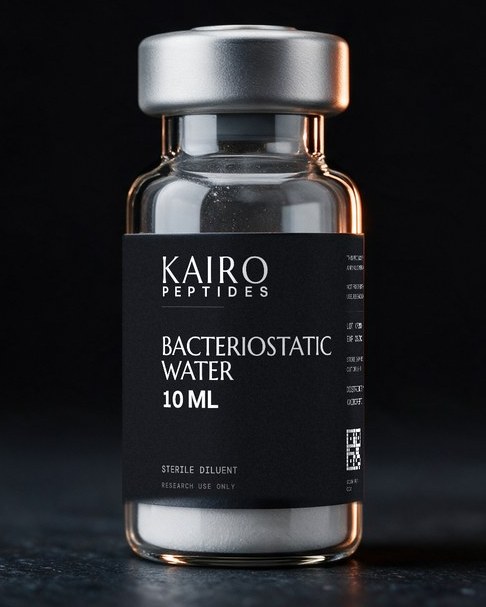
Bacteriostatic Water
10MLHolds microbial growth in check between entries, which is what lets a small vial be drawn from more than once. What is published is about the preservative that does it, benzyl alcohol, including whether it disturbs the material dissolved in it. Every paper behind those is linked below.
$10.00
- STERILE DILUENT
- COA WITH EVERY BATCH
- 3RD-PARTY VERIFIED
| Title | Range | Discount |
|---|---|---|
| Pack tier: Bacteriostatic Water (KAIRO-BACTERIOSTATIC-WATER-10ML) | 1 - 2 | $10.00 |
| Pack of 3+: 10% off | 3 - 4 | $9.00 |
| Pack of 5+: 15% off | 5 - 9 | $8.50 |
| Pack of 10+: 20% off | 10 + | $8.00 |
For laboratory research use only. Not for human or veterinary use, not for diagnostic or therapeutic use, and not for food or drug manufacture. No preparation or usage guidance is provided anywhere on this page.
Not a peptide. A diluent.
Bacteriostatic water has no activity of its own. It exists to dissolve a lyophilized peptide and to let a vial be entered more than once.
-
What it's for
Preclinical strong Stated verbatim in the product's own regulatory label, or documented in the clinical literature in people. On this page 'strong' attaches to labeling facts and to a documented toxicity, never to a benefit claimed for the material.Bacteriostatic water is the preserved form of sterile water, supplied in a container meant for more than 1 withdrawal, used to dissolve a lyophilized peptide into solution.
-
It holds bacteria in check. It does not sterilize.
Preclinical strong Stated verbatim in the product's own regulatory label, or documented in the clinical literature in people. On this page 'strong' attaches to labeling facts and to a documented toxicity, never to a benefit claimed for the material.Bacteriostatic water is preserved, not sterilized: the preservative holds microbial growth in check rather than killing everything in the vial.
-
Compatibility depends on the compound
Preclinical preliminary A single laboratory study, an early mechanistic observation, or a result whose interpretation is the authors' own inference.Whether this preservative affects a dissolved peptide depends on the specific molecule, and the published evidence points in different directions for different peptides.
What the preservative does to a protein it dissolves Peptide evidence, which points the other way from the protein evidence
This is background on the water itself, not usage or preparation guidance.
Frequently paired with
What shoppers usually add alongside this one
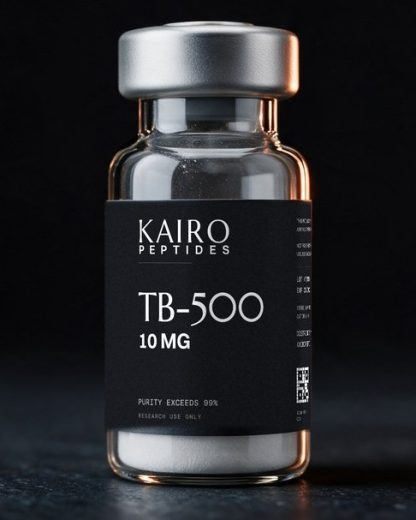
A versatile peptide, studied in research on cell movement and tissue repair.
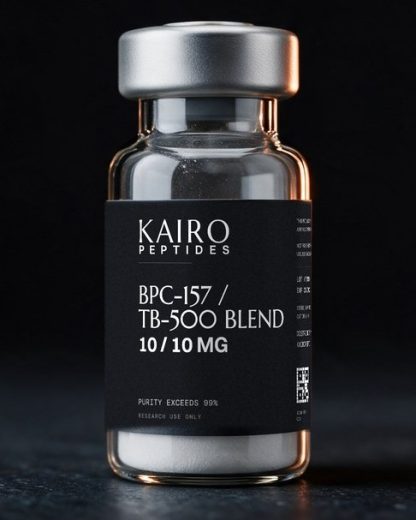
A recovery-focused blend, studied in research on tissue repair.
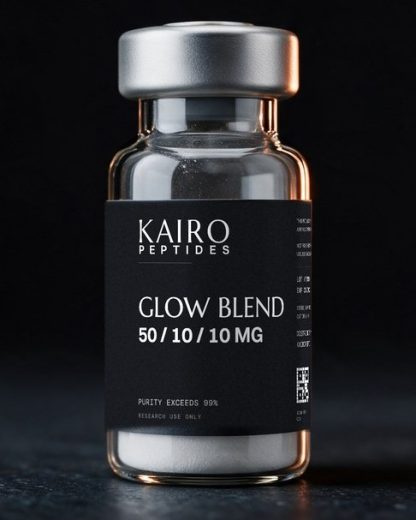
A multi-peptide skin blend, studied in research on skin and tissue.
What the research says about pairing these
Sterile water without preservative (the alternative diluent)
The direct comparator, not a combination. Sterile water carries no preservative. Bacteriostatic water carries benzyl alcohol and is labeled for repeated withdrawals from one container. That contrast comes straight from the two labels, and the bacteriostatic label additionally names preservative-free sterile water as the product to use where water is needed for newborns.
Preservative-free water is the explicit control condition in the reconstitution literature rather than a partner to it: rehydration with water versus with benzyl alcohol is the comparison Roy and colleagues ran, and the water arm produced less clumping of the freeze-dried protein than the preserved arm did. Nothing located compares the two diluents for how long a dissolved compound lasts, in either direction, so no claim of that kind is made here.
BPC-157 and TB-500 (a common co-marketed research pairing)
Listed for honesty about what is conventional rather than what is documented. These are among the compounds most often bought alongside a preserved diluent in this market, which is a fact about shopping carts and not about chemistry.
No located study examined bacteriostatic water or benzyl alcohol as a variable with either compound, and no located study evaluated the pair in a preserved vehicle. This is a co-use convention, not a documented interaction.
Selank and Semax (a common co-marketed research pairing)
Same status. Each compound has its own literature, and neither of those literatures uses a benzyl alcohol-preserved diluent as a studied variable.
No located study evaluates either compound in a preserved vehicle, and none evaluates the two together in one. Co-marketed, not co-studied in this context.
-
Studied for
Preservative identity and the multiple-entry container
The ingredient that makes this water re-enterable is benzyl alcohol, listed on the product's own label at 0.9 percent (9 mg/mL) or 1.1 percent (11 mg/mL). Bacteriostatic means the preservative holds microbial growth in check rather than killing microbes outright, so the liquid is not a sterilant. The label describes the product as supplied in a container from which repeated withdrawals may be made, and gives its pH as 5.7 within a range of 4.5 to 7.0. This is a regulatory labeling fact about the container and the preservative in it. It is not a stability or potency finding about anything dissolved in the water. a regulatory product label, read verbatim; not an experiment of any kind Preclinical strong Stated verbatim in the product's own regulatory label, or documented in the clinical literature in people. On this page 'strong' attaches to labeling facts and to a documented toxicity, never to a benefit claimed for the material. Open for the full finding and the paper it came from.In the literaturePreservative identity and the multiple-entry container
The ingredient that makes this water re-enterable is benzyl alcohol, listed on the product's own label at 0.9 percent (9 mg/mL) or 1.1 percent (11 mg/mL). Bacteriostatic means the preservative holds microbial growth in check rather than killing microbes outright, so the liquid is not a sterilant. The label describes the product as supplied in a container from which repeated withdrawals may be made, and gives its pH as 5.7 within a range of 4.5 to 7.0. This is a regulatory labeling fact about the container and the preservative in it. It is not a stability or potency finding about anything dissolved in the water.References 1
Modela regulatory product label, read verbatim; not an experiment of any kind
-
Studied for
Documented toxicity of the preservative
Benzyl alcohol toxicity in newborn infants is documented in the clinical literature, and the product's own label reflects it. The originating report is a 1982 paper in the New England Journal of Medicine; its full title is in the reference list. The current label states that benzyl alcohol, the preservative in this product, has been associated with toxicity in neonates, directs that only preservative-free sterile water be used where water is needed for preparing or diluting medications for newborns, and carries the heading NOT FOR USE IN NEONATES. Separately, a mouse study using intraperitoneal administration found the lethal amount at four hours was the same for adult and newborn mice, measured comparable blood levels of benzyl alcohol and its breakdown product in both age groups, and concluded the acute toxicity comes from the alcohol itself rather than from that breakdown product. Stated precisely: that animal study did not show newborn animals were more sensitive. The restriction rests on the human clinical literature and on the label, not on the mouse data. a published clinical report in newborn infants, plus a separate mouse study, plus the product's regulatory label Preclinical strong Stated verbatim in the product's own regulatory label, or documented in the clinical literature in people. On this page 'strong' attaches to labeling facts and to a documented toxicity, never to a benefit claimed for the material. Open for the full finding and the paper it came from.In the literatureDocumented toxicity of the preservative
Benzyl alcohol toxicity in newborn infants is documented in the clinical literature, and the product's own label reflects it. The originating report is a 1982 paper in the New England Journal of Medicine; its full title is in the reference list. The current label states that benzyl alcohol, the preservative in this product, has been associated with toxicity in neonates, directs that only preservative-free sterile water be used where water is needed for preparing or diluting medications for newborns, and carries the heading NOT FOR USE IN NEONATES. Separately, a mouse study using intraperitoneal administration found the lethal amount at four hours was the same for adult and newborn mice, measured comparable blood levels of benzyl alcohol and its breakdown product in both age groups, and concluded the acute toxicity comes from the alcohol itself rather than from that breakdown product. Stated precisely: that animal study did not show newborn animals were more sensitive. The restriction rests on the human clinical literature and on the label, not on the mouse data.References 14, 15, 1
Modela published clinical report in newborn infants, plus a separate mouse study, plus the product's regulatory label
-
Studied for
Contamination found in real multiple-entry vials
Two hospital surveys checked vials that were actually in use, and both found contamination at a low but real rate. A German study collected 227 opened multiple-entry vials on a single day and found one vial and one spike contaminated with Staphylococcus epidermidis, a rate of 0.9 percent (95 percent confidence interval 0.3 to 2.1). An Austrian study collected 96 vials over four months and found 4 of them (4.17 percent) were not sterile, and reported that three of those four were vials that contained a preservative. Read together, these real-world observations say something plain: a preservative reduces the risk that comes with entering a container repeatedly, but it does not remove it. in hospital surveys of vials in real use (no people were studied, only the vials) Preclinical moderate Two or more independent studies agree, or the same thing has been observed repeatedly in real use. Still laboratory bench work or survey work, never a controlled result in people. Open for the full finding and the paper it came from.In the literatureContamination found in real multiple-entry vials
Two hospital surveys checked vials that were actually in use, and both found contamination at a low but real rate. A German study collected 227 opened multiple-entry vials on a single day and found one vial and one spike contaminated with Staphylococcus epidermidis, a rate of 0.9 percent (95 percent confidence interval 0.3 to 2.1). An Austrian study collected 96 vials over four months and found 4 of them (4.17 percent) were not sterile, and reported that three of those four were vials that contained a preservative. Read together, these real-world observations say something plain: a preservative reduces the risk that comes with entering a container repeatedly, but it does not remove it.References 4, 5
Modelin hospital surveys of vials in real use (no people were studied, only the vials)
-
Studied for
The structural mechanism behind preservative-driven clumping
Two laboratories, working on different proteins, described the same underlying mechanism. In interferon alpha-2a, more benzyl alcohol meant more clumping, and the temperature at which the protein began clumping fell in a straight line as the preservative concentration rose; nuclear magnetic resonance and hydrogen-exchange measurements showed the protein was not falling apart entirely but coming loose in one specific region, the same region a computer model had predicted would be the trouble spot. In a separate study on the model protein alpha-chymotrypsinogen A, rehydrating in buffer containing benzyl alcohol produced large amounts of insoluble clumps within 24 hours (more than 10 percent), and attaching a few molecules of a large polyethylene glycol chain to the protein prevented that completely, while a small polyethylene glycol chain did nothing. The authors concluded the large chains work by physically shielding sticky surfaces on the protein, not by making it more stable. in purified proteins in the lab, from two independent research groups (NMR, hydrogen exchange, fluorescence, clumping assays) Preclinical moderate Two or more independent studies agree, or the same thing has been observed repeatedly in real use. Still laboratory bench work or survey work, never a controlled result in people. Open for the full finding and the paper it came from.In the literatureThe structural mechanism behind preservative-driven clumping
Two laboratories, working on different proteins, described the same underlying mechanism. In interferon alpha-2a, more benzyl alcohol meant more clumping, and the temperature at which the protein began clumping fell in a straight line as the preservative concentration rose; nuclear magnetic resonance and hydrogen-exchange measurements showed the protein was not falling apart entirely but coming loose in one specific region, the same region a computer model had predicted would be the trouble spot. In a separate study on the model protein alpha-chymotrypsinogen A, rehydrating in buffer containing benzyl alcohol produced large amounts of insoluble clumps within 24 hours (more than 10 percent), and attaching a few molecules of a large polyethylene glycol chain to the protein prevented that completely, while a small polyethylene glycol chain did nothing. The authors concluded the large chains work by physically shielding sticky surfaces on the protein, not by making it more stable.References 7, 8
Modelin purified proteins in the lab, from two independent research groups (NMR, hydrogen exchange, fluorescence, clumping assays)
-
Studied for
Choosing a preservative when a formulation has to survive repeated entry
Two separate laboratories screened preservatives for multi-entry antibody formulations and both landed on benzyl alcohol as a comparatively gentle option. The first compared benzyl alcohol, phenol and m-cresol against a reference IgG1 antibody and found all three loosened the antibody's structure, with phenol causing the most damage, then m-cresol, then benzyl alcohol; after four weeks of warm storage, phenol and m-cresol increased the count of tiny particles in the solution while benzyl alcohol did not, and none of the three measurably changed how much of the antibody remained in its single-molecule form. The second, an earlier study on a humanized antibody, screened six preservatives and found the antibody most stable with the two parabens, compatible with benzyl alcohol and chlorobutanol at low concentrations, and incompatible with phenol and m-cresol, concluding that as a single preservative benzyl alcohol was promising. Both results belong to the specific antibody tested and do not transfer to peptides. in purified antibodies in the lab, from two independent research groups (hydrogen exchange-mass spectrometry, calorimetry, size-exclusion chromatography, particle counting, statistical experimental design) Preclinical moderate Two or more independent studies agree, or the same thing has been observed repeatedly in real use. Still laboratory bench work or survey work, never a controlled result in people. Open for the full finding and the paper it came from.In the literatureChoosing a preservative when a formulation has to survive repeated entry
Two separate laboratories screened preservatives for multi-entry antibody formulations and both landed on benzyl alcohol as a comparatively gentle option. The first compared benzyl alcohol, phenol and m-cresol against a reference IgG1 antibody and found all three loosened the antibody's structure, with phenol causing the most damage, then m-cresol, then benzyl alcohol; after four weeks of warm storage, phenol and m-cresol increased the count of tiny particles in the solution while benzyl alcohol did not, and none of the three measurably changed how much of the antibody remained in its single-molecule form. The second, an earlier study on a humanized antibody, screened six preservatives and found the antibody most stable with the two parabens, compatible with benzyl alcohol and chlorobutanol at low concentrations, and incompatible with phenol and m-cresol, concluding that as a single preservative benzyl alcohol was promising. Both results belong to the specific antibody tested and do not transfer to peptides.References 12, 13
Modelin purified antibodies in the lab, from two independent research groups (hydrogen exchange-mass spectrometry, calorimetry, size-exclusion chromatography, particle counting, statistical experimental design)
-
Studied for
What the preservative does to a protein it dissolves
In a laboratory study of a freeze-dried protein (a recombinant human interleukin-1 receptor antagonist), rehydrating the dried powder with benzyl alcohol caused more clumping of the protein than rehydrating it with plain water. How much extra clumping happened depended heavily on how well the protein had kept its natural shape during freeze-drying: infrared measurements showed that a high starting protein concentration and the sugar sucrose protected that shape, while table salt damaged it. Once the sample was already back in solution and sitting at room temperature, benzyl alcohol did not make the clumping any worse over time. This is the single clearest reason not to assume a preserved diluent is inert toward whatever is dissolved in it. It is evidence in one protein and should not be carried across to any specific compound. in a purified protein in the lab (freeze-dried recombinant protein, infrared spectroscopy and clumping assays) Preclinical preliminary A single laboratory study, an early mechanistic observation, or a result whose interpretation is the authors' own inference. Open for the full finding and the paper it came from.In the literatureWhat the preservative does to a protein it dissolves
In a laboratory study of a freeze-dried protein (a recombinant human interleukin-1 receptor antagonist), rehydrating the dried powder with benzyl alcohol caused more clumping of the protein than rehydrating it with plain water. How much extra clumping happened depended heavily on how well the protein had kept its natural shape during freeze-drying: infrared measurements showed that a high starting protein concentration and the sugar sucrose protected that shape, while table salt damaged it. Once the sample was already back in solution and sitting at room temperature, benzyl alcohol did not make the clumping any worse over time. This is the single clearest reason not to assume a preserved diluent is inert toward whatever is dissolved in it. It is evidence in one protein and should not be carried across to any specific compound.References 6
Modelin a purified protein in the lab (freeze-dried recombinant protein, infrared spectroscopy and clumping assays)
-
Studied for
Peptide evidence, which points the other way from the protein evidence
Two published studies looked at benzyl alcohol against an actual peptide rather than a protein, and got the opposite result from the protein work above. Working with a fatty-acid-modified 31-residue peptide, the first study found that m-cresol and phenol latched onto the peptide and changed its shape, while benzyl alcohol did not shift the peptide's fluorescence signal, showed no measurable binding energy, and caused no shape change at all. Benzyl alcohol actually improved that peptide's physical stability and solubility when it was stressed with salt. The same paper reported that these results did not carry over to two closely related peptides, which is the point worth keeping. The second study used nuclear magnetic resonance on the same peptide and again found no clumping and no detectable interaction with benzyl alcohol, while m-cresol produced insoluble clumps containing a quarter of the peptide by weight after 24 hours at room temperature. The honest summary is that preservative behavior is specific to the individual molecule and cannot be generalized from proteins, or even from one peptide to a similar one. in purified synthetic peptides in the lab (solution biophysics, calorimetry and NMR) Preclinical preliminary A single laboratory study, an early mechanistic observation, or a result whose interpretation is the authors' own inference. Open for the full finding and the paper it came from.In the literaturePeptide evidence, which points the other way from the protein evidence
Two published studies looked at benzyl alcohol against an actual peptide rather than a protein, and got the opposite result from the protein work above. Working with a fatty-acid-modified 31-residue peptide, the first study found that m-cresol and phenol latched onto the peptide and changed its shape, while benzyl alcohol did not shift the peptide's fluorescence signal, showed no measurable binding energy, and caused no shape change at all. Benzyl alcohol actually improved that peptide's physical stability and solubility when it was stressed with salt. The same paper reported that these results did not carry over to two closely related peptides, which is the point worth keeping. The second study used nuclear magnetic resonance on the same peptide and again found no clumping and no detectable interaction with benzyl alcohol, while m-cresol produced insoluble clumps containing a quarter of the peptide by weight after 24 hours at room temperature. The honest summary is that preservative behavior is specific to the individual molecule and cannot be generalized from proteins, or even from one peptide to a similar one.References 10, 11
Modelin purified synthetic peptides in the lab (solution biophysics, calorimetry and NMR)
-
Studied for
How benzyl alcohol compares with other preservatives
One laboratory compared five common preservatives head to head in a single test protein (cytochrome c) and found that all five caused clumping, in this order from worst to mildest: m-cresol, then phenol, then benzyl alcohol, then phenoxyethanol, then chlorobutanol. All five worked the same way, by loosening one particular region of the protein, and the more a preservative loosened that region the more clumping it caused. Stabilizing that one region reduced the clumping caused by every one of them. The useful observation is the ranking within a single test system: benzyl alcohol sat in the middle, gentler than m-cresol and phenol, harsher than chlorobutanol. in a single purified protein in the lab (cytochrome c) Preclinical preliminary A single laboratory study, an early mechanistic observation, or a result whose interpretation is the authors' own inference. Open for the full finding and the paper it came from.In the literatureHow benzyl alcohol compares with other preservatives
One laboratory compared five common preservatives head to head in a single test protein (cytochrome c) and found that all five caused clumping, in this order from worst to mildest: m-cresol, then phenol, then benzyl alcohol, then phenoxyethanol, then chlorobutanol. All five worked the same way, by loosening one particular region of the protein, and the more a preservative loosened that region the more clumping it caused. Stabilizing that one region reduced the clumping caused by every one of them. The useful observation is the ranking within a single test system: benzyl alcohol sat in the middle, gentler than m-cresol and phenol, harsher than chlorobutanol.References 9
Modelin a single purified protein in the lab (cytochrome c)
-
Studied for
How preservative effectiveness varies with conditions
An early laboratory study measured how quickly benzyl alcohol kills microbes and showed the answer is not a fixed number. Effectiveness tracked the concentration of the preservative, the temperature, and the pH of the solution. The work was done against five test organisms (the mold Aspergillus niger, the yeast Candida albicans, and the bacteria Escherichia coli, Pseudomonas aeruginosa and Staphylococcus aureus), and reported its results as kill-rate and temperature-sensitivity parameters rather than as a single potency figure. The takeaway is that antimicrobial performance is a property of the conditions, not of the preservative alone. in laboratory cultures of five test microbes Preclinical preliminary A single laboratory study, an early mechanistic observation, or a result whose interpretation is the authors' own inference. Open for the full finding and the paper it came from.In the literatureHow preservative effectiveness varies with conditions
An early laboratory study measured how quickly benzyl alcohol kills microbes and showed the answer is not a fixed number. Effectiveness tracked the concentration of the preservative, the temperature, and the pH of the solution. The work was done against five test organisms (the mold Aspergillus niger, the yeast Candida albicans, and the bacteria Escherichia coli, Pseudomonas aeruginosa and Staphylococcus aureus), and reported its results as kill-rate and temperature-sensitivity parameters rather than as a single potency figure. The takeaway is that antimicrobial performance is a property of the conditions, not of the preservative alone.References 3
Modelin laboratory cultures of five test microbes
-
Studied for
How benzyl alcohol acts at the bacterial membrane
In one laboratory study, benzyl alcohol made bacterial membranes more fluid and destabilized their structure, and it also switched off membrane proteins including a pump that bacteria use to expel disinfectant. The work was done in cultures of the bacterium Methylobacterium and in artificial membrane bubbles, using Raman and fluorescence spectroscopy. An important limit: the study was about benzyl alcohol acting as a booster for a separate disinfectant, benzalkonium chloride, at alcohol concentrations that were not lethal on their own. It was not a study of how a preserved diluent holds microbes in check, and it does not establish that this membrane effect is the reason preservation works. in bacterial cultures and artificial membrane bubbles in the lab (Methylobacterium; giant vesicles) Preclinical preliminary A single laboratory study, an early mechanistic observation, or a result whose interpretation is the authors' own inference. Open for the full finding and the paper it came from.In the literatureHow benzyl alcohol acts at the bacterial membrane
In one laboratory study, benzyl alcohol made bacterial membranes more fluid and destabilized their structure, and it also switched off membrane proteins including a pump that bacteria use to expel disinfectant. The work was done in cultures of the bacterium Methylobacterium and in artificial membrane bubbles, using Raman and fluorescence spectroscopy. An important limit: the study was about benzyl alcohol acting as a booster for a separate disinfectant, benzalkonium chloride, at alcohol concentrations that were not lethal on their own. It was not a study of how a preserved diluent holds microbes in check, and it does not establish that this membrane effect is the reason preservation works.References 2
Modelin bacterial cultures and artificial membrane bubbles in the lab (Methylobacterium; giant vesicles)
2 strong / 3 moderate / 5 preliminaryRated by how many independent labs and how many kinds of experiment found the same thing.
What is in the vial.
| Compound | Bacteriostatic Water |
| Dosage form | Sterile diluent |
| Purity | STERILE DILUENT |
| Storage | KEEP COLD AND OUT OF LIGHT. |
| Lot format | LOT + EXP printed per vial |
| Distribution | DISTRIBUTED BY KAIRO, KAIROPEPTIDES.COM |
Sterile water with a preservative.
The full technical write-up 3 paragraphs, plus the fact row
Bacteriostatic water is sterile water with a preservative added to it. Its own label describes the product as 'containing 0.9% (9 mg/mL) or 1.1% (11 mg/mL) of benzyl alcohol added as a bacteriostatic preservative'
, and as 'a multiple-dose container from which repeated withdrawals may be made'
. That second phrase is the entire commercial premise of the material, and the first phrase is the reason it works. The word bacteriostatic is the operative one: a bacteriostatic preservative holds microbial growth in check rather than killing microbes, so this is a preserved diluent and not a sterilant, and its label never claims otherwise. The same label gives the pH as 5.7 within a range of 4.5 to 7.0 and carries the heading 'WARNING: NOT FOR USE IN NEONATES'
.
It is a diluent, not an active research compound, and it has no pharmacology of its own to report. Almost nothing published about the product is about the water. It is about the preservative in the water, and it answers two questions: what benzyl alcohol does to bacteria, and whether it quietly changes the protein or peptide dissolved in it. The second question is the one that matters to anyone dissolving something in it, and the honest answer is that it sometimes does and sometimes does not, and which one happens depends on the specific molecule. Every research area below belongs either to that preservative or to the labeling of the container it arrives in. None of them is a claim that the water itself does anything.
Two labeling facts, both read back from the primary document on July 28, 2026. The label directs storage at 68 to 77 F (20 to 25 C), the standard controlled room temperature range. It also carries an explicit restriction in newborn infants, reflecting benzyl alcohol toxicity documented in the clinical literature, and states that where water is required for preparing or diluting medications for newborns, only preservative-free sterile water should be used. Those are reported here as what the label says, not as instruction to any reader. Everything described below is either what researchers observed in laboratory systems or what a regulator's label states. None of it is a statement about effects in a person, and no preparation or usage guidance is given anywhere on this page: no volumes, ratios or mixing amounts are given anywhere in it.References 1, 14
- Also known as
- BAC water. On its own label the product is Bacteriostatic Water for Injection, USP.
- Status
- Not an approved drug in the United States or anywhere else
Sold as a laboratory research material.
Molecular identity
Sequence, formula and registry numbers
- Formula
- Free base None. A two-component solution has no formula of its own.
- Molar mass
- Free base None. Any vendor-listed molar mass for the finished solution is unsupported.
- CAS
- Free base None. The finished solution has no registry number, and any vendor-listed one is unsupported.
- PubChem CID
- Free base None for the mixture. Its two components carry their own, listed below.
This is not a peptide, so there is no sequence, and it is a two-component solution, so the finished mixture has no formula, molar mass or registry number of its own. Its two components each do. Water: PubChem CID 962, formula H2O, molar mass 18.015, CAS 7732-18-5. Benzyl alcohol, the preservative: PubChem CID 244, formula C7H8O, molar mass 108.14, IUPAC name phenylmethanol, CAS 100-51-6. The labeled composition and pH are quoted from the product's own label: 0.9 percent (9 mg/mL) or 1.1 percent (11 mg/mL) benzyl alcohol, pH 5.7 with a range of 4.5 to 7.0. Those are composition figures for the product, not figures for anything mixed with it.References 1, 18, 19
Storage
The longer version 3 rows
- Before you mix it
- Not supplied as a powder. This is a liquid diluent, and its own label directs storage at 68 to 77 F (20 to 25 C), the standard controlled room temperature range, read back verbatim from the label on July 28, 2026. That is a labeling fact about the sealed container. It is not a stability window for anything mixed with it.
- Once it is mixed
- Not provided. In-use limits for a container that has been entered are set by compendial standards and by the manufacturer's own labeling, and this dossier reproduces no figure of that kind: the compendial chapter text could not be independently retrieved and verified on July 28, 2026, and a number that cannot be verified does not belong on this page. Ten of the thirteen competitor and explainer pages surveyed for this product state such a figure as fact. This page states none.
- In the literature
-
One property is documented by measurement rather than inferred, and it belongs to the material dissolved in the water rather than to the water: anything in solution is on a clock. Deamidation rates were determined for 306 asparagine-containing sequences in model peptides in water at pH 7.4 and 37.0 degrees C (98.6 F), showing that asparagine residues lose their amide group on defined, sequence-dependent timescales. The same method was developed to measure glutamine as well, and the authors discuss glutamine alongside asparagine in their molecular-timer hypothesis, but the 306 measured sequences were the asparagine ones. This is why sequences containing asparagine, along with the oxidation-prone residues cysteine, methionine and tryptophan, are the ones most often flagged for instability in solution. Broader background on protein and peptide stability is reviewed in Manning MC, et al. Pharm Res. 2010;27(4):544-575, cited here as a review article and not as a primary result.
The molecule-specific caveat is the real headline. The published record does not support the assumption that a preserved diluent is inert. Benzyl alcohol increased clumping when a freeze-dried protein was rehydrated with it rather than with water, and it destabilizes proteins by loosening one region of them. Yet in the only peptide-specific studies located, it showed no detectable interaction with a fatty-acid-modified 31-residue peptide and improved that peptide's stability under salt stress. The behavior runs in both directions depending on the molecule, so compatibility is something to be determined empirically for each compound rather than assumed in either direction. References 1, 6, 7, 9, 10, 11, 16, 17
Every paper this page is built on.
Click any journal to open the paper.
- Appl Environ Microbiol
- J Clin Hosp Pharm
- Am J Infect Control
- Wien Med Wochenschr
- J Pharm Sci
- J Pharm Pharmacol
- Mol Pharm
- Int J Pharm
- AAPS PharmSci
- N Engl J Med
- Proc Natl Acad Sci USA
- Pharm Res
The full list 19 references, each linked
-
1
Bacteriostatic Water for Injection, USP prescribing information, Hospira, Inc. DailyMed SPL setid 87d6e9dc-fe3b-4593-ac9a-d7493d1959c7. Label information updated May 22, 2026; label text revised 08/2019. Retrieved July 28, 2026.
-
2
Yano T, Miyahara Y, Morii N, Okano T, Kubota H. Pentanol and Benzyl Alcohol Attack Bacterial Surface Structures Differently. Appl Environ Microbiol. 2016;82(1):402-408.
-
3
Karabit MS, Juneskans OT, Lundgren P. Studies on the evaluation of preservative efficacy--II. The determination of antimicrobial characteristics of benzylalcohol. J Clin Hosp Pharm. 1986;11(4):281-289.
-
4
Mattner F, Gastmeier P. Bacterial contamination of multiple-dose vials: a prevalence study. Am J Infect Control. 2004;32(1):12-16.
-
5
Nogler-Semenitz E, Lass-Florl C, Nogler M, Speer G, Dierich MP. Bacterial contamination of solutions for parenteral administration for single- and multiple-dose vials after multiple use in the hospital. Wien Med Wochenschr. 2007;157(15-16):398-401.
-
6
Roy S, Jung R, Kerwin BA, Randolph TW, Carpenter JF. Effects of benzyl alcohol on aggregation of recombinant human interleukin-1-receptor antagonist in reconstituted lyophilized formulations. J Pharm Sci. 2005;94(2):382-396.
-
7
Bis RL, Singh SM, Cabello-Villegas J, Mallela KMG. Role of benzyl alcohol in the unfolding and aggregation of interferon alpha-2a. J Pharm Sci. 2015;104(2):407-415.
-
8
Rodriguez-Martinez JA, Rivera-Rivera I, Griebenow K. Prevention of benzyl alcohol-induced aggregation of chymotrypsinogen by PEGylation. J Pharm Pharmacol. 2011;63(6):800-805.
PubMed 21585378 doi:10.1111/j.2042-7158.2011.01288.x Free full text
-
9
Hutchings RL, Singh SM, Cabello-Villegas J, Mallela KMG. Effect of antimicrobial preservatives on partial protein unfolding and aggregation. J Pharm Sci. 2013;102(2):365-376.
-
10
D'Addio SM, Su Y, Yin D, Zhang J, Kemp E, Gindy ME. Antimicrobial Excipient-Induced Reversible Association of Therapeutic Peptides in Parenteral Formulations. J Pharm Sci. 2021;110(2):850-859.
-
11
Li M, Falk BT, Lu X, Schroder R, McCoy M, Xu W, Yin DH, Gindy ME, D'Addio SM, Su Y. Molecular Mechanism of Antimicrobial Excipient-Induced Aggregation in Parenteral Formulations of Peptide Therapeutics. Mol Pharm. 2022;19(9):3267-3278.
-
12
Karunaratne SP, Jolliffe MC, Trayton I, Shanmugam RK, Darton NJ, Weis DD. Interaction between preservatives and a monoclonal antibody in support of multidose formulation development. Int J Pharm. 2023;648:123600.
-
13
Gupta S, Kaisheva E. Development of a multidose formulation for a humanized monoclonal antibody using experimental design techniques. AAPS PharmSci. 2003;5(2):E8.
-
14
Gershanik J, Boecler B, Ensley H, McCloskey S, George W. The gasping syndrome and benzyl alcohol poisoning. N Engl J Med. 1982;307(22):1384-1388.
-
15
McCloskey SE, Gershanik JJ, Lertora JJ, White L, George WJ. Toxicity of benzyl alcohol in adult and neonatal mice. J Pharm Sci. 1986;75(7):702-705.
-
16
Robinson NE, Robinson AB. Molecular clocks. Proc Natl Acad Sci USA. 2001;98(3):944-949.
-
17
Manning MC, Chou DK, Murphy BM, Payne RW, Katayama DS. Stability of protein pharmaceuticals: an update. Pharm Res. 2010;27(4):544-575.
-
18
PubChem Compound Summary for CID 962, Water. National Center for Biotechnology Information. Retrieved July 28, 2026.
-
19
PubChem Compound Summary for CID 244, Benzyl alcohol. National Center for Biotechnology Information. Retrieved July 28, 2026.
19 sources: 16 peer-reviewed papers and 3 primary documents.
Sources re-verified July 28, 2026
THIS PRODUCT IS NOT FOR HUMAN OR ANIMAL CONSUMPTION OF ANY KIND.
NOT FOR THERAPEUTIC OR DIAGNOSTIC USE. RESEARCH USE ONLY.