
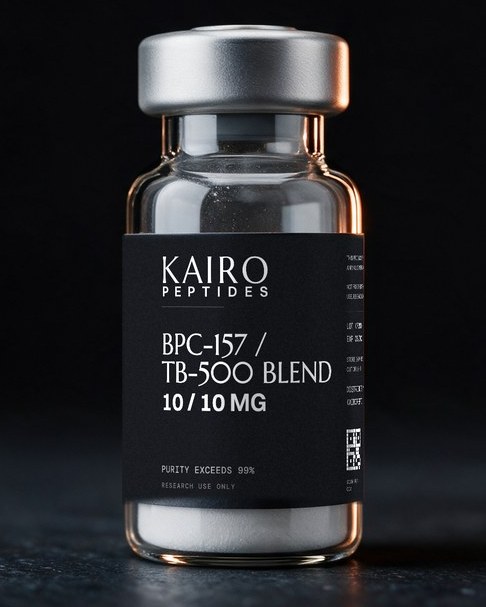
BPC-157 / TB-500 Blend
10MG/10MGSupplied together: pull from 1 vial instead of 2. Studied for tendon and tendon-to-bone repair, new blood vessel formation, wound healing, cell migration, collagen organization and bone healing. Each of the 2 was studied on its own, never as a pair. Every paper behind both is linked below.
$89.00
- PURITY EXCEEDS 99%
- COA WITH EVERY BATCH
- 3RD-PARTY VERIFIED
| Title | Range | Discount |
|---|---|---|
| Pack tier: BPC-157 / TB-500 Blend (KAIRO-BPC-157-TB-500-BLEND-10MG) | 1 - 2 | $89.00 |
| Pack of 3+: 10% off | 3 - 4 | $80.10 |
| Pack of 5+: 15% off | 5 - 9 | $75.65 |
| Pack of 10+: 20% off | 10 + | $71.20 |
For laboratory research use only. Not for human or veterinary use, not for diagnostic or therapeutic use, and not for food or drug manufacture. No preparation or usage guidance is provided anywhere on this page.
1 vial instead of 2.
Pull from 1 vial instead of 2, and read each compound on its own: BPC-157 and TB-500 have not been studied together, so every claim below belongs to a single compound.
-
BPC-157
Preclinical moderate A single solid preclinical study in a living animal. One laboratory, one design, one species.BPC-157 is studied for tendon healing, reported in rats to help a surgically cut Achilles tendon close and regain strength.
Healing of a cut Achilles tendon in living rats (BPC-157) Full BPC-157 profile
-
TB-500
Preclinical moderate A single solid preclinical study in a living animal. One laboratory, one design, one species.Thymosin beta-4, the protein TB-500 is drawn from, is studied for skin wound healing, reported to regrow skin faster with more collagen in the healing tissue.
Closure of an open skin wound and movement of skin cells (thymosin beta-4) Full TB-500 profile
Each line above belongs to a single component, tested on its own. No study has tested BPC-157 and TB-500 given together, so nothing here is a claim about the blend.
Frequently paired with
What shoppers usually add alongside this one
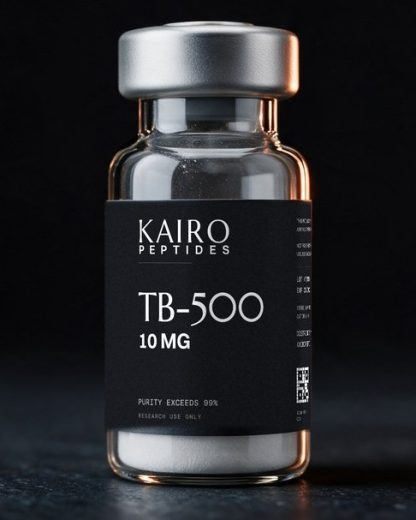
A versatile peptide, studied in research on cell movement and tissue repair.
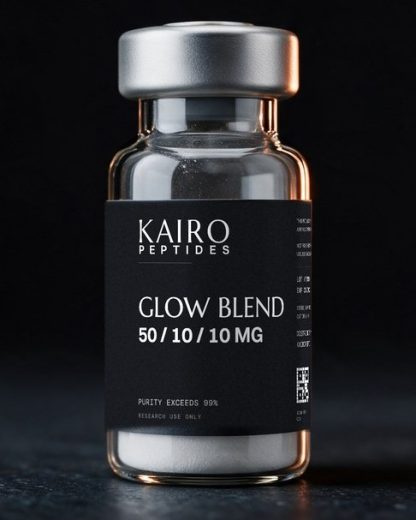
A multi-peptide skin blend, studied in research on skin and tissue.
What the research says about pairing these
TB-500 (thymosin beta-4), the second compound in this vial
The 2 are supplied together on the reasoning that their published mechanisms are complementary rather than overlapping. BPC-157 has been investigated for blood-vessel signaling through VEGFR2 in cultured human endothelial cells, on the chick chorioallantoic membrane and in a rat hind-limb ischemia model. Thymosin beta-4 is characterized biochemically as an actin-sequestering peptide that binds actin monomers one-to-one and blocks their assembly, a role linked in preclinical wound models to skin-cell movement and to new vessel growth. That is a rationale assembled from 2 separate literatures, not a finding about the pair, and this entry appears in this section rather than anywhere else on the page for exactly that reason: the reason these 2 are sold together is a marketing rationale, not a result.
No controlled study has evaluated the two in combination, in any model. The sourcing behind the pairing covers mechanism only. The 2025 BPC-157 review identifies only 3 small human pilot studies involving BPC-157 at all, reports no combination arm, and characterizes the compound as investigational. The 2026 scoping review separately found direct TB-500 evidence limited to a single study among the 80 it included. Evidence for the combination does not exist, which is why no sentence anywhere on this page has the pair as its subject.
GHK-Cu (copper peptide)
Frequently sold and discussed alongside BPC-157 and TB-500 in recovery and tissue-remodeling contexts, on a rationale of complementary extracellular-matrix and wound-repair activity. That rationale is drawn from separate literatures in exactly the way the entry above is.
A Crossref and PubMed search run for the research pass located no primary study giving GHK-Cu together with either compound in this vial. Co-marketed, not jointly studied.
-
Studied for
The one controlled human trial of thymosin beta-4, in an eye formulation
Thymosin beta-4 has reached a randomized controlled trial in people, but only as eye drops for dry eye, a formulation and route unrelated to anything else on this page. The trial was single-center, prospective, double-masked and placebo-controlled, with 72 qualifying participants with moderate to severe dry eye split evenly between a thymosin beta-4 eye solution and placebo for 28 days. Neither of the 2 things the trial had committed to measuring in advance, eye discomfort score and staining of the lower cornea, differed significantly between the thymosin beta-4 group and the placebo group at the primary visit. This entry is here to record how far the molecule has actually been studied under controlled conditions, including where it failed to beat placebo. It concerns a topical eye product and says nothing about any other tissue, route or preparation. in people: a randomized, double-masked, placebo-controlled Phase II trial, 72 participants, topical eye solution Preclinical strong More than 1 independent study pointing the same way, or a controlled human trial. Read it as how well a question was studied, never as how well the material worked: the only controlled human trial on this page missed both of its primary endpoints and is still rated strong. Open for the full finding and the paper it came from.In the literatureThe one controlled human trial of thymosin beta-4, in an eye formulation
Thymosin beta-4 has reached a randomized controlled trial in people, but only as eye drops for dry eye, a formulation and route unrelated to anything else on this page. The trial was single-center, prospective, double-masked and placebo-controlled, with 72 qualifying participants with moderate to severe dry eye split evenly between a thymosin beta-4 eye solution and placebo for 28 days. Neither of the 2 things the trial had committed to measuring in advance, eye discomfort score and staining of the lower cornea, differed significantly between the thymosin beta-4 group and the placebo group at the primary visit. This entry is here to record how far the molecule has actually been studied under controlled conditions, including where it failed to beat placebo. It concerns a topical eye product and says nothing about any other tissue, route or preparation.References 1
Modelin people: a randomized, double-masked, placebo-controlled Phase II trial, 72 participants, topical eye solution
-
Studied for
What the whole thymosin beta-4 / TB-500 literature adds up to (2026 scoping review)
A 2026 scoping review set out to map, rather than judge, every study on thymosin beta-4 and TB-500 in tissue healing and musculoskeletal repair. Searching PubMed, Europe PMC and ClinicalTrials.gov through March 2026, the authors screened 1,772 records and included 80 studies. Their conclusions are sobering and worth stating plainly: the literature leans heavily on dish-based and mixed designs; most of it studies thymosin beta-4 itself rather than TB-500; the best-covered tissues are skin and soft tissue, blood vessels, the eye and bone, while tendon, ligament, muscle, cartilage and spine are comparatively thin; human evidence clusters in eye and skin settings; and direct TB-500 evidence was limited to a single included study out of 80. The authors describe the mapped literature as unevenly distributed and largely preclinical. a scoping review of laboratory, animal, human and registered-trial sources, 80 studies included, by authors unrelated to the compound's development Preclinical strong More than 1 independent study pointing the same way, or a controlled human trial. Read it as how well a question was studied, never as how well the material worked: the only controlled human trial on this page missed both of its primary endpoints and is still rated strong. Open for the full finding and the paper it came from.In the literatureWhat the whole thymosin beta-4 / TB-500 literature adds up to (2026 scoping review)
A 2026 scoping review set out to map, rather than judge, every study on thymosin beta-4 and TB-500 in tissue healing and musculoskeletal repair. Searching PubMed, Europe PMC and ClinicalTrials.gov through March 2026, the authors screened 1,772 records and included 80 studies. Their conclusions are sobering and worth stating plainly: the literature leans heavily on dish-based and mixed designs; most of it studies thymosin beta-4 itself rather than TB-500; the best-covered tissues are skin and soft tissue, blood vessels, the eye and bone, while tendon, ligament, muscle, cartilage and spine are comparatively thin; human evidence clusters in eye and skin settings; and direct TB-500 evidence was limited to a single included study out of 80. The authors describe the mapped literature as unevenly distributed and largely preclinical.References 2
Modela scoping review of laboratory, animal, human and registered-trial sources, 80 studies included, by authors unrelated to the compound's development
-
Studied for
How little human data exists on BPC-157 (2025 review)
A 2025 review in a musculoskeletal medicine journal assessed how much and how good the evidence for BPC-157 really is. It credits the preclinical picture: regenerative effects across many animal models, acting through overlapping pathways including VEGFR2 and nitric oxide production via the Akt-eNOS route, plus ERK1/2 signaling. Then it states the part that matters most to anyone reading this page: human data are extremely limited, with only 3 pilot studies ever conducted in people, and rigorous large-scale trials are lacking. The authors conclude that until well-designed clinical trials are done, BPC-157 should be considered investigational, and its use approached with caution. a review of the preclinical animal, cell and limited human pilot literature, by authors unrelated to the compound's development Preclinical strong More than 1 independent study pointing the same way, or a controlled human trial. Read it as how well a question was studied, never as how well the material worked: the only controlled human trial on this page missed both of its primary endpoints and is still rated strong. Open for the full finding and the paper it came from.In the literatureHow little human data exists on BPC-157 (2025 review)
A 2025 review in a musculoskeletal medicine journal assessed how much and how good the evidence for BPC-157 really is. It credits the preclinical picture: regenerative effects across many animal models, acting through overlapping pathways including VEGFR2 and nitric oxide production via the Akt-eNOS route, plus ERK1/2 signaling. Then it states the part that matters most to anyone reading this page: human data are extremely limited, with only 3 pilot studies ever conducted in people, and rigorous large-scale trials are lacking. The authors conclude that until well-designed clinical trials are done, BPC-157 should be considered investigational, and its use approached with caution.References 3
Modela review of the preclinical animal, cell and limited human pilot literature, by authors unrelated to the compound's development
-
Studied for
Healing of a cut Achilles tendon in living rats (BPC-157)
In rats whose right Achilles tendon was cut through, leaving a visible gap between the 2 ends, animals given BPC-157 recovered better than saline controls on every measure the study used: the tendon took more load before failing and was stiffer, the animals walked better on a standard footprint score, the tissue under the microscope showed better-formed repair tissue, and the visible gap was smaller and eventually closed. In the same paper's dish experiments, BPC-157 on its own did not make cultured tendon cells grow at all; what it did was reverse the growth-blocking effect of 4-hydroxynonenal, a damaging breakdown product, in those cultures. IN VITRO RODENT rodent (rat Achilles tendon transection) plus in vitro (cultured rat tendon cells) Preclinical moderate A single solid preclinical study in a living animal. One laboratory, one design, one species. Open for the full finding and the paper it came from.In the literatureHealing of a cut Achilles tendon in living rats (BPC-157)
In rats whose right Achilles tendon was cut through, leaving a visible gap between the 2 ends, animals given BPC-157 recovered better than saline controls on every measure the study used: the tendon took more load before failing and was stiffer, the animals walked better on a standard footprint score, the tissue under the microscope showed better-formed repair tissue, and the visible gap was smaller and eventually closed. In the same paper's dish experiments, BPC-157 on its own did not make cultured tendon cells grow at all; what it did was reverse the growth-blocking effect of 4-hydroxynonenal, a damaging breakdown product, in those cultures.References 4
Modelrodent (rat Achilles tendon transection) plus in vitro (cultured rat tendon cells)
-
Studied for
Tendon reattaching to bone, and the effect of a corticosteroid (BPC-157)
Rats had the Achilles tendon cleanly detached from the heel bone, an injury the authors state does not heal back on its own. Over 3 weeks, animals given BPC-157 walked better on the standard footprint score, and the repaired junction took more load before failing and was stiffer. Under the microscope the collagen fibers were better organized, there was more type I collagen, and the new blood supply was further along. A corticosteroid drug, 6-alpha-methylprednisolone, consistently made healing worse in this model, and the paper reports that BPC-157 substantially reduced that harm. Read that wording carefully: reduced, not abolished. RODENT rodent (rat Achilles tendon-to-bone detachment) Preclinical moderate A single solid preclinical study in a living animal. One laboratory, one design, one species. Open for the full finding and the paper it came from.In the literatureTendon reattaching to bone, and the effect of a corticosteroid (BPC-157)
Rats had the Achilles tendon cleanly detached from the heel bone, an injury the authors state does not heal back on its own. Over 3 weeks, animals given BPC-157 walked better on the standard footprint score, and the repaired junction took more load before failing and was stiffer. Under the microscope the collagen fibers were better organized, there was more type I collagen, and the new blood supply was further along. A corticosteroid drug, 6-alpha-methylprednisolone, consistently made healing worse in this model, and the paper reports that BPC-157 substantially reduced that harm. Read that wording carefully: reduced, not abolished.References 5
Modelrodent (rat Achilles tendon-to-bone detachment)
-
Studied for
Blood vessel growth and VEGFR2 signaling (BPC-157)
One study tested BPC-157 for effects on new blood vessel growth in several systems at once. On the membrane of a developing chick egg, which is living tissue, and in a dish-based vessel-forming assay, vessel density went up. In rats whose hind-limb blood supply had been cut off, blood flow came back faster on laser scanning, and the muscle tissue afterward contained more vessels and showed more of the receptor VEGFR2 on them. In cultured human blood-vessel lining cells, BPC-157 raised VEGFR2 itself but not its usual trigger VEGF-A, pulled VEGFR2 inside the cell, and switched on the VEGFR2-Akt-eNOS chain over time. Blocking the pulling-inside step with a chemical called dynasore shut all of that down, which is what tied the effect to that specific receptor step. IN VITRO RODENT AVIAN IN VIVO chick chorioallantoic membrane (avian in vivo), rodent (rat hind-limb ischemia), and in vitro (cultured human vascular endothelial cells) Preclinical moderate A single solid preclinical study in a living animal. One laboratory, one design, one species. Open for the full finding and the paper it came from.In the literatureBlood vessel growth and VEGFR2 signaling (BPC-157)
One study tested BPC-157 for effects on new blood vessel growth in several systems at once. On the membrane of a developing chick egg, which is living tissue, and in a dish-based vessel-forming assay, vessel density went up. In rats whose hind-limb blood supply had been cut off, blood flow came back faster on laser scanning, and the muscle tissue afterward contained more vessels and showed more of the receptor VEGFR2 on them. In cultured human blood-vessel lining cells, BPC-157 raised VEGFR2 itself but not its usual trigger VEGF-A, pulled VEGFR2 inside the cell, and switched on the VEGFR2-Akt-eNOS chain over time. Blocking the pulling-inside step with a chemical called dynasore shut all of that down, which is what tied the effect to that specific receptor step.References 6
Modelchick chorioallantoic membrane (avian in vivo), rodent (rat hind-limb ischemia), and in vitro (cultured human vascular endothelial cells)
-
Studied for
Skin healing after a chemical burn (BPC-157)
Rats were given an alkali burn to the skin. Where BPC-157 was applied to the wound, the wound closed faster, and stained sections of skin taken 18 days later showed more repair tissue, more new surface skin, more remodeling of the deeper layer and more collagen than in the model control group. The burned tissue also carried more of the vessel-growth signal VEGF. In parallel dish experiments on human blood-vessel lining cells, the peptide increased how fast the cells multiplied and how far they migrated in 2 different assays, sped up the formation of vessel-like tubes, and altered ERK1/2 signaling along with its downstream targets c-Fos, c-Jun and Egr-1. IN VITRO RODENT rodent (rat alkali-burn skin wound, topical application) plus in vitro (human umbilical vein endothelial cells) Preclinical moderate A single solid preclinical study in a living animal. One laboratory, one design, one species. Open for the full finding and the paper it came from.In the literatureSkin healing after a chemical burn (BPC-157)
Rats were given an alkali burn to the skin. Where BPC-157 was applied to the wound, the wound closed faster, and stained sections of skin taken 18 days later showed more repair tissue, more new surface skin, more remodeling of the deeper layer and more collagen than in the model control group. The burned tissue also carried more of the vessel-growth signal VEGF. In parallel dish experiments on human blood-vessel lining cells, the peptide increased how fast the cells multiplied and how far they migrated in 2 different assays, sped up the formation of vessel-like tubes, and altered ERK1/2 signaling along with its downstream targets c-Fos, c-Jun and Egr-1.References 7
Modelrodent (rat alkali-burn skin wound, topical application) plus in vitro (human umbilical vein endothelial cells)
-
Studied for
Healing of a gap cut out of bone (BPC-157)
A segment was removed from the middle of 1 forearm bone in rabbits, leaving a gap that in every saline control animal was still not healed 6 weeks later. Against that baseline, BPC-157 significantly improved healing. On x-ray callus measurement, bone-density imaging and quantitative tissue measurement, certain BPC-157 regimens produced improvement on a par with the 2 standard comparisons the study ran: packing the gap with the animal's own bone marrow, or filling it with a graft of its own cortical bone. More of the animals given BPC-157 ended up with bone running continuously across the gap. The authors state the finding requires further investigation. rabbit (segmental radial bone defect) Preclinical moderate A single solid preclinical study in a living animal. One laboratory, one design, one species. Open for the full finding and the paper it came from.In the literatureHealing of a gap cut out of bone (BPC-157)
A segment was removed from the middle of 1 forearm bone in rabbits, leaving a gap that in every saline control animal was still not healed 6 weeks later. Against that baseline, BPC-157 significantly improved healing. On x-ray callus measurement, bone-density imaging and quantitative tissue measurement, certain BPC-157 regimens produced improvement on a par with the 2 standard comparisons the study ran: packing the gap with the animal's own bone marrow, or filling it with a graft of its own cortical bone. More of the animals given BPC-157 ended up with bone running continuously across the gap. The authors state the finding requires further investigation.References 8
Modelrabbit (segmental radial bone defect)
-
Studied for
Protection of tissue and rerouting of blood flow (BPC-157, review by the originating group)
A 2020 review positions BPC-157 as a likely mediator of a long-standing idea in gastroenterology called Robert's cytoprotection: the observation that the stomach lining can be protected against damaging agents. It gathers preclinical work in which BPC-157 kept the stomach lining intact against harmful agents, protected the lining of blood vessels, and produced what the authors describe as vessel recruitment, meaning blood re-routes around a blocked vessel through additional shunts and bypass loops. Those models include ischemia and reperfusion in the bowel, duodenal lesions, cecal perforation and occlusion of the inferior vena cava. This citation supports the tissue-protection and vessel-rerouting claims only; the VEGFR2 mechanism above is supported by Hsieh 2017, not by this review. a narrative review of rat and cell studies, written by the University of Zagreb group that first described the peptide Preclinical moderate A single solid preclinical study in a living animal. One laboratory, one design, one species. Open for the full finding and the paper it came from.In the literatureProtection of tissue and rerouting of blood flow (BPC-157, review by the originating group)
A 2020 review positions BPC-157 as a likely mediator of a long-standing idea in gastroenterology called Robert's cytoprotection: the observation that the stomach lining can be protected against damaging agents. It gathers preclinical work in which BPC-157 kept the stomach lining intact against harmful agents, protected the lining of blood vessels, and produced what the authors describe as vessel recruitment, meaning blood re-routes around a blocked vessel through additional shunts and bypass loops. Those models include ischemia and reperfusion in the bowel, duodenal lesions, cecal perforation and occlusion of the inferior vena cava. This citation supports the tissue-protection and vessel-rerouting claims only; the VEGFR2 mechanism above is supported by Hsieh 2017, not by this review.References 9
Modela narrative review of rat and cell studies, written by the University of Zagreb group that first described the peptide
-
Studied for
Closure of an open skin wound and movement of skin cells (thymosin beta-4)
In rats with a full-thickness skin wound, thymosin beta-4 was applied either onto the wound or delivered into the abdominal cavity. New surface skin covered the wound 42% more than in saline controls at 4 days, and by as much as 61% at 7 days. Those wounds also pulled closed at least 11% more than controls by day 7, and showed more collagen and more new blood vessels. In a separate dish test, the peptide made skin cells migrate 2 to 3 times more than medium alone within 4 to 5 hours. IN VITRO RODENT rodent (rat full-thickness skin wound) plus in vitro (skin-cell migration assay) Preclinical moderate A single solid preclinical study in a living animal. One laboratory, one design, one species. Open for the full finding and the paper it came from.In the literatureClosure of an open skin wound and movement of skin cells (thymosin beta-4)
In rats with a full-thickness skin wound, thymosin beta-4 was applied either onto the wound or delivered into the abdominal cavity. New surface skin covered the wound 42% more than in saline controls at 4 days, and by as much as 61% at 7 days. Those wounds also pulled closed at least 11% more than controls by day 7, and showed more collagen and more new blood vessels. In a separate dish test, the peptide made skin cells migrate 2 to 3 times more than medium alone within 4 to 5 hours.References 10
Modelrodent (rat full-thickness skin wound) plus in vitro (skin-cell migration assay)
-
Studied for
Cell migration and survival in an injured heart (thymosin beta-4)
Thymosin beta-4 made heart muscle cells and vessel-lining cells move in the developing embryonic heart, and kept that effect in heart cells after birth. Heart cells in culture also survived better with it. The study found the peptide latches onto 2 partner proteins, PINCH and integrin-linked kinase, which turns on the survival switch Akt. In mice whose coronary artery was tied off, thymosin beta-4 raised integrin-linked kinase and Akt activity in the heart, more heart muscle cells survived early on, and heart function was better. It is included here because an independent group corroborates the migration-and-survival signaling role of the peptide. It is a heart injury model and says nothing about tendon, muscle or skin. IN VITRO RODENT rodent (mouse coronary artery ligation) plus in vitro (cultured embryonic and newborn heart cells) Preclinical moderate A single solid preclinical study in a living animal. One laboratory, one design, one species. Open for the full finding and the paper it came from.In the literatureCell migration and survival in an injured heart (thymosin beta-4)
Thymosin beta-4 made heart muscle cells and vessel-lining cells move in the developing embryonic heart, and kept that effect in heart cells after birth. Heart cells in culture also survived better with it. The study found the peptide latches onto 2 partner proteins, PINCH and integrin-linked kinase, which turns on the survival switch Akt. In mice whose coronary artery was tied off, thymosin beta-4 raised integrin-linked kinase and Akt activity in the heart, more heart muscle cells survived early on, and heart function was better. It is included here because an independent group corroborates the migration-and-survival signaling role of the peptide. It is a heart injury model and says nothing about tendon, muscle or skin.References 11
Modelrodent (mouse coronary artery ligation) plus in vitro (cultured embryonic and newborn heart cells)
-
Studied for
Tendon cell outgrowth, survival and migration in culture (BPC-157)
Researchers took small pieces of rat Achilles tendon and grew them in dishes, along with tendon cells isolated from the same tendon. With BPC-157 in the culture, cells grew out of the tendon pieces faster, and more of them survived when the dish was stressed with hydrogen peroxide. The cells also moved further and spread out more, and did so more strongly at higher concentrations. Two proteins involved in how a cell grips its surroundings and pulls itself along, FAK and paxillin, were switched on in step with that. Notably, the peptide did not make the cells multiply faster in the standard proliferation test. This study did not itself cut any tendon in a living animal; the cut-tendon model is mentioned in its introduction as earlier work by others. IN VITRO EX VIVO in vitro and ex vivo (cultured rat Achilles tendon fibroblasts and tendon explants) Preclinical preliminary Cell-culture or isolated-tissue work only, or a single small study. A review that reports no new data of its own sits here too. Open for the full finding and the paper it came from.In the literatureTendon cell outgrowth, survival and migration in culture (BPC-157)
Researchers took small pieces of rat Achilles tendon and grew them in dishes, along with tendon cells isolated from the same tendon. With BPC-157 in the culture, cells grew out of the tendon pieces faster, and more of them survived when the dish was stressed with hydrogen peroxide. The cells also moved further and spread out more, and did so more strongly at higher concentrations. Two proteins involved in how a cell grips its surroundings and pulls itself along, FAK and paxillin, were switched on in step with that. Notably, the peptide did not make the cells multiply faster in the standard proliferation test. This study did not itself cut any tendon in a living animal; the cut-tendon model is mentioned in its introduction as earlier work by others.References 12
Modelin vitro and ex vivo (cultured rat Achilles tendon fibroblasts and tendon explants)
-
Studied for
What thymosin beta-4 actually does to actin, the cell's scaffolding protein
Cells build their internal scaffolding out of a protein called actin, and they keep a large pool of it in loose, unassembled form so it is ready when needed. In resting human platelets, most of that loose actin was found bound to a small peptide the authors had called Fx. This paper showed that Fx and thymosin beta-4 are the same molecule: the complete amino acid sequence of Fx turned out to be identical to thymosin beta-4, and authentic thymosin beta-4 behaved identically, binding actin one-to-one and blocking it from assembling. This is the biochemical basis for the standard description of thymosin beta-4 as an actin-sequestering peptide, a description carried forward independently in later work by unrelated groups. IN VITRO in vitro (purified protein: peptide and actin isolated from human platelets and muscle) Preclinical preliminary Cell-culture or isolated-tissue work only, or a single small study. A review that reports no new data of its own sits here too. Open for the full finding and the paper it came from.In the literatureWhat thymosin beta-4 actually does to actin, the cell's scaffolding protein
Cells build their internal scaffolding out of a protein called actin, and they keep a large pool of it in loose, unassembled form so it is ready when needed. In resting human platelets, most of that loose actin was found bound to a small peptide the authors had called Fx. This paper showed that Fx and thymosin beta-4 are the same molecule: the complete amino acid sequence of Fx turned out to be identical to thymosin beta-4, and authentic thymosin beta-4 behaved identically, binding actin one-to-one and blocking it from assembling. This is the biochemical basis for the standard description of thymosin beta-4 as an actin-sequestering peptide, a description carried forward independently in later work by unrelated groups.References 13
Modelin vitro (purified protein: peptide and actin isolated from human platelets and muscle)
-
Studied for
Wound repair and vessel growth in old animals (thymosin beta-4)
A short 2004 summary paper by the investigating group reports that thymosin beta-4 promotes new blood vessel growth and wound repair in rodents that are old as well as rodents that are young. The starting observation is that aged animals grow fewer new vessels and heal badly. The authors state the peptide works by increasing vessel growth and cell movement, and note that it was in clinical trials for wound repair at the time of writing in 2004. This is a 3-page summary of the group's own work, not a new experiment, which is why it is graded low and why nothing in it should be read as an independent result. a short summary review of the authors' own rat work; no new data reported Preclinical preliminary Cell-culture or isolated-tissue work only, or a single small study. A review that reports no new data of its own sits here too. Open for the full finding and the paper it came from.In the literatureWound repair and vessel growth in old animals (thymosin beta-4)
A short 2004 summary paper by the investigating group reports that thymosin beta-4 promotes new blood vessel growth and wound repair in rodents that are old as well as rodents that are young. The starting observation is that aged animals grow fewer new vessels and heal badly. The authors state the peptide works by increasing vessel growth and cell movement, and note that it was in clinical trials for wound repair at the time of writing in 2004. This is a 3-page summary of the group's own work, not a new experiment, which is why it is graded low and why nothing in it should be read as an independent result.References 14
Modela short summary review of the authors' own rat work; no new data reported
3 strong / 8 moderate / 3 preliminaryRated by how many independent labs and how many kinds of experiment found the same thing.
What is in the vial.
| Compound | BPC-157 / TB-500 Blend |
| Dosage form | Lyophilized powder |
| Purity | PURITY EXCEEDS 99% |
| Storage | STORE LYOPHILIZED. KEEP COLD AND OUT OF LIGHT. |
| Lot format | LOT + EXP printed per vial |
| Distribution | DISTRIBUTED BY KAIRO, KAIROPEPTIDES.COM |
2 research peptides, 1 vial.
The full technical write-up 3 paragraphs, plus the fact row
Two synthetic research peptides supplied together in a single vial. BPC-157 is a 15-amino-acid peptide, a stable gastric pentadecapeptide, whose sequence corresponds to part of a protein identified in gastric juice. TB-500 is the market's name for thymosin beta-4, a naturally occurring 43-amino-acid protein, or for the shorter portion of it that binds actin. Which of those 2 is in any given vial is a supplier fact this page does not assert, and the certificate of analysis issued for a lot is where it is established. Every verified finding on the second half of this page was observed for thymosin beta-4 itself, which is why every sentence about it says so rather than saying TB-500 did the work.
The 2 are supplied together, and each has been studied on its own. The rationale offered for the pairing is that the mechanisms reported for them in preclinical work are largely non-overlapping, which some researchers have proposed may mean they act on different steps of the repair process. That proposed complementarity is an inference drawn from 2 separate preclinical literatures, not a demonstrated property of the blend: no controlled study has evaluated the two in combination, in any model. Where the BPC-157 evidence comes from is worth stating just as plainly. Four of the 7 BPC-157 entries below (Staresinic 2003, Krivic 2006, Sebecic 1999, Sikiric 2020) come from the pharmacology group at the University of Zagreb that first described the peptide and carried it into development, and 2 of those papers state in their own abstracts that the compound was then in company-sponsored trials under the development codes PLD-116 and PL 14736 (Pliva). The independent BPC-157 work cited here is Chang 2011 and Hsieh 2017 (Chang Gung University, Taiwan) and Huang 2015 (Fourth Military Medical University, Xi'an). On the thymosin beta-4 side, Malinda 1999 and Philp 2004 share the same investigating authors; Safer 1991, Bock-Marquette 2004, Sosne 2015 and the 2 McGuire reviews are from unrelated groups. Affiliations were read off the PubMed records on July 28, 2026.
How the confidence labels are used here. Strong means more than 1 independent study pointing the same way, or a controlled human trial. Moderate means a single solid preclinical study in a living animal. Preliminary means cell-culture or isolated-tissue work only, or a single small study. Review articles are graded by the breadth of the literature they summarize, and are held down 1 level when the reviewing authors are the same group that developed or first described the compound. Read every label for how well a question was studied, never for how well the material worked: the only controlled human trial anywhere on this page is a 72-person dry eye study of a thymosin beta-4 eye solution that missed both of its primary endpoints, and it is rated strong. A 2025 review concludes that BPC-157 should be considered investigational, and its use approached with caution. A 2026 scoping review of thymosin beta-4 and TB-500 screened 1,772 records, included 80 studies, and found that direct TB-500 evidence was limited to a single included study. Neither compound is described as approved anywhere in the sources cited here. Everything described below is what researchers observed in laboratory systems. None of it is a statement about effects in a person, and no preparation or usage guidance is given anywhere on this page.References 2, 3
- Length
- Two peptides in 1 vial: a 15-amino-acid peptide, and thymosin beta-4, which is 43 amino acids, or a shorter fragment of it, depending on the lot
- Proline content
- 4 of the 15 residues (26.7%) in the BPC-157 component, counted from the sequence PubChem returns for CID 9941957. Not asserted for the second component, whose exact identity in a given lot is not established here
- Also known as
- BPC-157 also appears as PL-14736 and PLD-116. The second compound appears as thymosin beta-4, TB4, TB-500 and, as an international nonproprietary name, Timbetasin
- Status
- Not an approved drug in the United States or anywhere else
Sold as a laboratory research material.
Molecular identity
Once it is mixed, it goes in the fridge.
Water is what ages a peptide, so the rules change the moment you add it.
The longer version 3 rows
- Before you mix it
- Supplied as a lyophilized (freeze-dried) powder. Standard laboratory practice for lyophilized research peptides is to hold the sealed vial frozen for long-term storage, commonly at or below -4 F (-20 C), kept dry and protected from light, and to avoid repeated freeze-thaw cycles, which degrade peptide material. Dividing material into working aliquots before freezing is standard practice for the same reason. That is general practice for this class of material, not a claim attributed to any supplier or brand, and it is not specific to either compound in this vial.
- Once it is mixed
- Not provided. Reconstitution method, diluent, solution storage temperature and in-use window are preparation-for-administration details. This material is supplied for laboratory research use only, so no such guidance is given here, and nothing on this page addresses route, protocol or frequency.
- In the literature
- None located. No primary stability study establishes a shelf life for the lyophilized material or a holding period in solution for either compound in this vial, so no duration of any kind is asserted here; a figure of that kind quoted without a study behind it would function as a product specification. What is documented generally is that peptides in solution remain susceptible to oxidation, hydrolysis and microbial contamination, and that repeated freeze-thaw cycles accelerate degradation. The certificate of analysis issued for a given lot is the reference for that lot's identity and purity, and on this SKU that matters more than on a single-compound page: TB-500 is used inconsistently across suppliers, so the certificate is also where the identity of the second compound is established.
Every paper this page is built on.
Click any journal to open the paper.
- Clin Ophthalmol
- Appl Sci
- Curr Rev Musculoskelet Med
- J Orthop Res
- J Mol Med (Berl)
- Drug Des Devel Ther
- Bone
- Gut Liver
- J Invest Dermatol
- Nature
- J Appl Physiol (1985)
- J Biol Chem
- Mech Ageing Dev
The full list 17 references, each linked
-
1
Sosne G, Ousler GW. Thymosin beta 4 ophthalmic solution for dry eye: a randomized, placebo-controlled, Phase II clinical trial conducted using the controlled adverse environment (CAE) model. Clin Ophthalmol. 2015;9:877-884.
-
2
McGuire F, Hughes E, Maak T, Cushman DM. Thymosin Beta-4 and TB-500 in Tissue Healing, Regeneration, and Musculoskeletal Repair: A Scoping Review. Appl Sci. 2026;16(12):6202.
-
3
McGuire FP, Martinez R, Lenz A, Skinner L, Cushman DM. Regeneration or Risk? A Narrative Review of BPC-157 for Musculoskeletal Healing. Curr Rev Musculoskelet Med. 2025;18(12):611-619.
PubMed 40789979 doi:10.1007/s12178-025-09990-7 Free full text
-
4
Staresinic M, Sebecic B, Patrlj L, et al. Gastric pentadecapeptide BPC 157 accelerates healing of transected rat Achilles tendon and in vitro stimulates tendocytes growth. J Orthop Res. 2003;21(6):976-983.
-
5
Krivic A, Anic T, Seiwerth S, Huljev D, Sikiric P. Achilles detachment in rat and stable gastric pentadecapeptide BPC 157: promoted tendon-to-bone healing and opposed corticosteroid aggravation. J Orthop Res. 2006;24(5):982-989.
-
6
Hsieh MJ, Liu HT, Wang CN, et al. Therapeutic potential of pro-angiogenic BPC157 is associated with VEGFR2 activation and up-regulation. J Mol Med (Berl). 2017;95(3):323-333.
-
7
Huang T, Zhang K, Sun L, et al. Body protective compound-157 enhances alkali-burn wound healing in vivo and promotes proliferation, migration, and angiogenesis in vitro. Drug Des Devel Ther. 2015;9:2485-2499.
-
8
Sebecic B, Nikolic V, Sikiric P, et al. Osteogenic effect of a gastric pentadecapeptide, BPC-157, on the healing of segmental bone defect in rabbits: a comparison with bone marrow and autologous cortical bone implantation. Bone. 1999;24(3):195-202.
-
9
Sikiric P, Hahm KB, Blagaic AB, et al. Stable Gastric Pentadecapeptide BPC 157, Robert's Stomach Cytoprotection/Adaptive Cytoprotection/Organoprotection, and Selye's Stress Coping Response: Progress, Achievements, and the Future. Gut Liver. 2020;14(2):153-167.
-
10
Malinda KM, Sidhu GS, Mani H, Banaudha K, Maheshwari RK, Goldstein AL, Kleinman HK. Thymosin beta4 accelerates wound healing. J Invest Dermatol. 1999;113(3):364-368.
-
11
Bock-Marquette I, Saxena A, White MD, Dimaio JM, Srivastava D. Thymosin beta4 activates integrin-linked kinase and promotes cardiac cell migration, survival and cardiac repair. Nature. 2004;432(7016):466-472.
-
12
Chang CH, Tsai WC, Lin MS, Hsu YH, Pang JH. The promoting effect of pentadecapeptide BPC 157 on tendon healing involves tendon outgrowth, cell survival, and cell migration. J Appl Physiol (1985). 2011;110(3):774-780.
-
13
Safer D, Elzinga M, Nachmias VT. Thymosin beta 4 and Fx, an actin-sequestering peptide, are indistinguishable. J Biol Chem. 1991;266(7):4029-4032.
-
14
Philp D, Goldstein AL, Kleinman HK. Thymosin beta4 promotes angiogenesis, wound healing, and hair follicle development. Mech Ageing Dev. 2004;125(2):113-115.
-
15
PubChem Compound Summary for CID 9941957, BPC-157. National Center for Biotechnology Information. Retrieved July 28, 2026.
-
16
PubChem Compound Summary for CID 16132341, thymosin beta-4 (Timbetasin), CAS 77591-33-4. National Center for Biotechnology Information. Retrieved July 28, 2026.
-
17
PubChem Compound Summary for CID 45382195, thymosin beta-4. National Center for Biotechnology Information. Retrieved July 28, 2026.
17 sources: 14 peer-reviewed papers and 3 primary documents.
Sources re-verified July 28, 2026
THIS PRODUCT IS NOT FOR HUMAN OR ANIMAL CONSUMPTION OF ANY KIND.
NOT FOR THERAPEUTIC OR DIAGNOSTIC USE. RESEARCH USE ONLY.