
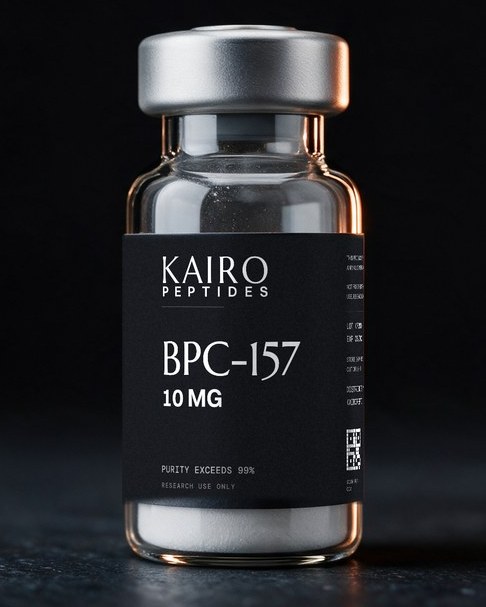
BPC-157
10MGThe one people take when something is not healing fast enough.
Studied for healing and tissue repair, gut and digestive health, blood flow, inflammation, joints and tendons, and nerve recovery. Every paper behind those is linked below.
$44.00
- PURITY EXCEEDS 99%
- COA WITH EVERY BATCH
- 3RD-PARTY VERIFIED
| Title | Range | Discount |
|---|---|---|
| Pack tier: BPC-157 (KAIRO-BPC-157-10MG) | 1 - 2 | $44.00 |
| Pack of 3+: 10% off | 3 - 4 | $39.60 |
| Pack of 5+: 15% off | 5 - 9 | $37.40 |
| Pack of 10+: 20% off | 10 + | $35.20 |
For laboratory research use only. Not for human or veterinary use, not for diagnostic or therapeutic use, and not for food or drug manufacture. No preparation or usage guidance is provided anywhere on this page.
Less inflammation. More blood flow.
That is what almost all of this research comes down to, and it is why BPC-157 keeps turning up in gut research, tendon research and wound research at the same time.
-
Blood flow and circulation
Preclinical strong Convergent results from more than one independent laboratory across more than one experimental system. Still preclinical: 'strong' here never means clinical-grade evidence in people.Two independent laboratories, one in Taiwan and one in Xi'an, reported that BPC-157 increased the formation of new blood vessels across four different experimental systems. It is the only finding on this page we rate strong, and it is the reason the same compound shows up in gut, tendon and wound research at once.
Angiogenesis and VEGFR2 signaling Vasomotor tone and the Src-Caveolin-1-eNOS pathway
-
Healing and tissue repair
Preclinical moderate A well-described result with several independent outcome measures, but from a single laboratory or a single study design.In a rat burn model, researchers reported that wounds closed faster and that the new tissue was better built: more collagen, better organized, with more blood vessels running through it.
-
Gut and digestive health
Preclinical moderate A well-described result with several independent outcome measures, but from a single laboratory or a single study design.BPC-157 was first identified in gastric juice, and the gut is where the research runs deepest. Separate rat studies reported that surgically joined intestinal tissue closed and held pressure, and that a persistent fistula closed.
Intestinal anastomosis healing Colocutaneous fistula healing and dependence on the nitric-oxide system
-
Joints, tendons and soft tissue recovery
Preclinical moderate A well-described result with several independent outcome measures, but from a single laboratory or a single study design.In rat studies, BPC-157 has been reported to improve how a detached tendon reattaches to bone and regains its strength.
-
Inflammation
Preclinical moderate A well-described result with several independent outcome measures, but from a single laboratory or a single study design.The tendon and gut studies above also measured inflammation directly: both reported less immune-cell activity and less swelling in the tissue as it healed.
Tendon-to-bone healing after Achilles detachment Intestinal anastomosis healing
-
Nerve recovery
Preclinical moderate A well-described result with several independent outcome measures, but from a single laboratory or a single study design.In rats with a cut sciatic nerve, the fibers regrew thicker and denser, and the muscle they controlled started signaling again.
Every line above describes what was measured in a laboratory. None of it establishes what the compound would do in a person.
Frequently paired with
What shoppers usually add alongside this one
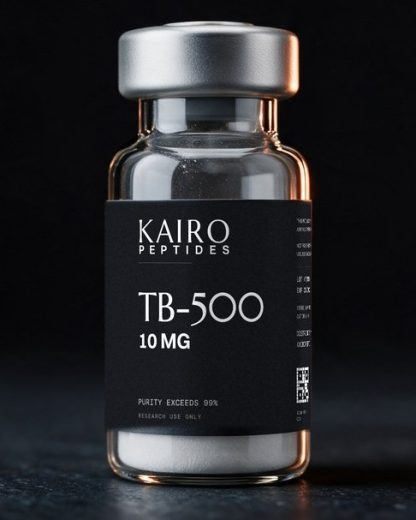
A versatile peptide, studied in research on cell movement and tissue repair.
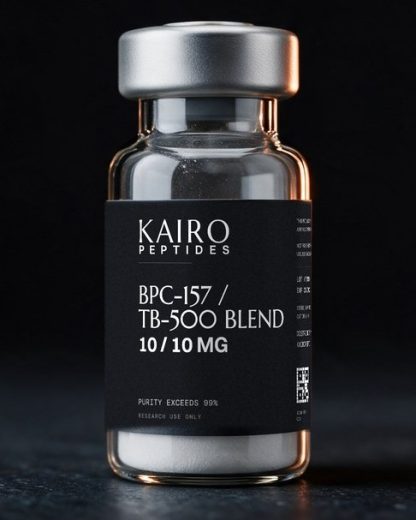
A recovery-focused blend, studied in research on tissue repair.
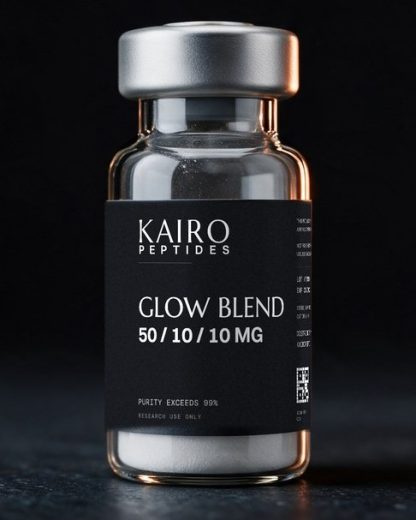
A multi-peptide skin blend, studied in research on skin and tissue.
What the research says about pairing these
TB-500 (a thymosin beta-4 fragment)
TB-500 is routinely sold and discussed alongside BPC-157 in tissue-repair research contexts. The rationale offered in that discourse is that the two have non-overlapping mechanisms: BPC-157 research implicates nitric-oxide signaling and VEGFR2-associated angiogenesis, while thymosin beta-4 research implicates actin-cytoskeleton remodeling and cell migration. That is a claim assembled from two separate literatures, not a finding about the pair.
A PubMed search run this session for BPC-157 together with TB-500 or thymosin beta-4 in title or abstract returned six records: five narrative reviews that discuss the two compounds separately within the same article, and one small uncontrolled retrospective human chart review whose reported outcomes are deliberately not restated here. No controlled study of the two in combination, in any model, was identified. The pairing is co-marketed, not jointly validated.
BPC-157 is best known for tissue repair.
Most of the published work looks at how the body rebuilds itself after damage: tendons reattaching to bone, skin closing after a burn, cut nerves regrowing, new blood vessels forming.
-
Studied for
New blood vessel growth
More new vessels formed, and blood flow came back faster to a rat leg whose blood supply had been cut off. Cells / chick membrane / rat 2 independent laboratories Preclinical strong Convergent results from more than one independent laboratory across more than one experimental system. Still preclinical: 'strong' here never means clinical-grade evidence in people. Open for the full finding and the paper it came from.In the literatureAngiogenesis and VEGFR2 signaling
One study investigated BPC-157 for pro-angiogenic activity across four systems: the chick chorioallantoic membrane assay, an endothelial tube-formation assay, a rat hind-limb ischemia model read by laser Doppler scanning, and cultured human vascular endothelial cells. Researchers reported increased vessel density in the membrane assay and in tube formation, accelerated recovery of blood flow in ischemic rat hind-limb muscle with histology showing more vessels and enhanced vascular VEGFR2 expression, and increased VEGFR2 mRNA and protein, but not VEGF-A, in the human endothelial cells. BPC-157 promoted VEGFR2 internalization, which was blocked in the presence of dynasore, an inhibitor of endocytosis; activation of the VEGFR2-Akt-eNOS pathway could also be suppressed by dynasore, and the increase in endothelial tube formation was likewise inhibited by dynasore. A second laboratory, independent of the first, reported convergent results in its own work: up-regulation of VEGF-a, enhanced proliferation and migration of human umbilical vein endothelial cells, and accelerated vascular tube formation in vitro.References 1, 2
Modelin vitro (cultured human vascular endothelial cells), chick chorioallantoic membrane (avian in vivo), and rodent (rat hind-limb ischemia)
-
Studied for
Tendon reattaching to bone
In rats with the Achilles cut away from the heel bone, the repair held more load before it failed and the animals walked better. Rat Preclinical moderate A well-described result with several independent outcome measures, but from a single laboratory or a single study design. Open for the full finding and the paper it came from.In the literatureTendon-to-bone healing after Achilles detachment
In rats whose Achilles tendon was sharply transected from the calcaneal bone, BPC-157 was compared with saline and with 6-alpha-methylprednisolone. Researchers reported improved healing measured functionally (increased Achilles functional index), biomechanically (increased load to failure, stiffness and Young elasticity modulus), macroscopically and microscopically, and by immunohistochemistry (better organization of collagen fibers, more collagen type I, advanced vascular appearance), and reported that BPC-157 substantially reduced the healing aggravation caused by the corticosteroid. A companion study in the same rat model, focused on the first four days after transection, reported an increased Achilles functional index at all time points alongside decreased myeloperoxidase activity, decreased histological inflammatory cell influx, and an increased vascular index.References 3, 4
Modelrodent (rat Achilles tendon-to-bone transection)
-
Studied for
Skin closing after a burn
In burn studies on rats, wounds closed faster and new tissue formed by day 18. Rat, topical / human cells Preclinical moderate A well-described result with several independent outcome measures, but from a single laboratory or a single study design. Open for the full finding and the paper it came from.In the literatureSkin wound healing in an alkali-burn model
In a rat alkali-burn skin model with topical application, researchers reported accelerated wound closure and, on histology at day 18 after wounding, better granulation tissue formation, reepithelialization, dermal remodeling and a higher extent of collagen deposition than the model control group, together with increased vascular endothelial growth factor expression in the wounded skin. In parallel in vitro work with human umbilical vein endothelial cells, the same study reported enhanced proliferation, promoted migration, up-regulated VEGF-a and accelerated vascular tube formation, and reported regulation of the phosphorylation level of ERK1/2 and its downstream targets c-Fos, c-Jun and Egr-1.References 2
Modelrodent (rat alkali-burn skin wound, topical application) plus in vitro (human umbilical vein endothelial cells)
-
Studied for
A cut intestine knitting back together
A cut and stitched rat intestine swelled less from day 1 and held more pressure before it leaked. Rat Preclinical moderate A well-described result with several independent outcome measures, but from a single laboratory or a single study design. Open for the full finding and the paper it came from.In the literatureIntestinal anastomosis healing
In rats with an ileoileal anastomosis, BPC-157 was investigated with macroscopic, histological and biomechanical assessment (volume infused, and pressure to leak induction) at intervals out to 14 days. Researchers reported that from day 1 edema was markedly attenuated and the number of granulocytes decreased, and that from days 4 or 5 necrosis decreased while granulation tissue, reticulin and collagen formation substantially increased, resulting in increased epithelization; anastomoses without leakage showed markedly higher volume and pressure values. A 2024 review from the same research program compiles anastomosis work of this type across several rat gastrointestinal models, including esophagogastric, colocolonic, jejunoileal and ileoileal anastomoses.References 5, 6
Modelrodent (rat ileoileal anastomosis), plus a narrative review of related rat anastomosis models
-
Studied for
Closing a channel between colon and skin
In rats with a channel running from the colon out to the skin, both the gut wall and the skin closed over. Rat Preclinical moderate A well-described result with several independent outcome measures, but from a single laboratory or a single study design. Open for the full finding and the paper it came from.In the literatureColocutaneous fistula healing and dependence on the nitric-oxide system
In a persistent rat colocutaneous fistula model, BPC-157 was given alone and together with the NOS inhibitor L-NAME, with the NO precursor L-arginine, and with their combinations, in order to test whether its effects depend on the nitric-oxide system. Researchers reported accelerated healing of the colonic and skin defects leading to closure of the fistula, assessed macroscopically, microscopically, biomechanically and functionally. On the nitric-oxide question specifically, the paper reports that L-NAME aggravated healing failure, that L-arginine was effective only when NO generation was blunted, and that all of the reported BPC-157 effects remained unchanged under L-NAME, under L-arginine, and under their co-administration.References 7
Modelrodent (rat colocutaneous fistula)
-
Studied for
A cut nerve growing back
In rats with a cut sciatic nerve, more fibers grew back and grew thicker, and the animals walked better. Rat Preclinical moderate A well-described result with several independent outcome measures, but from a single laboratory or a single study design. Open for the full finding and the paper it came from.In the literaturePeripheral nerve regeneration
In rats with a transected sciatic nerve, BPC-157 was investigated after application at the site of the anastomosis and, in a separate arm, directly into a tube after a 7 mm nerve segment was resected. Researchers reported faster axonal regeneration assessed histomorphometrically (improved presentation of neural fascicles, a homogeneous regeneration pattern, increased density and size of regenerative fibers, increased diameter of myelinated fibers, greater myelin sheath thickness, more myelinated fibers per area, and increased blood vessel presentation), electrophysiologically (increased motor action potentials), and functionally (improved sciatic functional index), with autotomy absent.References 8
Modelrodent (rat sciatic nerve transection)
-
Studied for
How blood vessels relax
Rings of rat aorta relaxed and widened more as more BPC-157 was added, and only with the vessel lining intact. Isolated tissue Preclinical moderate A well-described result with several independent outcome measures, but from a single laboratory or a single study design. Open for the full finding and the paper it came from.In the literatureVasomotor tone and the Src-Caveolin-1-eNOS pathway
Using isolated rat aorta, BPC-157 was investigated for effects on vascular tone. Researchers reported a concentration-dependent vasodilation effect that was attenuated in the absence of endothelium, which they read as an endothelium-dependent effect, although a slightly increased vasorelaxation in aorta without endothelium was noticed at high concentrations of BPC-157; there was no direct relaxation effect on a three-dimensional model made of vascular smooth muscle cells. The vasodilation was reported as nitric-oxide mediated, since adding L-NAME or hemoglobin inhibited it. BPC-157 enhanced the phosphorylation of Src, Caveolin-1 and eNOS, which the paper reports was abolished by pretreatment with a Src inhibitor, and co-immunoprecipitation showed reduced binding between Caveolin-1 and eNOS.References 9
Modelex vivo (isolated rat aortic rings) plus in vitro (vascular endothelial and smooth muscle cells)
-
Studied for
Tendon cells moving and surviving
Rat tendon cells in a dish grew out sooner, survived a hydrogen-peroxide stress better, and moved further. Cells and explants Preclinical preliminary A single study, an early mechanistic observation, or a result whose interpretation is the authors' own inference. Open for the full finding and the paper it came from.In the literatureTendon fibroblast outgrowth, survival and migration in culture
In cultured rat Achilles tendon fibroblasts and tendon explants, BPC-157 was investigated for effects on explant outgrowth, cell survival under hydrogen-peroxide oxidative stress, and cell migration and spreading. Researchers reported significantly accelerated outgrowth from explants, significantly increased cell survival under H2O2 stress, increases in migration on a transwell filter assay and in spreading, induction of F-actin formation, and increases in the phosphorylation of FAK and paxillin with total protein amounts unaltered. Cell proliferation was reported as not directly affected on the MTT assay. This study has no live-animal arm; the transected rat Achilles tendon appears only in its background as previously published work.References 10
Modelin vitro and ex vivo (cultured rat Achilles tendon fibroblasts and tendon explants)
1 strong / 6 moderate / 1 preliminaryRated by how many independent labs and how many kinds of experiment found the same thing.
20 years of published work.
-
2006
The first tendon study: an Achilles cut away from the heel bone in rats.References 3
-
2007
Rat intestine, cut and stitched, then tested for how much pressure the join held.References 5
-
2010
A cut sciatic nerve in rats, with a count of the fibers that grew back.References 8
-
2015
A rat burn study, with human cells run alongside it.References 2
-
2017 and 2020
Two papers from one Taiwanese group traced the blood vessel results to VEGFR2 signaling.References 1, 9
-
2025
A review counts 3 small human studies.References 11
-
2026
Every paper linked on this page was re-checked against PubMed and Crossref this session.
Most of this work is in animals. There are 3 small human studies and no large trials yet.References 11
What is in the vial.
| Compound | BPC-157 |
| Dosage form | Lyophilized powder |
| Purity | PURITY EXCEEDS 99% |
| Storage | STORE LYOPHILIZED. KEEP COLD AND OUT OF LIGHT. |
| Lot format | LOT + EXP printed per vial |
| Distribution | DISTRIBUTED BY KAIRO, KAIROPEPTIDES.COM |
A chain of 15 amino acids.
The full technical write-up 3 paragraphs, plus the fact row
BPC-157 is a synthetic peptide: a chain of 15 amino acids whose sequence corresponds to part of a protein found in human gastric juice. It is built in a laboratory rather than extracted from tissue, which is part of why it turns up so often as a tool compound in tissue-repair research: the same sequence can be made again and again to a known purity. In the literature it also appears under the development codes PL-10, PLD-116 and PL-14736.
Nearly all of the published work on BPC-157 is preclinical. It has been studied in cultured cells, in isolated tissue such as tendon explants and aortic rings, and in rat models, as a way to investigate tissue repair, blood-vessel formation, gastrointestinal healing and peripheral-nerve biology. The originating laboratory's own papers describe the compound as having entered company-sponsored trials under those development codes, but no report of such a trial was located in this verification pass, and PubMed indexes no BPC-157 record at all under the publication types 'clinical trial' or 'randomized controlled trial'. A 2025 peer-reviewed narrative review counts only three published human studies of any kind and characterizes the compound as investigational. It is not an approved drug in the United States or anywhere else.
Two regulatory facts, both checked against the primary documents on July 27, 2026. The World Anti-Doping Agency's 2022 Prohibited List, in effect from January 1, 2022, names BPC-157 explicitly as an example under S0 Non-Approved Substances, prohibited at all times, in and out of competition; the 2021 List did not name it. Separately, the FDA lists BPC-157 among bulk drug substances that may present significant safety risks in compounding, stating that compounded drugs containing it 'may pose risk for immunogenicity for certain routes of administration and may have complexities with regard to peptide-related impurities and active pharmaceutical ingredient (API) characterization'
, and that the agency 'lacks sufficient information to know whether the drug would cause harm when administered to humans'
. On that same FDA listing, BPC-157 appears among substances previously in category 2 of the interim compounding policies whose nominations were later withdrawn by the nominators. Everything described below is what researchers observed in laboratory systems. None of it is a statement about effects in a person, and no preparation or usage guidance is given anywhere on this page.References 11, 12, 13
- Length
- 15 amino acids (a pentadecapeptide)
- Proline content
- 4 of 15 residues (26.7%)
- Also known as
- PL-10, PLD-116, PL-14736, Bepecin
- Status
- Not an approved drug in the United States or anywhere else
Sold as a laboratory research material.
Molecular identity
Sequence, formula and registry numbers 15 residues, both salt forms
- G Gly
- E Glu
- P Pro
- P Pro
- P Pro
- G Gly
- K Lys
- P Pro
- A Ala
- D Asp
- D Asp
- A Ala
- G Gly
- L Leu
- V Val
15 residues. The 4 prolines carry a filled node.
- Formula
- Free base C62H98N16O22 Acetate C64H102N16O24
- Molar mass
- Free base 1419.5 g/mol Acetate 1479.6 g/mol
- CAS
- Free base 137525-51-0 Acetate 216441-37-1 and 1628202-19-6(both are listed as synonyms on the same PubChem record, so either may legitimately be encountered for the acetate form)
Which salt form any given lot is supplied as is a supplier-specific fact and is not asserted here.References 14, 15
Once it is mixed, it goes in the fridge.
Water is what ages a peptide, so the rules change the moment you add it.
The longer version 4 rows
- Once it is mixed
- Keep it in the refrigerator, 36 to 46 F (2 to 8 C). A normal fridge shelf works: not the freezer, not the door. Mixed with bacteriostatic water, the standard window is up to 28 days, the same limit a preserved multi-dose vial gets anywhere else. Sterile water has no preservative in it, so a vial mixed with that is single use. Do not freeze a mixed vial.
- Before you mix it
- The dry powder ships and keeps at room temperature, 68 to 72 F, with no cold pack. It does not need one. Room temperature is fine for weeks. The fridge holds it longer. The freezer at -4 F (-20 C) is where freeze-dried peptides sit for years.
- Small habits
- Let a cold vial come up to room temperature before you open it, because cold glass pulls water out of the air and water is what shortens its life. Keep it out of direct sun.
- The chemistry, if you want it
- BPC-157 is missing the amino acids that make most peptides fragile: no methionine, no cysteine, no tryptophan, no asparagine, no glutamine, so the usual oxidation and deamidation routes are not open to it. What is left is a bond between 2 aspartic acids that breaks by reacting with water. That is the whole reason the powder is easy and the mixed vial is what you look after.
Every paper this page is built on.
Click any journal to open the paper.
- J Mol Med (Berl)
- Drug Des Devel Ther
- J Orthop Res
- Inflamm Res
- Surg Today
- Pharmaceuticals (Basel)
- J Pharmacol Sci
- Regul Pept
- Sci Rep
- J Appl Physiol (1985)
- Curr Rev Musculoskelet Med
The full list 15 references, each linked
-
1
Hsieh MJ, Liu HT, Wang CN, Huang HY, Lin Y, Ko YS, Wang JS, Chang VH, Pang JS. Therapeutic potential of pro-angiogenic BPC157 is associated with VEGFR2 activation and up-regulation. J Mol Med (Berl). 2017;95(3):323-333.
-
2
Huang T, Zhang K, Sun L, Xue X, Zhang C, Shu Z, Mu N, Gu J, Zhang W, Wang Y, Zhang Y, Zhang W. Body protective compound-157 enhances alkali-burn wound healing in vivo and promotes proliferation, migration, and angiogenesis in vitro. Drug Des Devel Ther. 2015;9:2485-2499.
-
3
Krivic A, Anic T, Seiwerth S, Huljev D, Sikiric P. Achilles detachment in rat and stable gastric pentadecapeptide BPC 157: promoted tendon-to-bone healing and opposed corticosteroid aggravation. J Orthop Res. 2006;24(5):982-989.
-
4
Krivic A, Majerovic M, Jelic I, Seiwerth S, Sikiric P. Modulation of early functional recovery of Achilles tendon to bone unit after transection by BPC 157 and methylprednisolone. Inflamm Res. 2008;57(5):205-210.
-
5
Vuksic T, Zoricic I, Brcic L, Sever M, Klicek R, Radic B, Cesarec V, Berkopic L, Keller N, Blagaic AB, Kokic N, Jelic I, Geber J, Anic T, Seiwerth S, Sikiric P. Stable gastric pentadecapeptide BPC 157 in trials for inflammatory bowel disease (PL-10, PLD-116, PL14736, Pliva, Croatia) heals ileoileal anastomosis in the rat. Surg Today. 2007;37(9):768-777.
-
6
Bajramagic S, Sever M, Rasic F, Staresinic M, Skrtic A, Beketic Oreskovic L, et al. Stable gastric pentadecapeptide BPC 157 and intestinal anastomoses therapy in rats: a review. Pharmaceuticals (Basel). 2024;17(8):1081.
-
7
Klicek R, Sever M, Radic B, Drmic D, Kocman I, Zoricic I, Vuksic T, et al. Pentadecapeptide BPC 157, in clinical trials as a therapy for inflammatory bowel disease (PL14736), is effective in the healing of colocutaneous fistulas in rats: role of the nitric oxide-system. J Pharmacol Sci. 2008;108(1):7-17.
-
8
Gjurasin M, Miklic P, Zupancic B, Perovic D, Zarkovic K, Brcic L, Kolenc D, Radic B, Seiwerth S, Sikiric P. Peptide therapy with pentadecapeptide BPC 157 in traumatic nerve injury. Regul Pept. 2010;160(1-3):33-41.
-
9
Hsieh MJ, Lee CH, Chueh HY, Chang GJ, Huang HY, Lin Y, Pang JS. Modulatory effects of BPC 157 on vasomotor tone and the activation of Src-Caveolin-1-endothelial nitric oxide synthase pathway. Sci Rep. 2020;10(1):17078.
PubMed 33051481 doi:10.1038/s41598-020-74022-y Free full text
-
10
Chang CH, Tsai WC, Lin MS, Hsu YH, Pang JH. The promoting effect of pentadecapeptide BPC 157 on tendon healing involves tendon outgrowth, cell survival, and cell migration. J Appl Physiol (1985). 2011;110(3):774-780.
-
11
McGuire FP, Martinez R, Lenz A, Skinner L, Cushman DM. Regeneration or risk? A narrative review of BPC-157 for musculoskeletal healing. Curr Rev Musculoskelet Med. 2025;18(12):611-619.
PubMed 40789979 doi:10.1007/s12178-025-09990-7 Free full text
-
12
World Anti-Doping Agency. World Anti-Doping Code International Standard: Prohibited List 2022. In effect 1 January 2022. S0 Non-Approved Substances, page 4: 'This class covers many different substances including but not limited to BPC-157.'
-
13
U.S. Food and Drug Administration. Certain Bulk Drug Substances for Use in Compounding that May Present Significant Safety Risks. BPC-157 entry, table of bulk drug substances nominated but withdrawn. Retrieved July 27, 2026.
-
14
PubChem Compound Summary for CID 9941957, BPC-157 (free base). National Center for Biotechnology Information. Retrieved July 27, 2026.
-
15
PubChem Compound Summary for CID 155977614, BPC-157 acetate. National Center for Biotechnology Information. Retrieved July 27, 2026.
15 sources: 11 peer-reviewed papers and 4 primary documents.
Sources re-verified July 27, 2026
THIS PRODUCT IS NOT FOR HUMAN OR ANIMAL CONSUMPTION OF ANY KIND.
NOT FOR THERAPEUTIC OR DIAGNOSTIC USE. RESEARCH USE ONLY.
A cellular coenzyme, studied in research on energy metabolism and cellular aging.
An investigational peptide, studied in research on metabolism.
A steady peptide, studied in research on growth hormone release.