
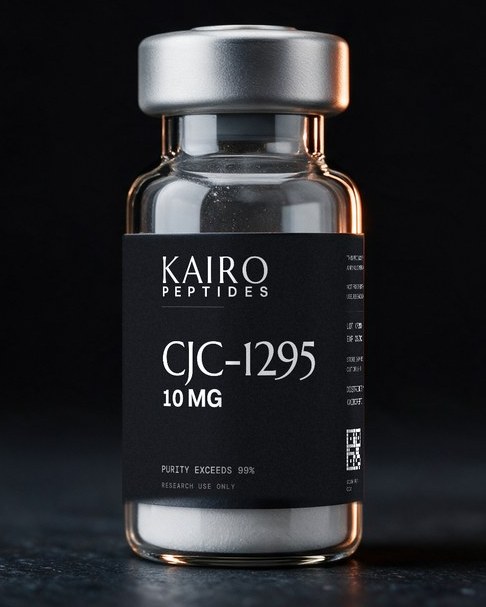
CJC-1295 (no DAC)
10MGStudied for growth hormone release, the body's natural pulse rhythm, IGF-1, and resistance to breakdown. Most of that research used the DAC version, a different molecule that shares this name, and every paper below names which one it tested.
$70.00
- PURITY EXCEEDS 99%
- COA WITH EVERY BATCH
- 3RD-PARTY VERIFIED
| Title | Range | Discount |
|---|---|---|
| Pack tier: CJC-1295 (KAIRO-CJC-1295-10MG) | 1 - 2 | $70.00 |
| Pack of 3+: 10% off | 3 - 4 | $63.00 |
| Pack of 5+: 15% off | 5 - 9 | $59.50 |
| Pack of 10+: 20% off | 10 + | $56.00 |
For laboratory research use only. Not for human or veterinary use, not for diagnostic or therapeutic use, and not for food or drug manufacture. No preparation or usage guidance is provided anywhere on this page.
It does not add growth hormone. It signals for it.
CJC-1295 is studied for turning on the body's own growth hormone release while leaving its natural burst rhythm intact, and every number below names the molecule it was measured on.
-
Growth hormone release
Preclinical moderate A well-described result with several independent outcome measures, but from a single laboratory or a single study design.CJC-1295 is studied for switching on the pituitary's own growth hormone release, work done in cultured pituitary cells and in rats using the longer-lasting DAC version of this molecule.
GHRH-receptor activation and acute GH release (the paper that named CJC-1295) GHRH-receptor dependence tested in a GHRH-deficient animal model (DAC form)
-
Pulsatile release and the body's natural rhythm
Preclinical moderate A well-described result with several independent outcome measures, but from a single laboratory or a single study design.CJC-1295 is studied for lifting growth hormone without flattening the body's overnight burst rhythm, measured in healthy men sampled every 20 minutes through the night on the longer-lasting DAC version.
Whether continuous GHRH-receptor stimulation flattens natural GH pulsatility (DAC form) The unmodified parent fragment GHRH(1-29) in older men: GH measures rose, IGF-I did not
-
DAC versus no DAC
Preclinical moderate A well-described result with several independent outcome measures, but from a single laboratory or a single study design.CJC-1295 without DAC is a different molecule from the longer-lasting DAC version that carries the famous human numbers, and anti-doping laboratories run the 2 as separate compounds with separate detection methods.
In vitro metabolism of GHRH analogs, and independent confirmation that the DAC and no-DAC forms are distinct analytes Equine anti-doping detection methods for CJC-1295 (the albumin-binding DAC form)
-
IGF-1 and the growth hormone axis
Preclinical moderate A well-described result with several independent outcome measures, but from a single laboratory or a single study design.CJC-1295 is studied for moving IGF-1, the marker that sits downstream of growth hormone, and the evidence splits: the DAC version raised it 1.5- to 3-fold for 9 to 11 days in healthy adults, while the unmodified fragment left it flat in older men over 6 weeks.
Sustained GH and IGF-I response in humans (DAC-conjugated form, NOT this compound) The unmodified parent fragment GHRH(1-29) in older men: GH measures rose, IGF-I did not
-
Resistance to breakdown
Preclinical preliminary A single study, an early mechanistic observation, or a result whose interpretation is the authors' own inference.CJC-1295 carries 4 changes to the natural sequence, and test-tube plasma work shows why: half of the unmodified hormone was gone in 13 minutes, and a mirror-image amino acid at the cut site prevented the cut entirely.
Why the position-2 substitution exists: DPP-IV is the enzyme that cleaves GHRH Quantified in vitro plasma stability of the unmodified parent fragment and substituted analogs
Every line above describes what was measured in a laboratory. None of it establishes what the compound would do in a person.
Frequently paired with
What shoppers usually add alongside this one
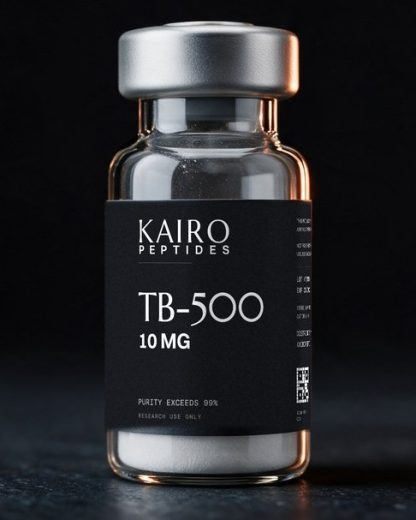
A versatile peptide, studied in research on cell movement and tissue repair.
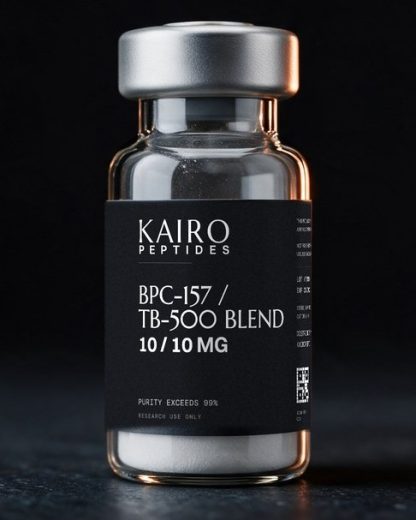
A recovery-focused blend, studied in research on tissue repair.
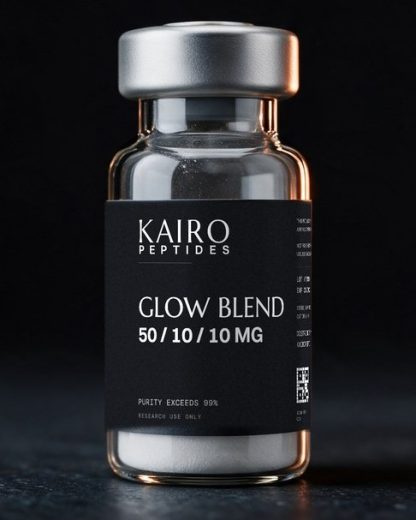
A multi-peptide skin blend, studied in research on skin and tissue.
What the research says about pairing these
GHRP-6
The single best-sourced pairing on this list, and the only one with direct human combination data. The rationale offered in the market is that a GHRH-receptor agonist and a ghrelin-receptor peptide push 2 different switches on the same cell, and here that rationale has a published basis rather than only a mechanism story.
In 18 normal men, submaximal intravenous GHRP-6 given together with GHRH-(1-44)-NH2 stimulated growth-hormone release synergistically rather than additively, which the authors attributed to the 2 agents acting through independent mechanisms. The reverse dependency was shown later: in 9 healthy men a GHRH antagonist eliminated most of the growth-hormone response to a GHRP-6 bolus, indicating the body's own GHRH is required for most of that response. Precision note: the human synergy data used native GHRH-(1-44)-NH2, not this modified GRF(1-29) analog, and tested GHRP-6 specifically, so the synergy is documented at the receptor-class level in both directions and not for this exact pair of molecules. No fold-multiple is carried here; the verified result is qualitative, more than additive.
GHRP-2 (pralmorelin) and hexarelin
Listed separately from GHRP-6 on purpose. Both act at the same ghrelin/GHS receptor as GHRP-6, so the 2-independent-pathway rationale applies at the class level.
Neither compound was tested in the human GHRH combination studies cited above, and no study of either in combination with modified GRF(1-29) was located. Class-level mechanism only.
Ipamorelin
No published study investigates ipamorelin in combination with modified GRF(1-29). Stated first so it cannot be lost to truncation. This specific pair is co-marketed far more often than it is studied, and the blended SKU is one of the most widely sold products in this category.
Ipamorelin's own pharmacology is well characterized and belongs to ipamorelin alone. It is a pentapeptide (Aib-His-D-2-Nal-D-Phe-Lys-NH2) reported to release growth hormone with potency and efficacy similar to GHRP-6 in cultured rat pituitary cells, in anaesthetized rats and in conscious swine. Selectivity was studied in swine, where none of the secretagogues tested altered FSH, LH, prolactin or TSH, and where GHRP-6 and GHRP-2 raised ACTH and cortisol but ipamorelin did not, an absence the authors state was evident even at exposures far above the level producing half-maximal GH release, leading them to describe ipamorelin as the first GHRP-receptor agonist with a selectivity for GH release similar to that displayed by GHRH. That paper sources ipamorelin alone, in swine and rats, not any combination and not in humans. The rationale for studying it alongside a GHRH-receptor agonist is the same 2-independent-pathway mechanism documented for GHRH plus GHRP-6.
MK-677 (ibutamoren)
An orally active non-peptide ghrelin-receptor agonist, so it occupies the same complementary-pathway position as a GHRP relative to a GHRH-receptor agonist, and it has substantial independent human literature of its own.
No study of MK-677 in combination with modified GRF(1-29) was located. This pairing rests on class-level mechanism and nothing more.
Tesamorelin or sermorelin (other GHRH analogs)
Flagged as a NON-synergy so it does not get written up as one. These frequently appear alongside this compound in co-marketed blends, but they act on the SAME receptor.
Combining 2 GHRH-receptor agonists is mechanistically redundant rather than complementary, and no study supports the combination.
BPC-157 and TB-500
Very commonly co-marketed with GH secretagogues in vendor bundles.
No published study investigates BPC-157 or TB-500 in combination with any GHRH analog. This is a marketing pairing, not a studied one, and it is framed here as compounds researchers commonly stock together, never as a documented interaction.
-
Studied for
Sustained GH and IGF-I response in humans (DAC-conjugated form, NOT this compound)
2 randomized, placebo-controlled, double-blind, ascending-level trials, running 28 and 49 days, were carried out in healthy adults aged 21 to 61. Participants received either the compound or placebo under the skin, as one of 4 ascending single amounts in the first study, and as 2 or 3 weekly or every-other-week amounts in the second. After a single exposure, average blood growth hormone rose 2- to 10-fold and stayed up for 6 days or more, and average blood IGF-I rose 1.5- to 3-fold for 9 to 11 days, both in proportion to the amount given. The estimated half-life of the compound was 5.8 to 8.1 days. After repeat exposures, average IGF-I stayed above starting levels for up to 28 days. No serious adverse reactions were reported. The scope fact that must never be separated from these numbers by layout: this work used the DAC-conjugated, albumin-binding CJC-1295, which is a different molecule from the no-DAC research peptide supplied here. No equivalent human trial of the no-DAC form was located. HUMAN human trial (2 randomized, placebo-controlled, double-blind ascending-level trials in healthy adults aged 21 to 61) Preclinical strong Convergent results from more than one independent laboratory, or a controlled human trial design. On this page 'strong' rates the quality of the study and never the relevance of its subject: both strong rows below were run on molecules other than the one supplied here, one on the albumin-binding DAC conjugate and one on native GHRH. Open for the full finding and the paper it came from.In the literatureSustained GH and IGF-I response in humans (DAC-conjugated form, NOT this compound)
2 randomized, placebo-controlled, double-blind, ascending-level trials, running 28 and 49 days, were carried out in healthy adults aged 21 to 61. Participants received either the compound or placebo under the skin, as one of 4 ascending single amounts in the first study, and as 2 or 3 weekly or every-other-week amounts in the second. After a single exposure, average blood growth hormone rose 2- to 10-fold and stayed up for 6 days or more, and average blood IGF-I rose 1.5- to 3-fold for 9 to 11 days, both in proportion to the amount given. The estimated half-life of the compound was 5.8 to 8.1 days. After repeat exposures, average IGF-I stayed above starting levels for up to 28 days. No serious adverse reactions were reported. The scope fact that must never be separated from these numbers by layout: this work used the DAC-conjugated, albumin-binding CJC-1295, which is a different molecule from the no-DAC research peptide supplied here. No equivalent human trial of the no-DAC form was located.References 1
Modelhuman trial (2 randomized, placebo-controlled, double-blind ascending-level trials in healthy adults aged 21 to 61)
-
Studied for
Two independent GH-releasing pathways: GHRH plus a GH-releasing peptide
In 18 normal men, a synthetic 6-amino-acid growth-hormone-releasing peptide (GHRP-6, sequence His-DTrp-Ala-Trp-DPhe-Lys-NH2) was given into a vein at 3 ascending levels and compared with the natural releasing hormone in its full-length form, GHRH-(1-44)-NH2. Average peak blood growth hormone was 1.2 micrograms per liter after placebo and rose across the 3 ascending levels to 7.6, then 16.5, then 68.7 micrograms per liter. When the 2 lower, deliberately submaximal levels of the peptide were given together with the natural releasing hormone, growth-hormone release was synergistic, meaning the combination produced more than the 2 agents added together. The authors read that as evidence the 2 agents work through independent mechanisms. This is the published mechanistic basis for the GHRH-analog-plus-GHRP research pairings listed in the co-marketed section below. Scope note: the human data used native GHRH-(1-44)-NH2, not this modified GRF(1-29) analog, and tested GHRP-6 specifically, so the synergy is documented at the receptor-class level and not for this exact pair of molecules. human study (18 normal men, intravenous ascending-level comparison) Preclinical strong Convergent results from more than one independent laboratory, or a controlled human trial design. On this page 'strong' rates the quality of the study and never the relevance of its subject: both strong rows below were run on molecules other than the one supplied here, one on the albumin-binding DAC conjugate and one on native GHRH. Open for the full finding and the paper it came from.In the literatureTwo independent GH-releasing pathways: GHRH plus a GH-releasing peptide
In 18 normal men, a synthetic 6-amino-acid growth-hormone-releasing peptide (GHRP-6, sequence His-DTrp-Ala-Trp-DPhe-Lys-NH2) was given into a vein at 3 ascending levels and compared with the natural releasing hormone in its full-length form, GHRH-(1-44)-NH2. Average peak blood growth hormone was 1.2 micrograms per liter after placebo and rose across the 3 ascending levels to 7.6, then 16.5, then 68.7 micrograms per liter. When the 2 lower, deliberately submaximal levels of the peptide were given together with the natural releasing hormone, growth-hormone release was synergistic, meaning the combination produced more than the 2 agents added together. The authors read that as evidence the 2 agents work through independent mechanisms. This is the published mechanistic basis for the GHRH-analog-plus-GHRP research pairings listed in the co-marketed section below. Scope note: the human data used native GHRH-(1-44)-NH2, not this modified GRF(1-29) analog, and tested GHRP-6 specifically, so the synergy is documented at the receptor-class level and not for this exact pair of molecules.References 2
Modelhuman study (18 normal men, intravenous ascending-level comparison)
-
Studied for
GHRH-receptor activation and acute GH release (the paper that named CJC-1295)
Chemists built 3 modified versions of the human GHRH front-end fragment and attached each to human serum albumin, a carrier protein found in blood. In cultured rat pituitary cells, all 3 attached versions resisted the enzyme dipeptidylpeptidase-IV better than the unmodified fragment and still triggered growth hormone release. When the modified versions were given under the skin of normal male Sprague-Dawley rats, a burst of growth hormone appeared in the blood. The best of the 3, which the authors named CJC-1295, produced a 4-fold larger total growth-hormone response over 2 hours than the unmodified fragment, and the molecule itself was still detectable in plasma beyond 72 hours. Scope fact, which must never be separated from this result by layout: this paper DEFINES CJC-1295 as the tetrasubstituted hGRF(1-29) carrying an N-epsilon-3-maleimidopropionamide lysine at the C terminus, meaning the albumin-binding DAC form. Every compound tested here carried that tail. The no-DAC research peptide was not tested as a separate arm, and the comparator for the 4-fold figure was unmodified hGRF(1-29), not the no-DAC analog. IN VITRO RODENT in vitro (cultured rat anterior pituitary cells) plus rodent (normal male Sprague-Dawley rats, under the skin) Preclinical moderate A well-described result with several independent outcome measures, but from a single laboratory or a single study design. Open for the full finding and the paper it came from.In the literatureGHRH-receptor activation and acute GH release (the paper that named CJC-1295)
Chemists built 3 modified versions of the human GHRH front-end fragment and attached each to human serum albumin, a carrier protein found in blood. In cultured rat pituitary cells, all 3 attached versions resisted the enzyme dipeptidylpeptidase-IV better than the unmodified fragment and still triggered growth hormone release. When the modified versions were given under the skin of normal male Sprague-Dawley rats, a burst of growth hormone appeared in the blood. The best of the 3, which the authors named CJC-1295, produced a 4-fold larger total growth-hormone response over 2 hours than the unmodified fragment, and the molecule itself was still detectable in plasma beyond 72 hours. Scope fact, which must never be separated from this result by layout: this paper DEFINES CJC-1295 as the tetrasubstituted hGRF(1-29) carrying an N-epsilon-3-maleimidopropionamide lysine at the C terminus, meaning the albumin-binding DAC form. Every compound tested here carried that tail. The no-DAC research peptide was not tested as a separate arm, and the comparator for the 4-fold figure was unmodified hGRF(1-29), not the no-DAC analog.References 3
Modelin vitro (cultured rat anterior pituitary cells) plus rodent (normal male Sprague-Dawley rats, under the skin)
-
Studied for
Whether continuous GHRH-receptor stimulation flattens natural GH pulsatility (DAC form)
Growth hormone is normally released in bursts through the night, and researchers wanted to know whether a long-acting version of the signal would flatten that rhythm into a constant drip. Healthy men aged 20 to 40 had blood drawn every 20 minutes across an overnight 12-hour window, once before and once a week after a single exposure at one of 2 ascending levels. Overall growth-hormone output went up, and the rhythm survived: the number and size of the secretory bursts were unchanged, while the baseline trough level between bursts rose markedly (7.5-fold), average growth hormone rose 46 percent and IGF-I rose 45 percent. No significant difference was seen between the 2 levels. Scope note: the compound studied was the DAC-conjugated form, so this is cited as pharmacology of the GHRH receptor, not as data on the no-DAC research peptide. human study (healthy men aged 20 to 40, overnight frequent-sampling protocol) Preclinical moderate A well-described result with several independent outcome measures, but from a single laboratory or a single study design. Open for the full finding and the paper it came from.In the literatureWhether continuous GHRH-receptor stimulation flattens natural GH pulsatility (DAC form)
Growth hormone is normally released in bursts through the night, and researchers wanted to know whether a long-acting version of the signal would flatten that rhythm into a constant drip. Healthy men aged 20 to 40 had blood drawn every 20 minutes across an overnight 12-hour window, once before and once a week after a single exposure at one of 2 ascending levels. Overall growth-hormone output went up, and the rhythm survived: the number and size of the secretory bursts were unchanged, while the baseline trough level between bursts rose markedly (7.5-fold), average growth hormone rose 46 percent and IGF-I rose 45 percent. No significant difference was seen between the 2 levels. Scope note: the compound studied was the DAC-conjugated form, so this is cited as pharmacology of the GHRH receptor, not as data on the no-DAC research peptide.References 4
Modelhuman study (healthy men aged 20 to 40, overnight frequent-sampling protocol)
-
Studied for
GHRH-receptor dependence tested in a GHRH-deficient animal model (DAC form)
Mice bred without the gene for growth-hormone-releasing hormone grow poorly, which makes them a clean test of whether a molecule works through the GHRH receptor. Starting at 1 week old, 3 groups of these mice received the same amount of compound for 5 weeks, given at 24-, 48- or 72-hour intervals. The mice on the 24-hour schedule ended up with normal body weight and length. The 48- and 72-hour groups grew heavier and longer than the placebo group but did not fully normalize. The exposed animals showed an increase in total pituitary RNA and in growth-hormone messenger RNA, which the authors read as multiplication of the pituitary cells that make growth hormone, supported by immunohistochemistry images. Because the effect requires an intact pituitary downstream, this supports action through the GHRH receptor. Scope note: the compound studied was the DAC-conjugated form. RODENT rodent (GHRH knockout mice, from 1 week of age for 5 weeks) Preclinical moderate A well-described result with several independent outcome measures, but from a single laboratory or a single study design. Open for the full finding and the paper it came from.In the literatureGHRH-receptor dependence tested in a GHRH-deficient animal model (DAC form)
Mice bred without the gene for growth-hormone-releasing hormone grow poorly, which makes them a clean test of whether a molecule works through the GHRH receptor. Starting at 1 week old, 3 groups of these mice received the same amount of compound for 5 weeks, given at 24-, 48- or 72-hour intervals. The mice on the 24-hour schedule ended up with normal body weight and length. The 48- and 72-hour groups grew heavier and longer than the placebo group but did not fully normalize. The exposed animals showed an increase in total pituitary RNA and in growth-hormone messenger RNA, which the authors read as multiplication of the pituitary cells that make growth hormone, supported by immunohistochemistry images. Because the effect requires an intact pituitary downstream, this supports action through the GHRH receptor. Scope note: the compound studied was the DAC-conjugated form.References 5
Modelrodent (GHRH knockout mice, from 1 week of age for 5 weeks)
-
Studied for
The unmodified parent fragment GHRH(1-29) in older men: GH measures rose, IGF-I did not
11 healthy, non-obese, walking-independent men aged 64 to 76, selected because their baseline IGF-I levels were low, received the unmodified GHRH 1-29 fragment under the skin nightly at home for 6 weeks, with blood sampled every 20 minutes overnight before and after. Average nighttime growth-hormone release, the area under the growth-hormone peak, and the peak height all rose significantly, while the number of bursts per night did not change. The downstream markers did not move: the study reported no change in IGF-I, IGF binding protein-3 or growth-hormone binding protein. This null result is included on purpose. It shows that pushing up nighttime growth-hormone measures with a GHRH fragment did not produce a measurable IGF-I change in this trial. Scope note: the compound studied was the unmodified 1-29 fragment (sermorelin), not the 4-substitution research analog. HUMAN human trial (11 healthy men aged 64 to 76, 6 weeks of nightly self-administration under the skin) Preclinical moderate A well-described result with several independent outcome measures, but from a single laboratory or a single study design. Open for the full finding and the paper it came from.In the literatureThe unmodified parent fragment GHRH(1-29) in older men: GH measures rose, IGF-I did not
11 healthy, non-obese, walking-independent men aged 64 to 76, selected because their baseline IGF-I levels were low, received the unmodified GHRH 1-29 fragment under the skin nightly at home for 6 weeks, with blood sampled every 20 minutes overnight before and after. Average nighttime growth-hormone release, the area under the growth-hormone peak, and the peak height all rose significantly, while the number of bursts per night did not change. The downstream markers did not move: the study reported no change in IGF-I, IGF binding protein-3 or growth-hormone binding protein. This null result is included on purpose. It shows that pushing up nighttime growth-hormone measures with a GHRH fragment did not produce a measurable IGF-I change in this trial. Scope note: the compound studied was the unmodified 1-29 fragment (sermorelin), not the 4-substitution research analog.References 6
Modelhuman trial (11 healthy men aged 64 to 76, 6 weeks of nightly self-administration under the skin)
-
Studied for
The reverse dependency: endogenous GHRH is required for a maximal GHRP-6 response
9 healthy men aged 20 to 30 were studied twice, receiving either saline or a blocker built to sit on the GHRH receptor without switching it on, followed 20 minutes later by an intravenous bolus of GHRP-6, with blood sampled every 10 minutes. With the blocker on board, most of the growth-hormone response to GHRP-6 disappeared: the maximal rise above starting level fell from 33.8 plus or minus 4.8 to 6.2 plus or minus 1.8 micrograms per liter, and the total response measured as area under the curve fell from 1701 plus or minus 278 to 376 plus or minus 113 micrograms per minute per liter. The authors concluded that the body's own GHRH is necessary for most of the growth-hormone response to GHRP-6 in humans, meaning the 2 systems lean on each other rather than simply running in parallel. Note on magnitude: the paper says most of the response was eliminated, not all of it, and this dossier does not describe the response as abolished. human study (9 healthy men, a GHRH antagonist followed by a GHRP-6 bolus) Preclinical moderate A well-described result with several independent outcome measures, but from a single laboratory or a single study design. Open for the full finding and the paper it came from.In the literatureThe reverse dependency: endogenous GHRH is required for a maximal GHRP-6 response
9 healthy men aged 20 to 30 were studied twice, receiving either saline or a blocker built to sit on the GHRH receptor without switching it on, followed 20 minutes later by an intravenous bolus of GHRP-6, with blood sampled every 10 minutes. With the blocker on board, most of the growth-hormone response to GHRP-6 disappeared: the maximal rise above starting level fell from 33.8 plus or minus 4.8 to 6.2 plus or minus 1.8 micrograms per liter, and the total response measured as area under the curve fell from 1701 plus or minus 278 to 376 plus or minus 113 micrograms per minute per liter. The authors concluded that the body's own GHRH is necessary for most of the growth-hormone response to GHRP-6 in humans, meaning the 2 systems lean on each other rather than simply running in parallel. Note on magnitude: the paper says most of the response was eliminated, not all of it, and this dossier does not describe the response as abolished.References 7
Modelhuman study (9 healthy men, a GHRH antagonist followed by a GHRP-6 bolus)
-
Studied for
Analytical chemistry: identifying GHRH analogs in human plasma
Anti-doping chemists built and validated a method to pull GHRH-type molecules out of human plasma using an antibody, then identify them by high-resolution tandem mass spectrometry. The method targeted 4 compounds, named in the paper as sermorelin, CJC-1293, CJC-1295 and tesamorelin, plus 2 breakdown products of sermorelin and CJC-1293. Reported method performance was a lower limit of detection below 50 picograms per milliliter, imprecision under 20 percent, and analyte recovery of 19 to 37 percent. The stability and breakdown of the compounds were examined using both test-tube and live-animal approaches, with blood collected from rats after intravenous administration; all intact substances were still detectable at least 4 hours later, though no expected breakdown product was confirmed in the rodent samples. This is method-development work, not a biological finding. RODENT analytical method development and validation (human plasma), plus a rodent (rat) breakdown arm Preclinical moderate A well-described result with several independent outcome measures, but from a single laboratory or a single study design. Open for the full finding and the paper it came from.In the literatureAnalytical chemistry: identifying GHRH analogs in human plasma
Anti-doping chemists built and validated a method to pull GHRH-type molecules out of human plasma using an antibody, then identify them by high-resolution tandem mass spectrometry. The method targeted 4 compounds, named in the paper as sermorelin, CJC-1293, CJC-1295 and tesamorelin, plus 2 breakdown products of sermorelin and CJC-1293. Reported method performance was a lower limit of detection below 50 picograms per milliliter, imprecision under 20 percent, and analyte recovery of 19 to 37 percent. The stability and breakdown of the compounds were examined using both test-tube and live-animal approaches, with blood collected from rats after intravenous administration; all intact substances were still detectable at least 4 hours later, though no expected breakdown product was confirmed in the rodent samples. This is method-development work, not a biological finding.References 8
Modelanalytical method development and validation (human plasma), plus a rodent (rat) breakdown arm
-
Studied for
In vitro metabolism of GHRH analogs, and independent confirmation that the DAC and no-DAC forms are distinct analytes
An anti-doping laboratory studied how 4 of the larger synthetic GHRH-type molecules break down, working in fortified human urine. The 4 are listed by the authors as sermorelin, tesamorelin, CJC-1295, and CJC-1295 with drug affinity complex. 19 major breakdown products were identified, then synthesized and characterized in house so they could be used as reference standards, and a liquid chromatography tandem mass spectrometry method was built around them, reaching detection limits generally at or below the 1 nanogram per milliliter performance limit required by the World Anti-Doping Agency. Beyond the analytical result, this paper is cited here for a labeling reason: an independent laboratory handles CJC-1295 and CJC-1295 with DAC as 2 separate chemical entities needing separate breakdown-product panels, which corroborates the naming distinction this dossier draws throughout. It is also the only entry on this page whose work is done on the no-DAC molecule as a distinct chemical entity, and it is analytical chemistry rather than biology. IN VITRO in vitro (fortified human urine) metabolism experiments plus analytical method development Preclinical moderate A well-described result with several independent outcome measures, but from a single laboratory or a single study design. Open for the full finding and the paper it came from.In the literatureIn vitro metabolism of GHRH analogs, and independent confirmation that the DAC and no-DAC forms are distinct analytes
An anti-doping laboratory studied how 4 of the larger synthetic GHRH-type molecules break down, working in fortified human urine. The 4 are listed by the authors as sermorelin, tesamorelin, CJC-1295, and CJC-1295 with drug affinity complex. 19 major breakdown products were identified, then synthesized and characterized in house so they could be used as reference standards, and a liquid chromatography tandem mass spectrometry method was built around them, reaching detection limits generally at or below the 1 nanogram per milliliter performance limit required by the World Anti-Doping Agency. Beyond the analytical result, this paper is cited here for a labeling reason: an independent laboratory handles CJC-1295 and CJC-1295 with DAC as 2 separate chemical entities needing separate breakdown-product panels, which corroborates the naming distinction this dossier draws throughout. It is also the only entry on this page whose work is done on the no-DAC molecule as a distinct chemical entity, and it is analytical chemistry rather than biology.References 9
Modelin vitro (fortified human urine) metabolism experiments plus analytical method development
-
Studied for
Equine anti-doping detection methods for CJC-1295 (the albumin-binding DAC form)
2 companion papers from the same group built the screening and confirmation methods used to catch the compound named CJC-1295 in racehorses. The screen is an immuno polymerase chain reaction assay that detected the compound bound to plasma protein down to 0.8 picograms per milliliter, with a practical screening threshold set at 50 picograms per milliliter because horses make their own GHRH. The confirmation method uses antibody capture, enzymatic digestion and LC-MS/MS, and identified the compound in horse plasma down to 180 picograms per milliliter. Included because analytical detectability is a verifiability fact about the molecule, not a claim about any biological effect. Scope note: both papers describe their target as a peptide carrying a reactive maleimidopropionic acid group that covalently links it to plasma proteins, one of them explicitly calling it a 30-amino-acid peptide. That is the albumin-binding DAC form, not the 29-residue no-DAC research peptide. analytical method development and validation (horse plasma, including samples from thoroughbred racehorses) Preclinical moderate A well-described result with several independent outcome measures, but from a single laboratory or a single study design. Open for the full finding and the paper it came from.In the literatureEquine anti-doping detection methods for CJC-1295 (the albumin-binding DAC form)
2 companion papers from the same group built the screening and confirmation methods used to catch the compound named CJC-1295 in racehorses. The screen is an immuno polymerase chain reaction assay that detected the compound bound to plasma protein down to 0.8 picograms per milliliter, with a practical screening threshold set at 50 picograms per milliliter because horses make their own GHRH. The confirmation method uses antibody capture, enzymatic digestion and LC-MS/MS, and identified the compound in horse plasma down to 180 picograms per milliliter. Included because analytical detectability is a verifiability fact about the molecule, not a claim about any biological effect. Scope note: both papers describe their target as a peptide carrying a reactive maleimidopropionic acid group that covalently links it to plasma proteins, one of them explicitly calling it a 30-amino-acid peptide. That is the albumin-binding DAC form, not the 29-residue no-DAC research peptide.References 10, 11
Modelanalytical method development and validation (horse plasma, including samples from thoroughbred racehorses)
-
Studied for
Why the position-2 substitution exists: DPP-IV is the enzyme that cleaves GHRH
Researchers wanted to know what actually destroys the body's own growth-hormone-releasing hormone once it enters the bloodstream. Incubating the hormone in human plasma, they found it is snipped at the bond between residues 2 and 3, producing a shortened fragment. That snipping was blocked by diprotin A, a competitive inhibitor of the enzyme dipeptidyl peptidase IV, which identifies DPP-IV as the enzyme responsible. Crucially for this research peptide, the paper also reported that swapping in a mirror-image (D) amino acid at either position 1 or position 2 prevented the cleavage entirely. A separate, slower trypsin-like plasma activity was described as a secondary degradation route. This is the published biochemical reason the D-Ala sits at position 2 in this molecule. IN VITRO in vitro (incubations of human plasma) Preclinical preliminary A single study, an early mechanistic observation, or a result whose interpretation is the authors' own inference. Open for the full finding and the paper it came from.In the literatureWhy the position-2 substitution exists: DPP-IV is the enzyme that cleaves GHRH
Researchers wanted to know what actually destroys the body's own growth-hormone-releasing hormone once it enters the bloodstream. Incubating the hormone in human plasma, they found it is snipped at the bond between residues 2 and 3, producing a shortened fragment. That snipping was blocked by diprotin A, a competitive inhibitor of the enzyme dipeptidyl peptidase IV, which identifies DPP-IV as the enzyme responsible. Crucially for this research peptide, the paper also reported that swapping in a mirror-image (D) amino acid at either position 1 or position 2 prevented the cleavage entirely. A separate, slower trypsin-like plasma activity was described as a secondary degradation route. This is the published biochemical reason the D-Ala sits at position 2 in this molecule.References 12
Modelin vitro (incubations of human plasma)
-
Studied for
Quantified in vitro plasma stability of the unmodified parent fragment and substituted analogs
The unmodified 1-29 fragment was incubated in pig plasma at body temperature, 98.6 F (37 C), and measured over time by HPLC. Half of it was gone in 13 minutes, and the main breakdown product was the fragment missing its first 2 amino acids, which pins the break to the bond between residues 2 and 3. Swapping glycine for alanine at position 15 stretched that to 17 minutes, a small gain. The paper also reported that removing the free amino group at the front end, or putting a mirror-image (D) amino acid at the second-to-last position from the front, completely prevented the break at the 2-3 bond in the straight-chain analogs. This independently corroborates, in a second species and by a different method, the cleavage site characterized in human plasma by Frohman 1989. Important: these are enzyme-driven stability numbers in a biological fluid. They say nothing about how long the material lasts in a vial. IN VITRO in vitro (incubations of pig plasma at 98.6 F / 37 C) Preclinical preliminary A single study, an early mechanistic observation, or a result whose interpretation is the authors' own inference. Open for the full finding and the paper it came from.In the literatureQuantified in vitro plasma stability of the unmodified parent fragment and substituted analogs
The unmodified 1-29 fragment was incubated in pig plasma at body temperature, 98.6 F (37 C), and measured over time by HPLC. Half of it was gone in 13 minutes, and the main breakdown product was the fragment missing its first 2 amino acids, which pins the break to the bond between residues 2 and 3. Swapping glycine for alanine at position 15 stretched that to 17 minutes, a small gain. The paper also reported that removing the free amino group at the front end, or putting a mirror-image (D) amino acid at the second-to-last position from the front, completely prevented the break at the 2-3 bond in the straight-chain analogs. This independently corroborates, in a second species and by a different method, the cleavage site characterized in human plasma by Frohman 1989. Important: these are enzyme-driven stability numbers in a biological fluid. They say nothing about how long the material lasts in a vial.References 13
Modelin vitro (incubations of pig plasma at 98.6 F / 37 C)
2 strong / 8 moderate / 2 preliminaryRated by how many independent labs and how many kinds of experiment found the same thing.
What is in the vial.
| Compound | CJC-1295 |
| Dosage form | Lyophilized powder |
| Purity | PURITY EXCEEDS 99% |
| Storage | STORE LYOPHILIZED. KEEP COLD AND OUT OF LIGHT. |
| Lot format | LOT + EXP printed per vial |
| Distribution | DISTRIBUTED BY KAIRO, KAIROPEPTIDES.COM |
A 29-residue GHRH analog.
The full technical write-up 3 paragraphs, plus the fact row
CJC-1295 is a synthetic research peptide: a 29-residue version of the working front end of the body's own growth-hormone-releasing hormone, with 4 positions swapped so the molecule resists the enzyme that cleaves the natural version within minutes. In catalogs and in the literature it also appears as tetrasubstituted human GRF(1-29) amide, Modified GRF (1-29), Mod GRF 1-29, and CJC-1295 without DAC. It belongs to the GHRH-analog class alongside sermorelin, which is the unmodified 1-29 fragment, and tesamorelin, and it is mechanistically distinct from the ghrelin-receptor secretagogues researchers study alongside it: ipamorelin, GHRP-2, GHRP-6 and MK-677.
One fact governs every number on this page. DAC is the Drug Affinity Complex, an N-epsilon-3-maleimidopropionamide lysine added at the C terminus that lets the molecule latch permanently onto albumin, a protein in blood. The compound named CJC-1295 in the original 2005 Endocrinology paper is defined there as 'a tetrasubstituted form of hGRF(1-29) with an added N epsilon-3-maleimidopropionamide derivative of lysine at the C terminus'
. That is the DAC form, and it is also the compound used in the well-known 2006 human trials. The material supplied here is the same 4-substitution 1-29 backbone with that albumin-binding tail removed. They are 2 different molecules sharing the same trade name, and the field handles them as such: a 2021 anti-doping study analyzed 'sermorelin, tesamorelin, CJC-1295, and CJC-1295 with drug affinity complex'
as 4 separate analytes requiring separate metabolite panels, and equine anti-doping papers describing CJC-1295 describe a 30-amino-acid peptide carrying a reactive maleimidopropionic acid group that covalently links it to plasma proteins, which is the DAC molecule and not the 29-residue one. Every research area below names which molecule was actually studied.
2 status facts, both checked against the primary documents. The World Anti-Doping Agency's 2026 Prohibited List, which states 'This List shall come into effect on 1 January 2026'
, names this class in section S2.2.4 under the banner PROHIBITED AT ALL TIMES (IN- AND OUT-OF-COMPETITION): 'growth hormone-releasing hormone (GHRH) and its analogues (e.g. CJC-1293, CJC-1295, sermorelin and tesamorelin)'
. Separately, the half-life of the no-DAC form is not established anywhere in the primary literature reviewed here, so this page states none. CJC-1295 is not an approved drug in the United States or anywhere else. Everything described below is what researchers observed in laboratory systems and in trials of the molecules named row by row. None of it is a statement about effects in a person, and no preparation or usage guidance is given anywhere on this page.References 3, 9, 11, 15
- Length
- 29 amino acids, supplied as the C-terminal amide
- Also known as
- Modified GRF (1-29), Mod GRF 1-29, CJC-1295 without DAC, tetrasubstituted human GRF(1-29) amide
- Status
- Not an approved drug in the United States or anywhere else
Sold as a laboratory research material.
Molecular identity
Sequence, formula and registry numbers
- Formula
- Free base C152H252N44O42
- Molar mass
- Free base 3367.9 g/mol
- CAS
- Free base Not asserted(2 different numbers circulate in this market, published by different sellers; PubChem CID 91976842 carries neither among its synonyms and no primary registry record could be retrieved for either, so this page prints none)
- PubChem CID
- Free base 91976842
4 substitutions relative to native human GHRH(1-29), established by direct alignment against the UniProt P01286 record whose mature segment reads YADAIFTNSYRKVLGQLSARKLLQDIMSR: position 2 Ala to D-Ala, a change of handedness rather than of the amino acid; position 8 Asn to Gln; position 15 Gly to Ala; position 27 Met to Leu. The D-Ala at position 2 is the change that blocks the dipeptidyl peptidase-IV cleavage site between residues 2 and 3. One disclosure about the source record, stated because it is messy: PubChem CID 91976842 is titled 'CJC1295 Without DAC', but its synonym list also carries 'CJC1295 With DAC', and its systematic synonym describes a lysinamide bearing an N6-maleimido group, which is DAC chemistry, while also omitting Leu17 from the chain. That record's NAME fields are unreliable and are not relied on here. Its FORMULA and MASS fields are, and both were reproduced independently. The half-life of the no-DAC form is UNKNOWN and is deliberately not stated anywhere on this page: no primary source for it was located, and the figures repeated on vendor pages carry no citation behind them. Which salt form any given lot is supplied as is a supplier-specific fact and is not asserted here.References 16, 17
Once it is mixed, it goes in the fridge.
Water is what ages a peptide, so the rules change the moment you add it.
The longer version 3 rows
- Before you mix it
- Supplied as a lyophilized (freeze-dried) powder. Standard laboratory practice for lyophilized research peptides is to hold the sealed vial frozen for long-term storage, commonly at or below -4 F (-20 C), kept dry and protected from light, and to avoid repeated freeze-thaw cycles, which degrade peptide material. Because cold glass draws moisture out of the air, the vial is allowed to reach room temperature before the seal is broken, so water does not condense onto the powder. That is general practice for this class of material, not a claim attributed to any supplier, brand or catalog record.
- Once it is mixed
- Refrigerate at 36 to 46 F (2 to 8 C), protect from light, minimize freeze-thaw cycles, and use sterile technique. Mixed with bacteriostatic water, the standard in-use window is up to 28 days. That 28 days is the sterility limit USP <797> gives a preserved multi-use vial, not a measured chemical stability window for this peptide, and it is never to be written as 'stable for 28 days'. Sterile water carries no preservative, so a vial mixed with it is single use. Do not freeze a mixed vial. The '28 days', '60 days' and '90 days' shelf-life figures circulating on vendor pages for this compound trace to blog posts rather than to stability data, and a compound-specific window should be published only from a seller's own certificate of analysis or stability testing, never inferred. Reconstitution volumes, concentrations, routes, schedules and every other preparation-for-administration detail are withheld: this material is supplied for laboratory research use only.
- In the literature
- No compound-specific stability property for the no-DAC form is documented in the peer-reviewed literature reviewed here, and no half-life for it is established. 2 adjacent numbers do exist and are quarantined so they cannot be misread as belonging to this molecule. The unmodified GRF(1-29)-NH2 parent degraded with a half-life of 13 minutes in pig plasma at 98.6 F (37 C) in a test tube, the primary fragment identified as GRF(3-29)-NH2 (Su CM, et al. Horm Metab Res. 1991;23(1):15-21, PMID 1826667). The DAC-conjugated CJC-1295 was estimated at 5.8 to 8.1 days in humans (Teichman SL, et al. J Clin Endocrinol Metab. 2006;91(3):799-805, PMID 16352683). Both are enzymatic or in-body figures measured in a biological fluid. Neither is vial, powder or solution storage stability, and neither belongs to the material supplied here. References 1, 13
Every paper this page is built on.
Click any journal to open the paper.
- J Clin Endocrinol Metab
- Endocrinology
- Am J Physiol Endocrinol Metab
- Metabolism
- Anal Bioanal Chem
- Drug Test Anal
- J Clin Invest
- Horm Metab Res
- Eur J Endocrinol
The full list 17 references, each linked
-
1
Teichman SL, Neale A, Lawrence B, Gagnon C, Castaigne JP, Frohman LA. Prolonged stimulation of growth hormone (GH) and insulin-like growth factor I secretion by CJC-1295, a long-acting analog of GH-releasing hormone, in healthy adults. J Clin Endocrinol Metab. 2006;91(3):799-805.
-
2
Bowers CY, Reynolds GA, Durham D, Barrera CM, Pezzoli SS, Thorner MO. Growth hormone (GH)-releasing peptide stimulates GH release in normal men and acts synergistically with GH-releasing hormone. J Clin Endocrinol Metab. 1990;70(4):975-982.
-
3
Jette L, Leger R, Thibaudeau K, Benquet C, Robitaille M, Pellerin I, Paradis V, van Wyk P, Pham K, Bridon DP. Human growth hormone-releasing factor (hGRF)1-29-albumin bioconjugates activate the GRF receptor on the anterior pituitary in rats: identification of CJC-1295 as a long-lasting GRF analog. Endocrinology. 2005;146(7):3052-3058.
-
4
Ionescu M, Frohman LA. Pulsatile secretion of growth hormone (GH) persists during continuous stimulation by CJC-1295, a long-acting GH-releasing hormone analog. J Clin Endocrinol Metab. 2006;91(12):4792-4797.
-
5
Alba M, Fintini D, Sagazio A, Lawrence B, Castaigne JP, Frohman LA, Salvatori R. Once-daily administration of CJC-1295, a long-acting growth hormone-releasing hormone (GHRH) analog, normalizes growth in the GHRH knockout mouse. Am J Physiol Endocrinol Metab. 2006;291(6):E1290-E1294.
-
6
Vittone J, Blackman MR, Busby-Whitehead J, Tsiao C, Stewart KJ, Tobin J, Stevens T, Bellantoni MF, Rogers MA, Baumann G, Roth J, Harman SM, Spencer RG. Effects of single nightly injections of growth hormone-releasing hormone (GHRH 1-29) in healthy elderly men. Metabolism. 1997;46(1):89-96.
-
7
Pandya N, DeMott-Friberg R, Bowers CY, Barkan AL, Jaffe CA. Growth hormone (GH)-releasing peptide-6 requires endogenous hypothalamic GH-releasing hormone for maximal GH stimulation. J Clin Endocrinol Metab. 1998;83(4):1186-1189.
-
8
Knoop A, Thomas A, Fichant E, Delahaut P, Schanzer W, Thevis M. Qualitative identification of growth hormone-releasing hormones in human plasma by means of immunoaffinity purification and LC-HRMS/MS. Anal Bioanal Chem. 2016;408(12):3145-3153.
-
9
Memdouh S, Gavrilovic I, Ng K, Cowan D, Abbate V. Advances in the detection of growth hormone releasing hormone synthetic analogs. Drug Test Anal. 2021;13(11-12):1871-1887.
-
10
Timms M, Ganio K, Steel R. A method for confirming CJC-1295 abuse in equine plasma samples by LC-MS/MS. Drug Test Anal. 2019;11(8):1248-1257.
-
11
Timms M, Ganio K, Forbes G, Bailey S, Steel R. An immuno polymerase chain reaction screen for the detection of CJC-1295 and other growth-hormone-releasing hormone analogs in equine plasma. Drug Test Anal. 2019;11(6):804-812.
-
12
Frohman LA, Downs TR, Heimer EP, Felix AM. Dipeptidylpeptidase IV and trypsin-like enzymatic degradation of human growth hormone-releasing hormone in plasma. J Clin Invest. 1989;83(5):1533-1540.
-
13
Su CM, Jensen LR, Heimer EP, Felix AM, Pan YC, Mowles TF. In vitro stability of growth hormone releasing factor (GRF) analogs in porcine plasma. Horm Metab Res. 1991;23(1):15-21.
-
14
Raun K, Hansen BS, Johansen NL, Thogersen H, Madsen K, Ankersen M, Andersen PH. Eur J Endocrinol. 1998;139(5):552-561. Title deliberately not printed: the research pass re-resolved this DOI via Crossref and read the abstract verbatim via PubMed efetch, but did not record the article title, and no title is asserted here that the verification did not capture.
-
15
World Anti-Doping Agency. World Anti-Doping Code International Standard: Prohibited List 2026. In effect 1 January 2026. Section S2.2.4, growth hormone releasing factors, under PROHIBITED AT ALL TIMES (IN- AND OUT-OF-COMPETITION). Primary PDF downloaded and text-extracted in the verification pass (2026list_en_final_clean_september_2025.pdf, SHA-256 f0b3fcb0dc48477868983eaddac08c132b5c079d941eaa8d40aa6ff9064ece5a).
-
16
UniProt P01286 (SLIB_HUMAN, Somatoliberin). FASTA record pulled live and aligned residue by residue against the sequence stated here. Retrieved July 28, 2026.
-
17
PubChem Compound Summary for CID 91976842, CJC-1295 without DAC. National Center for Biotechnology Information. Retrieved July 28, 2026. Formula and mass fields only; see molecular_facts for why this record's NAME fields are not relied on.
17 sources: 14 peer-reviewed papers and 3 primary documents.
Sources re-verified July 28, 2026
THIS PRODUCT IS NOT FOR HUMAN OR ANIMAL CONSUMPTION OF ANY KIND.
NOT FOR THERAPEUTIC OR DIAGNOSTIC USE. RESEARCH USE ONLY.
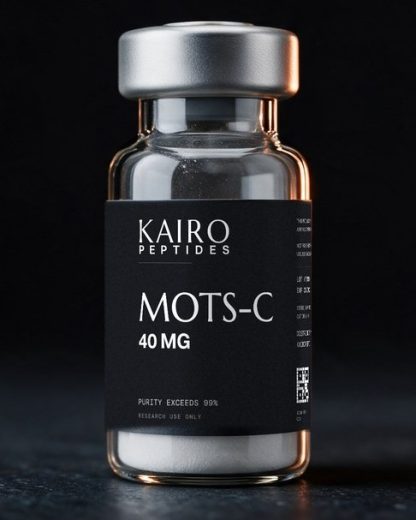
A mitochondrial peptide, studied in research on metabolism and exercise.
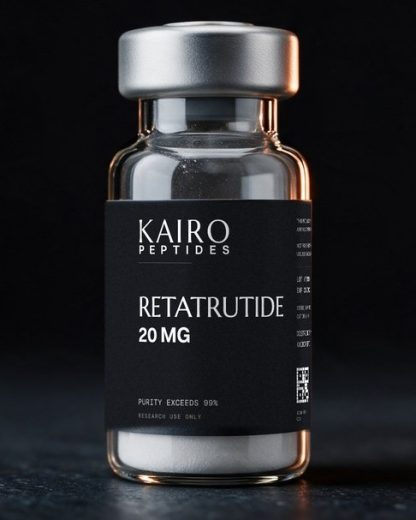
An investigational peptide, studied in research on metabolism.
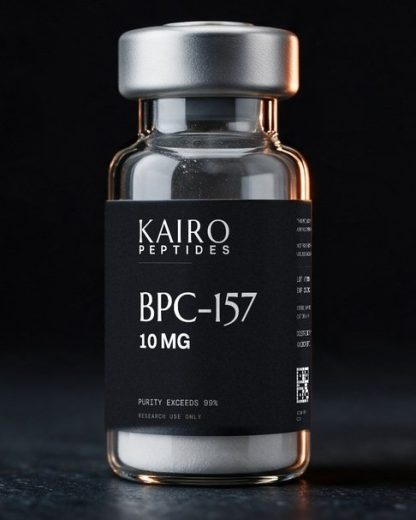
A resilient peptide, studied in research on tissue repair and the gut lining.