GHK-Cu
50MGStudied for wound closure, skin structure and collagen turnover, and calming inflammatory signals in skin cells. Every paper behind those is linked below.
$40.00
- PURITY EXCEEDS 99%
- COA WITH EVERY BATCH
- 3RD-PARTY VERIFIED
| Title | Range | Discount |
|---|---|---|
| Pack tier: GHK-Cu (KAIRO-GHK-CU-50MG) | 1 - 2 | $40.00 |
| Pack of 3+: 10% off | 3 - 4 | $36.00 |
| Pack of 5+: 15% off | 5 - 9 | $34.00 |
| Pack of 10+: 20% off | 10 + | $32.00 |
For laboratory research use only. Not for human or veterinary use, not for diagnostic or therapeutic use, and not for food or drug manufacture. No preparation or usage guidance is provided anywhere on this page.
Faster wound closure. More collagen turnover.
That is where this compound's research concentrates: the only randomized human trial in this whole dossier, sitting alongside a body of laboratory work on how skin cells rebuild and remodel their own collagen scaffolding.
-
Wound healing and skin closure
Preclinical strong Convergent results from more than one independent laboratory across more than one experimental system, or a single well-designed randomized human trial. Still the ceiling of what this page shows: 'strong' here never means the compound is an approved or recommended treatment.GHK-Cu is studied for wound closure. In a randomized, placebo-controlled human trial, a topical gel applied to diabetic neuropathic foot ulcers on top of standard wound care reached a median 98.5% area closure versus 60.8% for vehicle, roughly 3 times the closure rate, with fewer infections along the way. It has also been studied for wound repair across several animal species.
GHK-Cu: randomized human trial, topical gel, diabetic neuropathic ulcers GHK-Cu: wound-repair investigation across species
-
Skin structure and collagen turnover
Preclinical moderate A well-described result with several independent outcome measures, but from a single laboratory, a single research program, or a review's own synthesis of earlier work.GHK-Cu is studied for its effect on the skin's collagen scaffolding. An independent laboratory reported that it increases matrix-remodeling enzymes (MMP-2) and their inhibitors (TIMP-1, TIMP-2) in cultured skin cells, an effect traced specifically to the copper: it was reproduced by copper ions but not by the GHK peptide alone.
GHK-Cu: independent laboratory replication of matrix remodeling (MMP-2, TIMPs, proteoglycans) GHK-Cu: extracellular-matrix and collagen turnover, low-nanomolar in vitro
-
Basal skin cells dividing
Preclinical preliminary A single study, an early mechanistic observation, or a result whose interpretation is the authors' own inference.GHK-Cu and copper-free GHK are each separately reported to increase proliferation and proliferation-marker expression in basal keratinocytes, the skin's dividing surface layer, in cultured skin-equivalent models.
GHK-Cu and copper-free GHK: keratinocyte proliferation and epidermal stem-cell markers
-
Calming inflammatory signals in skin cells
Preclinical preliminary A single study, an early mechanistic observation, or a result whose interpretation is the authors' own inference.GHK-Cu is studied for inflammation control at the cell level. An independent laboratory reported that it, alongside copper-free GHK and copper itself, reduced a TNF-alpha-driven inflammatory signal (IL-6) in cultured human skin cells.
GHK-Cu: anti-inflammatory cytokine modulation in dermal fibroblasts
-
Antioxidant and oxidative-stress protection
Preclinical preliminary A single study, an early mechanistic observation, or a result whose interpretation is the authors' own inference.GHK is characterized in a review as an efficient antioxidant, able to quench toxins generated during lipid peroxidation and to reduce the level of free ionic copper, chemistry rather than a demonstrated outcome in tissue.
-
Gene expression and DNA repair
Preclinical preliminary A single study, an early mechanistic observation, or a result whose interpretation is the authors' own inference.GHK is reported to shift expression of DNA-repair genes, 47 stimulated and 5 suppressed, in a Connectivity Map database analysis rather than a measurement taken directly in tissue.
-
Lung and muscle protection under oxidative injury
Preclinical moderate A well-described result with several independent outcome measures, but from a single laboratory, a single research program, or a review's own synthesis of earlier work.GHK-Cu is studied in mouse models of lung and muscle injury from smoke, dust and chemical exposure. A cluster of recent laboratory reports, largely from one research program, found it reduced inflammatory and oxidative markers across pulmonary fibrosis, emphysema, silicosis, smoke-induced muscle dysfunction and, in one further model, colitis.
Every line above describes what was measured in a laboratory. None of it establishes what the compound would do in a person.
Frequently paired with
What shoppers usually add alongside this one
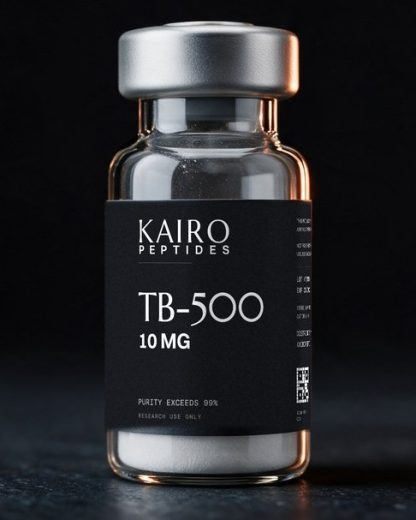
A versatile peptide, studied in research on cell movement and tissue repair.
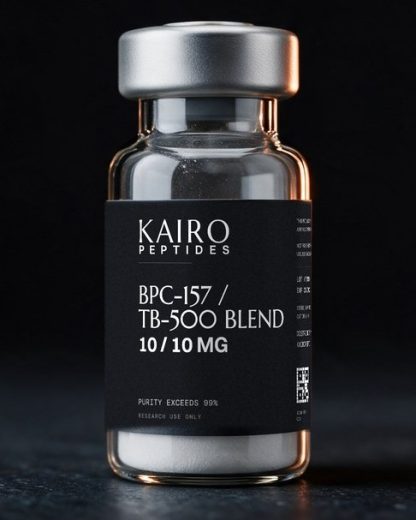
A recovery-focused blend, studied in research on tissue repair.
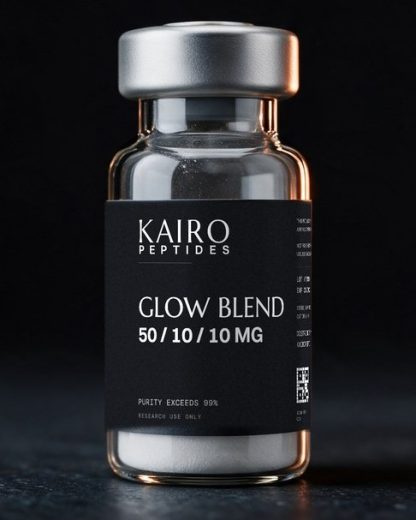
A multi-peptide skin blend, studied in research on skin and tissue.
What the research says about pairing these
BPC-157 + TB-500 (the GLOW Blend pairing)
GHK-Cu is co-marketed with BPC-157 and TB-500 as a 3-component blend elsewhere in this catalog, on the rationale that GHK-Cu's separately studied extracellular-matrix and collagen-turnover literature complements BPC-157's tissue-repair and angiogenesis literature and TB-500's cell-migration literature. That rationale is assembled from 3 separate literatures, not a finding about the group.
No controlled study testing GHK-Cu combined with either compound was located in PubMed, PMC or Europe PMC in this pass. Each component's research stands alone; the pairing is formulation logic, not a studied combination, and no claim of combined effect is made here.
-
Studied for
GHK-Cu: randomized human trial, topical gel, diabetic neuropathic ulcers
In a multicenter, randomized, evaluator-blinded, placebo-controlled clinical trial, a topical GHK-Cu gel was applied to diabetic neuropathic plantar ulcers on top of an aggressive standardized wound-care protocol: sharp debridement at study entry, daily application, pressure-relieving footwear and education on diabetes control. The published report gives a median area-percentage closure of 98.5% in the GHK-Cu gel group versus 60.8% in the vehicle group, a higher proportion of people healing 98% or better, and a closure rate described as roughly 3 times faster than vehicle plus standard care. In the larger ulcers at study entry, the enhancement was more pronounced: a median of 89.2% versus a negative value for vehicle, meaning the larger ulcers given only vehicle tended to grow rather than close over the study period. Ulcer infection was also less frequent with immediate post-debridement use. This is a single 1994 trial of a single named topical gel formulation on open diabetic plantar ulcers under an aggressive wound-care protocol; it describes that gel in that population and says nothing about any other format or about a lyophilized research compound outside that formulation. HUMAN randomized, evaluator-blinded, placebo-controlled human trial, topical gel formulation, diabetic neuropathic plantar ulcers Preclinical strong Convergent results from more than one independent laboratory across more than one experimental system, or a single well-designed randomized human trial. Still the ceiling of what this page shows: 'strong' here never means the compound is an approved or recommended treatment. Open for the full finding and the paper it came from.In the literatureGHK-Cu: randomized human trial, topical gel, diabetic neuropathic ulcers
In a multicenter, randomized, evaluator-blinded, placebo-controlled clinical trial, a topical GHK-Cu gel was applied to diabetic neuropathic plantar ulcers on top of an aggressive standardized wound-care protocol: sharp debridement at study entry, daily application, pressure-relieving footwear and education on diabetes control. The published report gives a median area-percentage closure of 98.5% in the GHK-Cu gel group versus 60.8% in the vehicle group, a higher proportion of people healing 98% or better, and a closure rate described as roughly 3 times faster than vehicle plus standard care. In the larger ulcers at study entry, the enhancement was more pronounced: a median of 89.2% versus a negative value for vehicle, meaning the larger ulcers given only vehicle tended to grow rather than close over the study period. Ulcer infection was also less frequent with immediate post-debridement use. This is a single 1994 trial of a single named topical gel formulation on open diabetic plantar ulcers under an aggressive wound-care protocol; it describes that gel in that population and says nothing about any other format or about a lyophilized research compound outside that formulation.References 1
Modelrandomized, evaluator-blinded, placebo-controlled human trial, topical gel formulation, diabetic neuropathic plantar ulcers
-
Studied for
GHK-Cu: wound-repair investigation across species
A 2015 peer-reviewed review reports that GHK-Cu accelerated wound healing and increased blood vessel formation and antioxidant enzyme levels in rabbits, induced systemic wound healing in rats, mice and pigs, and improved the healing of diabetic and ischemic wounds in rats while lowering an inflammatory marker (TNF-alpha) and stimulating collagen synthesis in that same rat tissue. These are animal findings, synthesized inside a review rather than independently re-resolved to their individual original reports in this pass; no human outcome is implied by any of them. rabbit, rat, mouse and pig models, as synthesized in a peer-reviewed review Preclinical moderate A well-described result with several independent outcome measures, but from a single laboratory, a single research program, or a review's own synthesis of earlier work. Open for the full finding and the paper it came from.In the literatureGHK-Cu: wound-repair investigation across species
A 2015 peer-reviewed review reports that GHK-Cu accelerated wound healing and increased blood vessel formation and antioxidant enzyme levels in rabbits, induced systemic wound healing in rats, mice and pigs, and improved the healing of diabetic and ischemic wounds in rats while lowering an inflammatory marker (TNF-alpha) and stimulating collagen synthesis in that same rat tissue. These are animal findings, synthesized inside a review rather than independently re-resolved to their individual original reports in this pass; no human outcome is implied by any of them.References 2
Modelrabbit, rat, mouse and pig models, as synthesized in a peer-reviewed review
-
Studied for
GHK-Cu: independent laboratory replication of matrix remodeling (MMP-2, TIMPs, proteoglycans)
A French laboratory independently studied GHK-Cu's effects on the extracellular matrix in 2 related reports. In cultured dermal fibroblasts, GHK-Cu increased matrix metalloproteinase-2 (MMP-2) protein and mRNA levels and increased secretion of the tissue inhibitors of metalloproteinases TIMP-1 and TIMP-2; the authors state that GHK-Cu is an activator of both connective-tissue production and of extracellular-matrix remodeling, not unidirectional collagen building. A key form-specific result from this same report: the MMP-2 increase was reproduced by copper ions but not by the tripeptide GHK alone, meaning this particular effect depended on the copper, not just the peptide backbone. In a second report from the same laboratory, repeated GHK-Cu use in a rat experimental wound-chamber model increased wound-tissue dry weight, total protein, type I collagen and glycosaminoglycan content, and increased chondroitin sulfate and dermatan sulfate accumulation over controls; it also raised decorin gene expression in both the wound chamber and in separate rat skin-cell cultures, while a second small proteoglycan, biglycan, responded differently in tissue than in culture, read by the authors as evidence that different proteoglycans are regulated differently across the wound-repair process rather than uniformly. Both reports test GHK-Cu, the copper complex, except for the copper-dependence comparison itself. IN VITRO cultured human and rat dermal fibroblasts (in vitro), plus a rat experimental wound-chamber model (in vivo) for the proteoglycan report Preclinical moderate A well-described result with several independent outcome measures, but from a single laboratory, a single research program, or a review's own synthesis of earlier work. Open for the full finding and the paper it came from.In the literatureGHK-Cu: independent laboratory replication of matrix remodeling (MMP-2, TIMPs, proteoglycans)
A French laboratory independently studied GHK-Cu's effects on the extracellular matrix in 2 related reports. In cultured dermal fibroblasts, GHK-Cu increased matrix metalloproteinase-2 (MMP-2) protein and mRNA levels and increased secretion of the tissue inhibitors of metalloproteinases TIMP-1 and TIMP-2; the authors state that GHK-Cu is an activator of both connective-tissue production and of extracellular-matrix remodeling, not unidirectional collagen building. A key form-specific result from this same report: the MMP-2 increase was reproduced by copper ions but not by the tripeptide GHK alone, meaning this particular effect depended on the copper, not just the peptide backbone. In a second report from the same laboratory, repeated GHK-Cu use in a rat experimental wound-chamber model increased wound-tissue dry weight, total protein, type I collagen and glycosaminoglycan content, and increased chondroitin sulfate and dermatan sulfate accumulation over controls; it also raised decorin gene expression in both the wound chamber and in separate rat skin-cell cultures, while a second small proteoglycan, biglycan, responded differently in tissue than in culture, read by the authors as evidence that different proteoglycans are regulated differently across the wound-repair process rather than uniformly. Both reports test GHK-Cu, the copper complex, except for the copper-dependence comparison itself.References 3, 4
Modelcultured human and rat dermal fibroblasts (in vitro), plus a rat experimental wound-chamber model (in vivo) for the proteoglycan report
-
Studied for
GHK-Cu: protective effects in animal models of oxidative and inflammatory organ injury (2020 to 2025)
A cluster of studies published from 2020 to 2025, independent of the 2015 review, tested systemically given GHK-Cu in mouse models of organ injury driven by oxidative stress and inflammation. In bleomycin-induced pulmonary fibrosis, GHK-Cu reduced inflammatory cytokines and collagen deposition in lung tissue and reduced markers of epithelial-to-mesenchymal transition. In cigarette-smoke-induced pulmonary emphysema, GHK-Cu lessened the emphysematous tissue changes, partially reversed an MMP-9/TIMP-1 imbalance in lung tissue, and reduced inflammatory cytokines in lung-lavage fluid, with a matching antioxidant effect shown separately in cultured human lung-lining cells. In a silicosis model, GHK-Cu was reported to reduce lung inflammation and fibrosis, linked by the authors to the antioxidant enzyme peroxiredoxin 6. In a cigarette-smoke skeletal-muscle-dysfunction model, GHK-Cu improved muscle function measures through a pathway the authors tie to the protein sirtuin 1; the same report includes a small human observational comparison, endogenous plasma GHK measured in 9 people with chronic lung disease against 11 age-matched healthy people, a correlational comparison of naturally occurring peptide levels, not a study of given GHK-Cu, and is reported here as exactly that. A related 2025 report from a partly overlapping author network extended a similar oxidative-stress and inflammation-reduction pattern to a mouse model of chemically induced colitis, reporting reduced disease-activity scores, preserved gut-lining cells, reduced inflammatory cytokines and improved gut-barrier protein expression. Four of these 5 reports share overlapping authorship centered on 2 institutions, so this is convergent evidence across several organ-injury models from a largely contiguous research program, not independent replication by unconnected laboratories. All animal work here used GHK-Cu, the copper complex; none of it is human interventional data. mouse models of bleomycin-induced pulmonary fibrosis, cigarette-smoke-induced emphysema, silica-induced silicosis, cigarette-smoke skeletal muscle dysfunction, and colitis, plus cultured human lung-epithelial cells and a small human observational plasma comparison Preclinical moderate A well-described result with several independent outcome measures, but from a single laboratory, a single research program, or a review's own synthesis of earlier work. Open for the full finding and the paper it came from.In the literatureGHK-Cu: protective effects in animal models of oxidative and inflammatory organ injury (2020 to 2025)
A cluster of studies published from 2020 to 2025, independent of the 2015 review, tested systemically given GHK-Cu in mouse models of organ injury driven by oxidative stress and inflammation. In bleomycin-induced pulmonary fibrosis, GHK-Cu reduced inflammatory cytokines and collagen deposition in lung tissue and reduced markers of epithelial-to-mesenchymal transition. In cigarette-smoke-induced pulmonary emphysema, GHK-Cu lessened the emphysematous tissue changes, partially reversed an MMP-9/TIMP-1 imbalance in lung tissue, and reduced inflammatory cytokines in lung-lavage fluid, with a matching antioxidant effect shown separately in cultured human lung-lining cells. In a silicosis model, GHK-Cu was reported to reduce lung inflammation and fibrosis, linked by the authors to the antioxidant enzyme peroxiredoxin 6. In a cigarette-smoke skeletal-muscle-dysfunction model, GHK-Cu improved muscle function measures through a pathway the authors tie to the protein sirtuin 1; the same report includes a small human observational comparison, endogenous plasma GHK measured in 9 people with chronic lung disease against 11 age-matched healthy people, a correlational comparison of naturally occurring peptide levels, not a study of given GHK-Cu, and is reported here as exactly that. A related 2025 report from a partly overlapping author network extended a similar oxidative-stress and inflammation-reduction pattern to a mouse model of chemically induced colitis, reporting reduced disease-activity scores, preserved gut-lining cells, reduced inflammatory cytokines and improved gut-barrier protein expression. Four of these 5 reports share overlapping authorship centered on 2 institutions, so this is convergent evidence across several organ-injury models from a largely contiguous research program, not independent replication by unconnected laboratories. All animal work here used GHK-Cu, the copper complex; none of it is human interventional data.References 5, 6, 7, 8, 9
Modelmouse models of bleomycin-induced pulmonary fibrosis, cigarette-smoke-induced emphysema, silica-induced silicosis, cigarette-smoke skeletal muscle dysfunction, and colitis, plus cultured human lung-epithelial cells and a small human observational plasma comparison
-
Studied for
GHK-Cu: extracellular-matrix and collagen turnover, low-nanomolar in vitro
In cell-culture work summarized in the 2015 review, GHK-Cu, at very low, non-toxic concentrations, stimulated both synthesis and breakdown of collagen and glycosaminoglycans, stimulated dermatan sulfate, chondroitin sulfate and the small proteoglycan decorin, and modulated the activity of metalloproteinases and their inhibitors TIMP-1 and TIMP-2. The review's own wording is that it affects 'both synthesis and breakdown,' meaning turnover and remodeling, not unidirectional collagen building. This entry is the review's own narrative summary of earlier work rather than a separately re-resolved original report. IN VITRO in vitro (cultured cells), as summarized in a peer-reviewed review Preclinical preliminary A single study, an early mechanistic observation, or a result whose interpretation is the authors' own inference. Open for the full finding and the paper it came from.In the literatureGHK-Cu: extracellular-matrix and collagen turnover, low-nanomolar in vitro
In cell-culture work summarized in the 2015 review, GHK-Cu, at very low, non-toxic concentrations, stimulated both synthesis and breakdown of collagen and glycosaminoglycans, stimulated dermatan sulfate, chondroitin sulfate and the small proteoglycan decorin, and modulated the activity of metalloproteinases and their inhibitors TIMP-1 and TIMP-2. The review's own wording is that it affects 'both synthesis and breakdown,' meaning turnover and remodeling, not unidirectional collagen building. This entry is the review's own narrative summary of earlier work rather than a separately re-resolved original report.References 2
Modelin vitro (cultured cells), as summarized in a peer-reviewed review
-
Studied for
GHK-Cu: anti-inflammatory cytokine modulation in dermal fibroblasts
An independent Polish laboratory reported that GHK-Cu, its copper-free precursor GHK, the related tripeptide Gly-Gly-His and its copper complex, and copper chloride itself all decreased TNF-alpha-driven secretion of the pro-inflammatory cytokine IL-6 in cultured normal human dermal fibroblasts, while a comparison ingredient had no effect. The authors propose, as their own interpretation, that these copper-peptides could be explored as topical alternatives to corticosteroids or non-steroidal anti-inflammatory drugs for skin surface use; that is the study authors' own framing of a possible future direction, not a demonstrated outcome, and no drug-replacement claim is made in this dossier. IN VITRO in vitro, cultured normal human dermal fibroblasts, IL-6 measured by ELISA Preclinical preliminary A single study, an early mechanistic observation, or a result whose interpretation is the authors' own inference. Open for the full finding and the paper it came from.In the literatureGHK-Cu: anti-inflammatory cytokine modulation in dermal fibroblasts
An independent Polish laboratory reported that GHK-Cu, its copper-free precursor GHK, the related tripeptide Gly-Gly-His and its copper complex, and copper chloride itself all decreased TNF-alpha-driven secretion of the pro-inflammatory cytokine IL-6 in cultured normal human dermal fibroblasts, while a comparison ingredient had no effect. The authors propose, as their own interpretation, that these copper-peptides could be explored as topical alternatives to corticosteroids or non-steroidal anti-inflammatory drugs for skin surface use; that is the study authors' own framing of a possible future direction, not a demonstrated outcome, and no drug-replacement claim is made in this dossier.References 10
Modelin vitro, cultured normal human dermal fibroblasts, IL-6 measured by ELISA
-
Studied for
GHK-Cu and copper-free GHK: keratinocyte proliferation and epidermal stem-cell markers
2 separate lines of evidence, testing 2 different forms of the molecule, both point toward increased keratinocyte proliferation and proliferation-marker expression. First, the 2015 review states that GHK-Cu, at low concentrations, increased expression of epidermal stem-cell markers such as integrins and p63 in basal keratinocytes in skin-equivalent models, which the cited authors interpret as increased proliferative potential; this is the review's own summary, not independently re-resolved to its underlying original report in this pass. Second, and independently, a Korean laboratory tested copper-free GHK specifically and reported that it increased proliferation of cultured normal human keratinocytes, increased integrin staining and proliferation-marker-positive cell counts in skin-equivalent models, and increased integrin expression by Western blot. The authors' own conclusion is that copper-free GHK produced effects similar to what had been reported for GHK-Cu in that system, which they read as support for using the copper-free form to obtain effects otherwise associated with the copper complex; that is the cited authors' own inference, not a conclusion this dossier repeats as its own claim. IN VITRO in vitro, cultured human keratinocytes and skin-equivalent (organotypic) models Preclinical preliminary A single study, an early mechanistic observation, or a result whose interpretation is the authors' own inference. Open for the full finding and the paper it came from.In the literatureGHK-Cu and copper-free GHK: keratinocyte proliferation and epidermal stem-cell markers
2 separate lines of evidence, testing 2 different forms of the molecule, both point toward increased keratinocyte proliferation and proliferation-marker expression. First, the 2015 review states that GHK-Cu, at low concentrations, increased expression of epidermal stem-cell markers such as integrins and p63 in basal keratinocytes in skin-equivalent models, which the cited authors interpret as increased proliferative potential; this is the review's own summary, not independently re-resolved to its underlying original report in this pass. Second, and independently, a Korean laboratory tested copper-free GHK specifically and reported that it increased proliferation of cultured normal human keratinocytes, increased integrin staining and proliferation-marker-positive cell counts in skin-equivalent models, and increased integrin expression by Western blot. The authors' own conclusion is that copper-free GHK produced effects similar to what had been reported for GHK-Cu in that system, which they read as support for using the copper-free form to obtain effects otherwise associated with the copper complex; that is the cited authors' own inference, not a conclusion this dossier repeats as its own claim.References 2, 11
Modelin vitro, cultured human keratinocytes and skin-equivalent (organotypic) models
-
Studied for
GHK-Cu: topical cosmetic-study results reported secondhand in the review
The 2015 review describes 2 separate topical human studies that should not be merged. First, a placebo-controlled study in which creams were applied to the thigh for 1 month measured collagen increases in 70% of the women who used a GHK-Cu cream, versus 50% for a vitamin C cream and 40% for retinoic acid. Second, a separate 12-week facial-cream study in 71 women with mild to advanced photoaging assessed visible skin parameters (laxity, clarity, fine lines, wrinkle depth, density and thickness) and did not measure collagen; the review attributes this to a conference presentation rather than a peer-reviewed paper. Both are reported here strictly as described inside the review; this pass re-resolved the review itself, not these 2 underlying original reports, and both are finished cosmetic cream products, not the compound alone, which is the boundary this dossier holds throughout. human topical cosmetic-cream studies, described secondhand within a peer-reviewed review Preclinical preliminary A single study, an early mechanistic observation, or a result whose interpretation is the authors' own inference. Open for the full finding and the paper it came from.In the literatureGHK-Cu: topical cosmetic-study results reported secondhand in the review
The 2015 review describes 2 separate topical human studies that should not be merged. First, a placebo-controlled study in which creams were applied to the thigh for 1 month measured collagen increases in 70% of the women who used a GHK-Cu cream, versus 50% for a vitamin C cream and 40% for retinoic acid. Second, a separate 12-week facial-cream study in 71 women with mild to advanced photoaging assessed visible skin parameters (laxity, clarity, fine lines, wrinkle depth, density and thickness) and did not measure collagen; the review attributes this to a conference presentation rather than a peer-reviewed paper. Both are reported here strictly as described inside the review; this pass re-resolved the review itself, not these 2 underlying original reports, and both are finished cosmetic cream products, not the compound alone, which is the boundary this dossier holds throughout.References 2
Modelhuman topical cosmetic-cream studies, described secondhand within a peer-reviewed review
-
Studied for
GHK: gene-expression database analysis
Using the Broad Institute's Connectivity Map, a computational gene-expression database tool, GHK was reported to increase expression of DNA-repair genes, with 47 genes stimulated and 5 suppressed at a threshold of at least a 50% change. The review separately makes a much broader claim about GHK regulating thousands of genes; on direct reading of the review in this pass, no underlying study or methodology is supplied for that broader figure anywhere in the text, so it is not stated as a finding here (see cannot_support). The review's framing that this represents resetting a cell toward a healthier state is the authors' own interpretive language, not a finding, and is not repeated here. computational transcriptomic database analysis (Connectivity Map); no cell type specified in the review Preclinical preliminary A single study, an early mechanistic observation, or a result whose interpretation is the authors' own inference. Open for the full finding and the paper it came from.In the literatureGHK: gene-expression database analysis
Using the Broad Institute's Connectivity Map, a computational gene-expression database tool, GHK was reported to increase expression of DNA-repair genes, with 47 genes stimulated and 5 suppressed at a threshold of at least a 50% change. The review separately makes a much broader claim about GHK regulating thousands of genes; on direct reading of the review in this pass, no underlying study or methodology is supplied for that broader figure anywhere in the text, so it is not stated as a finding here (see cannot_support). The review's framing that this represents resetting a cell toward a healthier state is the authors' own interpretive language, not a finding, and is not repeated here.References 2
Modelcomputational transcriptomic database analysis (Connectivity Map); no cell type specified in the review
-
Studied for
GHK: antioxidant characterization
The review characterizes GHK as able to quench some toxins generated during lipid peroxidation, describing it as an efficient antioxidant, and states it helps reduce the level of free ionic copper, which the authors relate to limiting oxidative damage. This is biochemical characterization of the molecule's chemistry, not a demonstrated outcome in a cell, tissue or organism. biochemical characterization as described in a review Preclinical preliminary A single study, an early mechanistic observation, or a result whose interpretation is the authors' own inference. Open for the full finding and the paper it came from.In the literatureGHK: antioxidant characterization
The review characterizes GHK as able to quench some toxins generated during lipid peroxidation, describing it as an efficient antioxidant, and states it helps reduce the level of free ionic copper, which the authors relate to limiting oxidative damage. This is biochemical characterization of the molecule's chemistry, not a demonstrated outcome in a cell, tissue or organism.References 2
Modelbiochemical characterization as described in a review
-
Studied for
GHK-Cu: transgenic mouse model of Alzheimer's-type pathology, intranasal route
In 5xFAD mice, a transgenic mouse line bred to develop amyloid plaques and cognitive decline resembling Alzheimer's disease, intranasal GHK-Cu over 3 months was reported to delay measured cognitive decline on standard rodent memory tasks including a maze test, reduce amyloid plaque burden in the frontal cortex and hippocampus, and lower an inflammation marker (MCP-1) in the same brain regions, compared with 5xFAD mice given no GHK-Cu. The study authors' own framing is that these observations are early groundwork for further study, not an established result. This is a single preclinical mouse study using a genetically engineered disease model; it is not human data, and nothing here should be read as evidence about Alzheimer's disease or any other dementia in a person. 5xFAD transgenic mice (a genetic Alzheimer's-type pathology model), intranasal route Preclinical preliminary A single study, an early mechanistic observation, or a result whose interpretation is the authors' own inference. Open for the full finding and the paper it came from.In the literatureGHK-Cu: transgenic mouse model of Alzheimer's-type pathology, intranasal route
In 5xFAD mice, a transgenic mouse line bred to develop amyloid plaques and cognitive decline resembling Alzheimer's disease, intranasal GHK-Cu over 3 months was reported to delay measured cognitive decline on standard rodent memory tasks including a maze test, reduce amyloid plaque burden in the frontal cortex and hippocampus, and lower an inflammation marker (MCP-1) in the same brain regions, compared with 5xFAD mice given no GHK-Cu. The study authors' own framing is that these observations are early groundwork for further study, not an established result. This is a single preclinical mouse study using a genetically engineered disease model; it is not human data, and nothing here should be read as evidence about Alzheimer's disease or any other dementia in a person.References 12
Model5xFAD transgenic mice (a genetic Alzheimer's-type pathology model), intranasal route
-
Studied for
GHK-Cu: lifespan and stress-resistance pathways in Caenorhabditis elegans
In the roundworm Caenorhabditis elegans, a commonly used laboratory model organism for aging and stress-pathway research, GHK-Cu was reported to extend lifespan and improve several age-related measures, including resistance to oxidative and thermal stress, motility, pharyngeal pumping, defecation rhythm, and reduced lipofuscin, a marker of cellular aging. Mechanistically, the authors report that GHK-Cu preserved mitochondrial membrane potential, shifted mitochondrial dynamics toward fusion, and activated 2 stress-response gene pathways, DAF-16 and SKN-1, conserved across many species including mammals. This is a single study in an invertebrate model organism, not a mammalian or human study; DAF-16 and SKN-1 have mammalian counterparts studied in aging research generally, but this study does not itself test or establish any effect in a mammal, and no anti-aging or longevity claim for people is made or implied from it in this dossier. Caenorhabditis elegans (invertebrate model organism) Preclinical preliminary A single study, an early mechanistic observation, or a result whose interpretation is the authors' own inference. Open for the full finding and the paper it came from.In the literatureGHK-Cu: lifespan and stress-resistance pathways in Caenorhabditis elegans
In the roundworm Caenorhabditis elegans, a commonly used laboratory model organism for aging and stress-pathway research, GHK-Cu was reported to extend lifespan and improve several age-related measures, including resistance to oxidative and thermal stress, motility, pharyngeal pumping, defecation rhythm, and reduced lipofuscin, a marker of cellular aging. Mechanistically, the authors report that GHK-Cu preserved mitochondrial membrane potential, shifted mitochondrial dynamics toward fusion, and activated 2 stress-response gene pathways, DAF-16 and SKN-1, conserved across many species including mammals. This is a single study in an invertebrate model organism, not a mammalian or human study; DAF-16 and SKN-1 have mammalian counterparts studied in aging research generally, but this study does not itself test or establish any effect in a mammal, and no anti-aging or longevity claim for people is made or implied from it in this dossier.References 13
ModelCaenorhabditis elegans (invertebrate model organism)
1 strong / 3 moderate / 8 preliminaryRated by how many independent labs and how many kinds of experiment found the same thing.
What is in the vial.
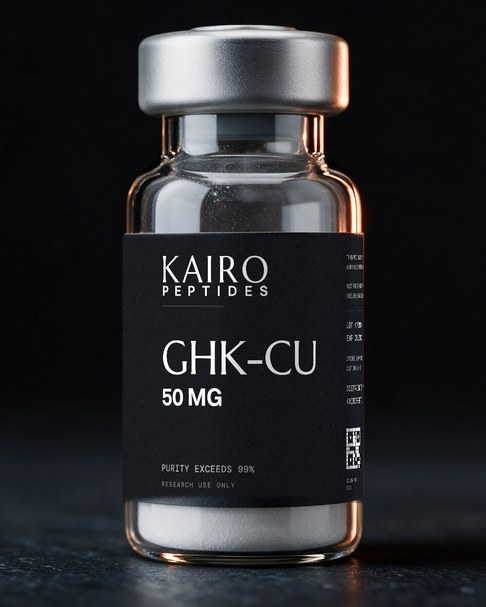
| Compound | GHK-Cu |
| Dosage form | Lyophilized powder |
| Purity | PURITY EXCEEDS 99% |
| Storage | STORE LYOPHILIZED. KEEP COLD AND OUT OF LIGHT. |
| Lot format | LOT + EXP printed per vial |
| Distribution | DISTRIBUTED BY KAIRO, KAIROPEPTIDES.COM |
A copper-binding tripeptide.
The full technical write-up 3 paragraphs, plus the fact row
GHK-Cu is the copper(II) coordination complex of the tripeptide glycyl-L-histidyl-L-lysine (Gly-His-Lys, GHK), a 3-amino-acid fragment that occurs naturally in human plasma, saliva and urine. A 2015 peer-reviewed review states that the peptide was isolated in 1973 as an activity in human albumin that caused old human liver tissue to synthesize proteins the way younger tissue does, and that later work identified the active agent as this tripeptide bound to copper. The same review reports human plasma GHK at roughly 200 nanograms per milliliter at age 20, declining to roughly 80 nanograms per milliliter by age 60. That discovery history is recounted here as background from a 2015 review of the same investigator's own earlier work, not as independently verified primary data in its own right, and no liver finding is carried elsewhere in this dossier as a result of it.
One identity point governs how every finding below should be read: GHK-Cu, the copper complex, and GHK, the free, copper-free tripeptide, are chemically distinct, and the market does not always keep them apart. Every research area below states which form was actually studied. In one case an independent laboratory reported that GHK-Cu's matrix-remodeling effect in cultured fibroblasts was reproduced by copper ions but not by the tripeptide GHK alone, meaning copper is doing real mechanistic work in that assay. Elsewhere, a separate independent study found copper-free GHK alone produced keratinocyte effects broadly similar to what had been reported for GHK-Cu, which points the other way. Both are reported below, each attributed to the form actually tested.
A provenance concentration is worth stating plainly, the same way this catalog states it elsewhere. Of the 12 research areas below, 5 rest entirely on a single 2015 peer-reviewed review, itself substantially a synthesis of its lead author's own earlier laboratory work; for those 5, 'summarized in a review by the originating investigator' is the correct and weaker description, not 'shown in an independently replicated primary study,' and the confidence ratings below reflect that. The remaining 7 research areas rest on primary literature carrying no authorship overlap with that review: independent laboratories in Poland, Korea, France, the United States and China, though the most recent cluster of that work (2020 to 2025) itself concentrates on a small, largely overlapping author network centered on 2 institutions, a separate concentration issue flagged again where it applies. Research use only.References 2
- Length
- 3 amino acids (a tripeptide), complexed with copper
- Also known as
- Copper Tripeptide-1, Prezatide copper, GHK copper, GHK-Cu
- Status
- Not an approved drug in the United States or anywhere else
Sold as a laboratory research material.
Molecular identity
Sequence, formula and registry numbers 3 residues
- G Gly
- H His
- K Lys
3 residues.
- Formula
- Registered form C14H23CuN6O4+
- Molar mass
- Registered form 402.92 g/mol
- CAS
- Registered form 89030-95-5
- PubChem CID
- Registered form 71587328
PubChem indexes several GHK-copper stoichiometries rather than a single canonical record, so no single CID should be read as the compound. CID 71587328, listed as 'Prezatide copper,' is shown above: it carries CAS 89030-95-5 and the cosmetic-ingredient names Copper Tripeptide-1 and GHK copper, and its 402.92 g/mol figure sits closest to (though not identical with) the roughly 403.9 g/mol figure that appears on some vendor documentation. 2 further PubChem records exist for related GHK-copper stoichiometries: CID 165429100 ('N2-(N-glycyl-L-histidyl)-L-Lysine, copper complex'), C14H22CuN6O4, 401.91 g/mol; and CID 133697840, a 2-ligand-to-1-copper form, C28H48CuN12O8, 744.3 g/mol. This dossier states that ambiguity rather than asserting a single canonical mass. Separately, the free, copper-free tripeptide GHK is PubChem CID 73587, C14H24N6O4, 340.38 g/mol, CAS 49557-75-7, also carrying the synonym Prezatide without 'copper'; several research areas above test that form specifically and say so. No purity, stability window or storage temperature specific to this peptide-copper complex is asserted anywhere in this dossier beyond general laboratory handling convention.References 14, 15, 16, 17
Once it is mixed, it goes in the fridge.
Water is what ages a peptide, so the rules change the moment you add it.
The longer version 3 rows
- Before you mix it
- Supplied as a lyophilized (freeze-dried) powder. Standard laboratory practice for lyophilized research peptides is to hold the sealed vial frozen for long-term storage, commonly at or below -4 F, kept dry and protected from light, and to avoid repeated freeze-thaw cycles, which degrade peptide material. That is general practice for this class of material, not a claim attributed to any supplier or brand.
- Once it is mixed
- Once mixed, keep the vial refrigerated at 36 to 46 F (2 to 8 C), for up to 28 days. The 28 days is a USP <797> sterility limit for a preserved multiple-use vial, not a measured chemical stability window for this peptide, and is never written as 'stable for 28 days'. Mixing volumes, concentrations, routes and schedules are preparation-for-administration details and remain withheld here as they are on every page in this catalog.
- In the literature
- None located. No peer-reviewed study of this peptide-copper complex's own stability, dry or in solution, beyond general laboratory handling convention, was found in this search pass, so this dossier states no compound-specific shelf life, in-use window or degradation route for it.
Every paper this page is built on.
Click any journal to open the paper.
- Wound Repair Regen
- Biomed Res Int
- Life Sci
- J Invest Dermatol
- Front Mol Biosci
- J Cachexia Sarcopenia Muscle
- Redox Biol
- Front Pharmacol
- Acta Pol Pharm
- J Pept Sci
- Aging Pathobiol Ther
- Biogerontology
The full list 17 references, each linked
-
1
Mulder GD, Patt LM, Sanders L, Rosenstock J, Altman MI, Hanley ME, Duncan GW. Enhanced healing of ulcers in patients with diabetes by topical treatment with glycyl-L-histidyl-L-lysine copper. Wound Repair Regen. 1994;2(4):259-269.
-
2
Pickart L, Vasquez-Soltero JM, Margolina A. GHK Peptide as a Natural Modulator of Multiple Cellular Pathways in Skin Regeneration. Biomed Res Int. 2015;2015:648108.
-
3
Simeon A, Emonard H, Hornebeck W, Maquart FX. The tripeptide-copper complex glycyl-L-histidyl-L-lysine-Cu2+ stimulates matrix metalloproteinase-2 expression by fibroblast cultures. Life Sci. 2000;67(18):2257-2265.
-
4
Simeon A, Wegrowski Y, Bontemps Y, Maquart FX. Expression of glycosaminoglycans and small proteoglycans in wounds: modulation by the tripeptide-copper complex glycyl-L-histidyl-L-lysine-Cu(2+). J Invest Dermatol. 2000;115(6):962-968.
-
5
Ma WH, Li M, Ma HF, Li W, Liu L, Yin Y, Zhou XM, Hou G. Protective effects of GHK-Cu in bleomycin-induced pulmonary fibrosis via anti-oxidative stress and anti-inflammation pathways. Life Sci. 2020;241:117139.
-
6
Zhang Q, Yan L, Lu J, Zhou X. Glycyl-L-histidyl-L-lysine-Cu(2+) attenuates cigarette smoke-induced pulmonary emphysema and inflammation by reducing oxidative stress pathway. Front Mol Biosci. 2022;9:925700.
-
7
Deng M, Zhang Q, Yan L, Bian Y, Li R, Gao J, Wang Y, Miao J, Li J, Zhou X, Hou G. Glycyl-l-histidyl-l-lysine-Cu(2+) rescues cigarette smoking-induced skeletal muscle dysfunction via a sirtuin 1-dependent pathway. J Cachexia Sarcopenia Muscle. 2023;14(3):1365-1380.
-
8
Bian Y, Deng M, Liu J, Li J, Zhang Q, Wang Z, Liao L, Miao J, Li R, Zhou X, Hou G. The glycyl-l-histidyl-l-lysine-Cu(2+) tripeptide complex attenuates lung inflammation and fibrosis in silicosis by targeting peroxiredoxin 6. Redox Biol. 2024;75:103237.
-
9
Mao S, Huang J, Li J, Sun F, Zhang Q, Cheng Q, Zeng W, Lei D, Wang S, Yao J. Exploring the beneficial effects of GHK-Cu on an experimental model of colitis and the underlying mechanisms. Front Pharmacol. 2025;16:1551843.
-
10
Gruchlik A, Jurzak M, Chodurek E, Dzierzewicz Z. Effect of Gly-Gly-His, Gly-His-Lys and their copper complexes on TNF-alpha-dependent IL-6 secretion in normal human dermal fibroblasts. Acta Pol Pharm. 2012;69(6):1303-1306.
-
11
Choi HR, Kang YA, Ryoo SJ, Shin JW, Na JI, Huh CH, Park KC. Stem cell recovering effect of copper-free GHK in skin. J Pept Sci. 2012;18(11):685-690.
-
12
Tucker M, Liao GY, Keely A, Park JY, Rosenfeld M, Wezeman J, Mangalindan R, Ratner D, Darvas M, Ladiges W. Behavioral and neuropathological features of Alzheimer's disease are attenuated in 5xFAD mice treated with intranasal GHK peptide. Aging Pathobiol Ther. 2024;6(3):102-108.
-
13
Wen H, Zhao K, Luo X, Pu J, Li Y, Dou Y, He J, Nie X, Ke Y, Zhou W. The GHK-Cu delays aging in Caenorhabditis elegans via coordinated regulation of mitochondrial function and activation of DAF-16/SKN-1 pathways. Biogerontology. 2026;27(3):100.
-
14
PubChem Compound Summary for CID 165429100, N2-(N-glycyl-L-histidyl)-L-Lysine, copper complex. National Center for Biotechnology Information. Retrieved July 28, 2026.
-
15
PubChem Compound Summary for CID 71587328, Prezatide copper (GHK-Cu). National Center for Biotechnology Information. Retrieved July 28, 2026.
-
16
PubChem Compound Summary for CID 133697840, GHK-Cu (2-ligand form). National Center for Biotechnology Information. Retrieved July 28, 2026.
-
17
PubChem Compound Summary for CID 73587, GHK (copper-free tripeptide, Prezatide). National Center for Biotechnology Information. Retrieved July 28, 2026.
17 sources: 13 peer-reviewed papers and 4 primary documents.
Sources re-verified July 28, 2026
THIS PRODUCT IS NOT FOR HUMAN OR ANIMAL CONSUMPTION OF ANY KIND.
NOT FOR THERAPEUTIC OR DIAGNOSTIC USE. RESEARCH USE ONLY.