
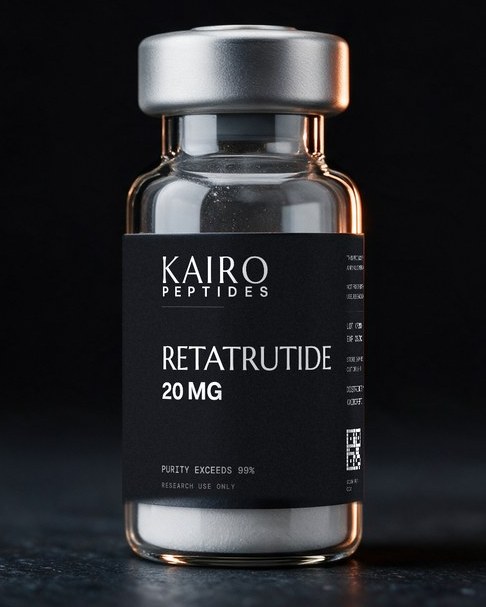
Retatrutide
20MGStudied for weight loss, blood sugar, liver fat, blood pressure and cholesterol, and what the lost weight is actually made of. Every paper behind those is linked below.
$120.00
- PURITY EXCEEDS 99%
- COA WITH EVERY BATCH
- 3RD-PARTY VERIFIED
| Title | Range | Discount |
|---|---|---|
| Pack tier: Retatrutide (KAIRO-RETATRUTIDE-20MG) | 1 - 2 | $120.00 |
| Pack of 3+: 10% off | 3 - 4 | $108.00 |
| Pack of 5+: 15% off | 5 - 9 | $102.00 |
| Pack of 10+: 20% off | 10 + | $96.00 |
For laboratory research use only. Not for human or veterinary use, not for diagnostic or therapeutic use, and not for food or drug manufacture. No preparation or usage guidance is provided anywhere on this page.
Weight is not the only number that moved.
Retatrutide is studied as a triple receptor agonist, 3 hormone switches instead of 1, and that is why the same compound turns up in weight research, blood-sugar research, liver-fat research and blood-pressure research at once.
-
Weight loss
Preclinical strong More than one randomized controlled trial in people reporting the same direction of result on a prespecified measure, or such a trial together with a meta-analysis of trials. 'Strong' describes the published record of an investigational compound and nothing more: it is approved nowhere, every trial behind this rating was run by its own developer, and none of it authorizes any use of this material.Retatrutide is studied for body weight in randomized human trials. A 48-week trial in 338 adults reported average body weight down as much as 24.2% in the highest group, against 2.1% on placebo.
-
Blood sugar and glycemic control
Preclinical strong More than one randomized controlled trial in people reporting the same direction of result on a prespecified measure, or such a trial together with a meta-analysis of trials. 'Strong' describes the published record of an investigational compound and nothing more: it is approved nowhere, every trial behind this rating was run by its own developer, and none of it authorizes any use of this material.Retatrutide is studied for blood sugar, in a trial that also included a compound already on the market. Over 24 weeks in 281 adults, average HbA1c fell as much as 2.02 percentage points, against 0.01 on placebo and 1.41 with that comparator.
-
Liver fat
Preclinical strong More than one randomized controlled trial in people reporting the same direction of result on a prespecified measure, or such a trial together with a meta-analysis of trials. 'Strong' describes the published record of an investigational compound and nothing more: it is approved nowhere, every trial behind this rating was run by its own developer, and none of it authorizes any use of this material.Retatrutide is studied for liver fat in adults who entered with at least 10% of the liver made up of fat. Over 24 weeks in 98 participants, average liver fat fell as much as 82.4% in the highest group, against a slight rise on placebo.
-
Blood pressure and cholesterol
Preclinical strong More than one randomized controlled trial in people reporting the same direction of result on a prespecified measure, or such a trial together with a meta-analysis of trials. 'Strong' describes the published record of an investigational compound and nothing more: it is approved nowhere, every trial behind this rating was run by its own developer, and none of it authorizes any use of this material.Retatrutide is studied for blood pressure and blood fats, pooled across randomized trials. That analysis reported systolic blood pressure 6.79 mmHg lower, LDL cholesterol 13.10 mg/dL lower and triglycerides 40.90 mg/dL lower, with no meaningful change in HDL cholesterol.
-
Body composition and lean mass
Preclinical strong More than one randomized controlled trial in people reporting the same direction of result on a prespecified measure, or such a trial together with a meta-analysis of trials. 'Strong' describes the published record of an investigational compound and nothing more: it is approved nowhere, every trial behind this rating was run by its own developer, and none of it authorizes any use of this material.Retatrutide is studied for what the lost weight is actually made of. A body-scan substudy of 189 participants reported fat mass down as much as 26.1% at week 36, and found lean tissue coming off in proportion to total weight rather than being spared.
Every line above describes what was measured in a single trial or model. None of it is an approved use, and none of it establishes what the compound would do in a person.
Frequently paired with
What shoppers usually add alongside this one
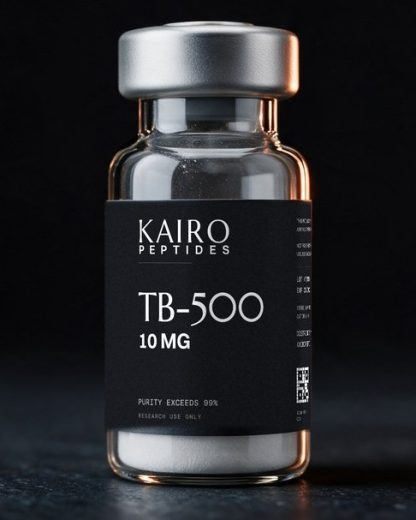
A versatile peptide, studied in research on cell movement and tissue repair.
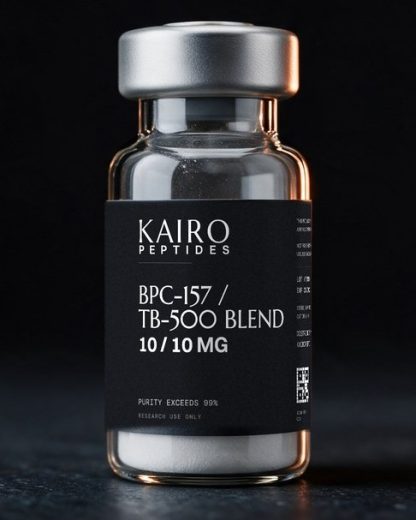
A recovery-focused blend, studied in research on tissue repair.
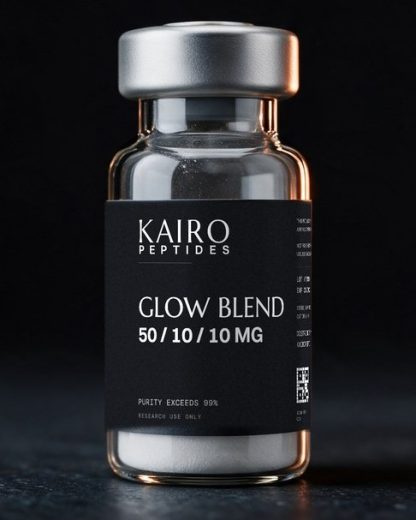
A multi-peptide skin blend, studied in research on skin and tissue.
What the research says about pairing these
Tesamorelin, ipamorelin, CJC-1295 and other growth-hormone-axis peptides
Widely promoted in vendor stacking guides on the theory that growth-hormone secretagogues offset lean-tissue loss during incretin-driven weight reduction. Every source making that claim is a retail peptide seller, several of them citing outcome figures that trace to nothing.
No study, preclinical or clinical, giving this compound together with any of these was identified. This is co-marketing lore rather than a studied combination, and the lean-tissue premise behind it runs against this compound's own body-composition substudy above.
BPC-157 and TB-500
Promoted alongside this compound for recovery support during training.
No study giving this compound together with BPC-157 or TB-500 was identified. The research programs are entirely separate, and BPC-157's own evidence base is preclinical. Co-marketed only.
GHK-Cu
Appears in vendor stacking pages for this compound on a skin and connective-tissue rationale.
No co-administration study with this compound was identified. Co-marketed only.
MOTS-c
Promoted as a mitochondrial-function complement in vendor dual-axis protocols.
No study giving this compound together with MOTS-c was identified. Co-marketed only.
Cagrilintide and other amylin analogs
The amylin-plus-incretin direction is genuine at the class level, and vendor pages extend it to this compound by analogy.
The studied pairing in that direction is with a different, already-marketed compound, not with this one. No study giving this compound together with cagrilintide was identified. If it is mentioned at all, it is a class-level research direction and never a combination involving this material.
-
Studied for
Receptor pharmacology and discovery
The discovery paper describes a single peptide that switches on three different hormone receptors at the same time: the glucagon receptor, the GIP receptor, and the GLP-1 receptor. In the authors' own words, in cultured cells it "shows balanced GCGR and GLP-1R activity but more GIPR activity." In obese mice the compound reduced body weight and improved blood-sugar control, and the authors attributed that weight loss to two things working together: the glucagon arm raising the rate at which the animals burned energy, added to the GIP and GLP-1 arms cutting how much they ate. In an accompanying first-in-human study, the compound stayed in the body long enough that a reduction in body weight was still measurable six weeks after a single administration. in cultured cells, plus obese mice, plus a first-in-human phase 1 single-ascending study Preclinical strong More than one randomized controlled trial in people reporting the same direction of result on a prespecified measure, or such a trial together with a meta-analysis of trials. 'Strong' describes the published record of an investigational compound and nothing more: it is approved nowhere, every trial behind this rating was run by its own developer, and none of it authorizes any use of this material. Open for the full finding and the paper it came from.In the literatureReceptor pharmacology and discovery
The discovery paper describes a single peptide that switches on three different hormone receptors at the same time: the glucagon receptor, the GIP receptor, and the GLP-1 receptor. In the authors' own words, in cultured cells it "shows balanced GCGR and GLP-1R activity but more GIPR activity." In obese mice the compound reduced body weight and improved blood-sugar control, and the authors attributed that weight loss to two things working together: the glucagon arm raising the rate at which the animals burned energy, added to the GIP and GLP-1 arms cutting how much they ate. In an accompanying first-in-human study, the compound stayed in the body long enough that a reduction in body weight was still measurable six weeks after a single administration.References 1
Modelin cultured cells, plus obese mice, plus a first-in-human phase 1 single-ascending study
-
Studied for
Body weight over 48 weeks (phase 2)
In a 48-week randomized trial in 338 adults selected for excess body weight, average body weight fell in proportion to the amount given. Across the four ascending groups, average body weight at 48 weeks was down 8.7%, 17.1%, 22.8% and 24.2%, against 2.1% in the placebo group. At the trial's main 24-week checkpoint the corresponding figures were 7.2%, 12.9%, 17.3% and 17.5%, against 1.6% on placebo. The most common side effects were digestive, related to the amount given, and mostly mild to moderate. The investigators also reported increases in heart rate that tracked with the amount given, which peaked at 24 weeks and declined after that. human, phase 2 randomized double-blind placebo-controlled trial, 338 participants, 48 weeks Preclinical strong More than one randomized controlled trial in people reporting the same direction of result on a prespecified measure, or such a trial together with a meta-analysis of trials. 'Strong' describes the published record of an investigational compound and nothing more: it is approved nowhere, every trial behind this rating was run by its own developer, and none of it authorizes any use of this material. Open for the full finding and the paper it came from.In the literatureBody weight over 48 weeks (phase 2)
In a 48-week randomized trial in 338 adults selected for excess body weight, average body weight fell in proportion to the amount given. Across the four ascending groups, average body weight at 48 weeks was down 8.7%, 17.1%, 22.8% and 24.2%, against 2.1% in the placebo group. At the trial's main 24-week checkpoint the corresponding figures were 7.2%, 12.9%, 17.3% and 17.5%, against 1.6% on placebo. The most common side effects were digestive, related to the amount given, and mostly mild to moderate. The investigators also reported increases in heart rate that tracked with the amount given, which peaked at 24 weeks and declined after that.References 2
Modelhuman, phase 2 randomized double-blind placebo-controlled trial, 338 participants, 48 weeks
-
Studied for
Blood sugar against an active comparator (phase 2)
A randomized trial in 281 adults with an entry HbA1c of 7.0 to 10.5% and a BMI of 25 to 50 compared this compound against both a placebo and an already-marketed single-receptor compound of the same family. At 24 weeks the average fall in HbA1c ranged from 0.43% in the lowest group to 2.02% in the highest, against 0.01% on placebo and 1.41% with the comparator. At 36 weeks body weight fell in proportion to the amount given, from 3.19% in the lowest group to 16.94% in the highest, against 3.00% on placebo and 2.02% with the comparator. Mild-to-moderate digestive side effects were reported by 35% of participants receiving the compound, against 13% on placebo. human, phase 2 randomized double-blind placebo- and active-controlled trial, 281 participants Preclinical strong More than one randomized controlled trial in people reporting the same direction of result on a prespecified measure, or such a trial together with a meta-analysis of trials. 'Strong' describes the published record of an investigational compound and nothing more: it is approved nowhere, every trial behind this rating was run by its own developer, and none of it authorizes any use of this material. Open for the full finding and the paper it came from.In the literatureBlood sugar against an active comparator (phase 2)
A randomized trial in 281 adults with an entry HbA1c of 7.0 to 10.5% and a BMI of 25 to 50 compared this compound against both a placebo and an already-marketed single-receptor compound of the same family. At 24 weeks the average fall in HbA1c ranged from 0.43% in the lowest group to 2.02% in the highest, against 0.01% on placebo and 1.41% with the comparator. At 36 weeks body weight fell in proportion to the amount given, from 3.19% in the lowest group to 16.94% in the highest, against 3.00% on placebo and 2.02% with the comparator. Mild-to-moderate digestive side effects were reported by 35% of participants receiving the compound, against 13% on placebo.References 3
Modelhuman, phase 2 randomized double-blind placebo- and active-controlled trial, 281 participants
-
Studied for
Blood sugar and body weight in a phase 3 confirmatory trial (TRANSCEND-T2D-1)
TRANSCEND-T2D-1 was a 40-week phase 3 randomized double-blind placebo-controlled trial at 48 sites in the USA, Mexico and India, in 537 adults whose blood sugar was not adequately controlled by diet and exercise alone. Using the trial's regimen-based analysis, average HbA1c fell 1.69%, 1.86% and 1.94% across the three ascending groups, against 0.81% on placebo (every comparison p<0.0001). Average body weight fell 11.5%, 13.9% and 15.3%, against 2.6% on placebo. Discontinuations due to side effects were 2 to 5% in the groups receiving the compound and 0% on placebo. Two deaths occurred during the study, both in the lowest group, and the investigators reported both as unrelated to the study drug. human, phase 3 randomized double-blind placebo-controlled trial, 537 participants randomized, 40 weeks Preclinical strong More than one randomized controlled trial in people reporting the same direction of result on a prespecified measure, or such a trial together with a meta-analysis of trials. 'Strong' describes the published record of an investigational compound and nothing more: it is approved nowhere, every trial behind this rating was run by its own developer, and none of it authorizes any use of this material. Open for the full finding and the paper it came from.In the literatureBlood sugar and body weight in a phase 3 confirmatory trial (TRANSCEND-T2D-1)
TRANSCEND-T2D-1 was a 40-week phase 3 randomized double-blind placebo-controlled trial at 48 sites in the USA, Mexico and India, in 537 adults whose blood sugar was not adequately controlled by diet and exercise alone. Using the trial's regimen-based analysis, average HbA1c fell 1.69%, 1.86% and 1.94% across the three ascending groups, against 0.81% on placebo (every comparison p<0.0001). Average body weight fell 11.5%, 13.9% and 15.3%, against 2.6% on placebo. Discontinuations due to side effects were 2 to 5% in the groups receiving the compound and 0% on placebo. Two deaths occurred during the study, both in the lowest group, and the investigators reported both as unrelated to the study drug.References 4
Modelhuman, phase 3 randomized double-blind placebo-controlled trial, 537 participants randomized, 40 weeks
-
Studied for
Liver fat (phase 2a substudy)
In a randomized substudy of 98 participants who entered with at least 10% of the liver made up of fat, the amount of liver fat fell sharply and in proportion to the amount given. At 24 weeks, average liver fat was down 42.9%, 57.0%, 81.4% and 82.4% across the four ascending groups, against a 0.3% increase on placebo (every comparison against placebo at p<0.001). By 24 weeks, a normal liver-fat level, under 5%, had been reached by 27%, 52%, 79% and 86% of participants in those groups, against nobody on placebo. The investigators reported that the liver-fat reductions tracked significantly with changes in body weight, abdominal fat, and measures tied to insulin sensitivity and fat handling. human, phase 2a randomized double-blind placebo-controlled substudy, 98 participants Preclinical strong More than one randomized controlled trial in people reporting the same direction of result on a prespecified measure, or such a trial together with a meta-analysis of trials. 'Strong' describes the published record of an investigational compound and nothing more: it is approved nowhere, every trial behind this rating was run by its own developer, and none of it authorizes any use of this material. Open for the full finding and the paper it came from.In the literatureLiver fat (phase 2a substudy)
In a randomized substudy of 98 participants who entered with at least 10% of the liver made up of fat, the amount of liver fat fell sharply and in proportion to the amount given. At 24 weeks, average liver fat was down 42.9%, 57.0%, 81.4% and 82.4% across the four ascending groups, against a 0.3% increase on placebo (every comparison against placebo at p<0.001). By 24 weeks, a normal liver-fat level, under 5%, had been reached by 27%, 52%, 79% and 86% of participants in those groups, against nobody on placebo. The investigators reported that the liver-fat reductions tracked significantly with changes in body weight, abdominal fat, and measures tied to insulin sensitivity and fat handling.References 5
Modelhuman, phase 2a randomized double-blind placebo-controlled substudy, 98 participants
-
Studied for
Where the lost weight actually comes from
A prespecified body-scan substudy of the phase 2 trial above, with 189 participants enrolled to the substudy, used DXA body scanning to separate fat from lean tissue. Total fat mass at week 36 was down 4.9% in the lowest group, 15.2% and 26.1% in the middle groups, and 23.2% in the highest, against 4.5% on placebo and 2.6% with the comparator. The authors' own conclusion is the important part: the share of the weight lost that came from lean tissue was similar to what other weight-loss compounds produce. In plain terms, lean tissue came off roughly in proportion to total weight rather than being selectively protected. This is the correct primary reference for any body-composition question about this compound, and it does not support claims of selective muscle preservation. human, DXA body-composition substudy of a phase 2 randomized double-blind placebo- and active-controlled trial, 189 participants enrolled to the substudy Preclinical strong More than one randomized controlled trial in people reporting the same direction of result on a prespecified measure, or such a trial together with a meta-analysis of trials. 'Strong' describes the published record of an investigational compound and nothing more: it is approved nowhere, every trial behind this rating was run by its own developer, and none of it authorizes any use of this material. Open for the full finding and the paper it came from.In the literatureWhere the lost weight actually comes from
A prespecified body-scan substudy of the phase 2 trial above, with 189 participants enrolled to the substudy, used DXA body scanning to separate fat from lean tissue. Total fat mass at week 36 was down 4.9% in the lowest group, 15.2% and 26.1% in the middle groups, and 23.2% in the highest, against 4.5% on placebo and 2.6% with the comparator. The authors' own conclusion is the important part: the share of the weight lost that came from lean tissue was similar to what other weight-loss compounds produce. In plain terms, lean tissue came off roughly in proportion to total weight rather than being selectively protected. This is the correct primary reference for any body-composition question about this compound, and it does not support claims of selective muscle preservation.References 6
Modelhuman, DXA body-composition substudy of a phase 2 randomized double-blind placebo- and active-controlled trial, 189 participants enrolled to the substudy
-
Studied for
Blood pressure and blood fats, pooled across trials
A systematic review and meta-analysis of randomized controlled trials pooled the available human data and reported significant reductions in systolic blood pressure (6.79 mmHg lower, 95% CI 8.36 to 5.23 lower, p<0.0001) and diastolic blood pressure (2.46 mmHg lower, 95% CI 3.25 to 1.67 lower, p<0.0001). It also reported significant reductions in total cholesterol (21.88 mg/dL lower), LDL cholesterol (13.10 mg/dL lower) and triglycerides (40.90 mg/dL lower), and no meaningful change in HDL cholesterol (0.01 mg/dL, p=0.98). Worth knowing about the consistency of these pooled numbers: the blood-pressure results were highly consistent across the included trials, while the total-cholesterol result varied a great deal between them (I-squared 84%), so that figure is the softest of the set. human, systematic review and meta-analysis of randomized controlled trials Preclinical strong More than one randomized controlled trial in people reporting the same direction of result on a prespecified measure, or such a trial together with a meta-analysis of trials. 'Strong' describes the published record of an investigational compound and nothing more: it is approved nowhere, every trial behind this rating was run by its own developer, and none of it authorizes any use of this material. Open for the full finding and the paper it came from.In the literatureBlood pressure and blood fats, pooled across trials
A systematic review and meta-analysis of randomized controlled trials pooled the available human data and reported significant reductions in systolic blood pressure (6.79 mmHg lower, 95% CI 8.36 to 5.23 lower, p<0.0001) and diastolic blood pressure (2.46 mmHg lower, 95% CI 3.25 to 1.67 lower, p<0.0001). It also reported significant reductions in total cholesterol (21.88 mg/dL lower), LDL cholesterol (13.10 mg/dL lower) and triglycerides (40.90 mg/dL lower), and no meaningful change in HDL cholesterol (0.01 mg/dL, p=0.98). Worth knowing about the consistency of these pooled numbers: the blood-pressure results were highly consistent across the included trials, while the total-cholesterol result varied a great deal between them (I-squared 84%), so that figure is the softest of the set.References 7
Modelhuman, systematic review and meta-analysis of randomized controlled trials
-
Studied for
How long it lasts in the body, and first blood-sugar effects in people
In a 12-week early human study in 72 adults whose blood sugar was raised, the compound cleared from the body slowly, with a half-life of about 6 days. By week 12, average daily blood glucose fell significantly in the three highest groups compared with placebo (differences of -2.8, -3.1 and -2.9 mmol/L), long-term blood sugar as measured by HbA1c fell significantly in the same three groups (-1.4%, -1.6% and -1.2% versus placebo), and body weight fell in proportion to the amount given, reaching -8.96 kg versus placebo in the highest group. Digestive side effects were the most frequently reported adverse events. human, phase 1b randomized double-blind placebo-controlled multiple-ascending trial, 72 participants, 12 weeks Preclinical strong More than one randomized controlled trial in people reporting the same direction of result on a prespecified measure, or such a trial together with a meta-analysis of trials. 'Strong' describes the published record of an investigational compound and nothing more: it is approved nowhere, every trial behind this rating was run by its own developer, and none of it authorizes any use of this material. Open for the full finding and the paper it came from.In the literatureHow long it lasts in the body, and first blood-sugar effects in people
In a 12-week early human study in 72 adults whose blood sugar was raised, the compound cleared from the body slowly, with a half-life of about 6 days. By week 12, average daily blood glucose fell significantly in the three highest groups compared with placebo (differences of -2.8, -3.1 and -2.9 mmol/L), long-term blood sugar as measured by HbA1c fell significantly in the same three groups (-1.4%, -1.6% and -1.2% versus placebo), and body weight fell in proportion to the amount given, reaching -8.96 kg versus placebo in the highest group. Digestive side effects were the most frequently reported adverse events.References 8
Modelhuman, phase 1b randomized double-blind placebo-controlled multiple-ascending trial, 72 participants, 12 weeks
-
Studied for
Rodent studies of body weight and liver fat
In obese mice with fat accumulated in the liver, researchers reported that the compound reduced body weight by 31% compared with animals that received none (p<0.0001), and that the loss came from BOTH fat and lean tissue. Food and water intake dropped in the first days, while the rate at which the animals burned energy was NOT significantly changed. It markedly reduced a standard index of insulin resistance and reduced liver fat scoring, fatty acids, triglycerides and cholesterol content in the liver. In obese hamsters it shifted what the animals chose to eat, increasing plain chow and decreasing both the high-fat high-cholesterol food and the sugar water. Weight loss there again came from both fat and lean tissue, although lean tissue was no longer different from controls after five weeks, with no change in bone mineral density. Liver triglyceride content fell by about half (p<0.01), but the microscopic liver damage scoring did not improve. RODENT rodent (diet-induced obese mice and diet-induced obese hamsters) Preclinical moderate A well-described result with several independent outcome measures, but from a single laboratory, a single animal model or a single study design. Open for the full finding and the paper it came from.In the literatureRodent studies of body weight and liver fat
In obese mice with fat accumulated in the liver, researchers reported that the compound reduced body weight by 31% compared with animals that received none (p<0.0001), and that the loss came from BOTH fat and lean tissue. Food and water intake dropped in the first days, while the rate at which the animals burned energy was NOT significantly changed. It markedly reduced a standard index of insulin resistance and reduced liver fat scoring, fatty acids, triglycerides and cholesterol content in the liver. In obese hamsters it shifted what the animals chose to eat, increasing plain chow and decreasing both the high-fat high-cholesterol food and the sugar water. Weight loss there again came from both fat and lean tissue, although lean tissue was no longer different from controls after five weeks, with no change in bone mineral density. Liver triglyceride content fell by about half (p<0.01), but the microscopic liver damage scoring did not improve.References 9
Modelrodent (diet-induced obese mice and diet-induced obese hamsters)
-
Studied for
Learning and memory in rats made insulin-deficient
In male rats made insulin-deficient with streptozotocin, the compound lowered blood glucose but did not prevent the weight loss that comes with that model. In maze testing, the rats receiving the compound PRESERVED their overall performance compared with the model animals that received none, and showed a limited, task-dependent easing of a short-term avoidance-memory deficit rather than a full return to normal across memory measures. This is protection from decline, not improvement. It came alongside a significant drop in a hippocampal inflammatory marker (TNF-alpha), a non-significant trend toward lower IL-1beta, and partial preservation of brain tissue structure in the cortex and hippocampus. In healthy rats given the compound alone, behavior did not improve beyond normal control levels. The authors explicitly noted that they did not establish whether the compound reached the brain directly. RODENT rodent (streptozotocin-induced insulin-deficient male Sprague-Dawley rats) Preclinical moderate A well-described result with several independent outcome measures, but from a single laboratory, a single animal model or a single study design. Open for the full finding and the paper it came from.In the literatureLearning and memory in rats made insulin-deficient
In male rats made insulin-deficient with streptozotocin, the compound lowered blood glucose but did not prevent the weight loss that comes with that model. In maze testing, the rats receiving the compound PRESERVED their overall performance compared with the model animals that received none, and showed a limited, task-dependent easing of a short-term avoidance-memory deficit rather than a full return to normal across memory measures. This is protection from decline, not improvement. It came alongside a significant drop in a hippocampal inflammatory marker (TNF-alpha), a non-significant trend toward lower IL-1beta, and partial preservation of brain tissue structure in the cortex and hippocampus. In healthy rats given the compound alone, behavior did not improve beyond normal control levels. The authors explicitly noted that they did not establish whether the compound reached the brain directly.References 10
Modelrodent (streptozotocin-induced insulin-deficient male Sprague-Dawley rats)
-
Studied for
Isolated human heart tissue: force of contraction
Working with small strips of right atrial tissue removed during open-heart surgery from adults, researchers found that adding the compound to the organ bath in rising nanomolar concentrations increased the force of contraction, building over concentration and over time, and shortened the time the muscle took to relax. When an enzyme that breaks down cAMP was blocked first, the compound became both more potent and more effective at increasing contraction force. That increase in force was greatly reduced by blockers of the GLP-1, GIP and glucagon receptors, was not blocked by a beta-blocker, and was also reduced by a drug that blocks calcium release from internal stores, by a nerve-signal mimic, and by an adenosine receptor agonist. The authors concluded the compound increases contraction force in human atrial tissue through the cAMP system acting via its own three receptors. IMPORTANT FRAMING: this is donated tissue in a dish, not a study in living people, and it says nothing about what happens in an intact body. EX VIVO ex vivo human right atrial tissue obtained at cardiac surgery, in an organ bath Preclinical preliminary A single study, an early mechanistic observation in isolated tissue, or a result announced by the sponsor and not yet peer-reviewed. Open for the full finding and the paper it came from.In the literatureIsolated human heart tissue: force of contraction
Working with small strips of right atrial tissue removed during open-heart surgery from adults, researchers found that adding the compound to the organ bath in rising nanomolar concentrations increased the force of contraction, building over concentration and over time, and shortened the time the muscle took to relax. When an enzyme that breaks down cAMP was blocked first, the compound became both more potent and more effective at increasing contraction force. That increase in force was greatly reduced by blockers of the GLP-1, GIP and glucagon receptors, was not blocked by a beta-blocker, and was also reduced by a drug that blocks calcium release from internal stores, by a nerve-signal mimic, and by an adenosine receptor agonist. The authors concluded the compound increases contraction force in human atrial tissue through the cAMP system acting via its own three receptors. IMPORTANT FRAMING: this is donated tissue in a dish, not a study in living people, and it says nothing about what happens in an intact body.References 11
Modelex vivo human right atrial tissue obtained at cardiac surgery, in an organ bath
-
Studied for
Isolated mouse heart tissue: a mechanism for the faster heartbeat
Working with isolated, still-beating right atrial tissue from mice in an organ bath, researchers found the compound made the tissue beat faster, with the effect reaching statistical significance at low nanomolar concentrations and, at the higher concentration tested, coming close to the effect of a standard adrenaline-like stimulant. In separate electrically paced left atrial tissue from the same animals, the compound did NOT increase the force of contraction, though the adrenaline-like stimulant did. Blocking each of the three target receptors in turn showed that only the glucagon-receptor blocker significantly reduced the faster beating; the GLP-1 and GIP receptor blockers did not. The effect survived a beta-blocker but was blunted by an inhibitor of the PKA enzyme, and was amplified by a drug that stops cAMP being broken down. The authors concluded the compound speeds the beating rate in mouse right atria through the glucagon receptor, signalling via cAMP and PKA. The authors themselves framed the study around the observation that this compound raised heart rate in human safety studies, and listed a direct action on the heart's pacemaker as one of three candidate explanations they set out to test. EX VIVO ex vivo isolated atrial tissue from adult CD1 mice, in an organ bath Preclinical preliminary A single study, an early mechanistic observation in isolated tissue, or a result announced by the sponsor and not yet peer-reviewed. Open for the full finding and the paper it came from.In the literatureIsolated mouse heart tissue: a mechanism for the faster heartbeat
Working with isolated, still-beating right atrial tissue from mice in an organ bath, researchers found the compound made the tissue beat faster, with the effect reaching statistical significance at low nanomolar concentrations and, at the higher concentration tested, coming close to the effect of a standard adrenaline-like stimulant. In separate electrically paced left atrial tissue from the same animals, the compound did NOT increase the force of contraction, though the adrenaline-like stimulant did. Blocking each of the three target receptors in turn showed that only the glucagon-receptor blocker significantly reduced the faster beating; the GLP-1 and GIP receptor blockers did not. The effect survived a beta-blocker but was blunted by an inhibitor of the PKA enzyme, and was amplified by a drug that stops cAMP being broken down. The authors concluded the compound speeds the beating rate in mouse right atria through the glucagon receptor, signalling via cAMP and PKA. The authors themselves framed the study around the observation that this compound raised heart rate in human safety studies, and listed a direct action on the heart's pacemaker as one of three candidate explanations they set out to test.References 12
Modelex vivo isolated atrial tissue from adult CD1 mice, in an organ bath
-
Studied for
TRIUMPH-1 headline results as announced by the sponsor, not peer-reviewed
TRIUMPH-1 is an 80-week phase 3 randomized double-blind placebo-controlled trial that randomized 2,339 participants selected for excess body weight and without raised blood sugar at entry. In the company's own announcement, under its more favorable of two analyses, average body weight at 80 weeks was down 19.0%, 25.9% and 28.3% across the three ascending groups, against 2.2% on placebo. Under the more conservative analysis the same figures were 17.6%, 23.7% and 25.0%, against 3.9% on placebo; both sets are reported here because the gap between them is exactly the kind of detail that gets dropped in retelling. A pre-specified extension to 104 weeks enrolled only participants who had already completed 80 weeks and tolerated their assigned amount, and reported up to 30.3% average weight reduction; that group is self-selected and its numbers are not comparable to the main trial. On side effects, the announcement reported nausea, diarrhea, constipation and vomiting rising with the amount given; a nerve-sensation side effect (dysesthesia) in 5.1%, 12.3% and 12.5% of participants receiving the compound against 0.9% on placebo; and discontinuation due to side effects in 4.1%, 6.9% and 11.3% against 4.9% on placebo. SOURCING CAVEAT, load-bearing: these figures come from a company news release, not a peer-reviewed publication. A PubMed search found no TRIUMPH-1 outcomes paper indexed. They must never be presented with the weight of the peer-reviewed trials above, and no buyer-facing sentence on this page rests on any of them. human, phase 3 trial; company topline news release only, not peer-reviewed Preclinical preliminary A single study, an early mechanistic observation in isolated tissue, or a result announced by the sponsor and not yet peer-reviewed. Open for the full finding and the paper it came from.In the literatureTRIUMPH-1 headline results as announced by the sponsor, not peer-reviewed
TRIUMPH-1 is an 80-week phase 3 randomized double-blind placebo-controlled trial that randomized 2,339 participants selected for excess body weight and without raised blood sugar at entry. In the company's own announcement, under its more favorable of two analyses, average body weight at 80 weeks was down 19.0%, 25.9% and 28.3% across the three ascending groups, against 2.2% on placebo. Under the more conservative analysis the same figures were 17.6%, 23.7% and 25.0%, against 3.9% on placebo; both sets are reported here because the gap between them is exactly the kind of detail that gets dropped in retelling. A pre-specified extension to 104 weeks enrolled only participants who had already completed 80 weeks and tolerated their assigned amount, and reported up to 30.3% average weight reduction; that group is self-selected and its numbers are not comparable to the main trial. On side effects, the announcement reported nausea, diarrhea, constipation and vomiting rising with the amount given; a nerve-sensation side effect (dysesthesia) in 5.1%, 12.3% and 12.5% of participants receiving the compound against 0.9% on placebo; and discontinuation due to side effects in 4.1%, 6.9% and 11.3% against 4.9% on placebo. SOURCING CAVEAT, load-bearing: these figures come from a company news release, not a peer-reviewed publication. A PubMed search found no TRIUMPH-1 outcomes paper indexed. They must never be presented with the weight of the peer-reviewed trials above, and no buyer-facing sentence on this page rests on any of them.References 13
Modelhuman, phase 3 trial; company topline news release only, not peer-reviewed
8 strong / 2 moderate / 3 preliminaryRated by how many independent labs and how many kinds of experiment found the same thing.
What is in the vial.
| Compound | Retatrutide |
| Dosage form | Lyophilized powder |
| Purity | PURITY EXCEEDS 99% |
| Storage | STORE LYOPHILIZED. KEEP COLD AND OUT OF LIGHT. |
| Lot format | LOT + EXP printed per vial |
| Distribution | DISTRIBUTED BY KAIRO, KAIROPEPTIDES.COM |
An investigational metabolic peptide.
The full technical write-up 3 paragraphs, plus the fact row
Retatrutide is a synthetic peptide, a chain of amino acids assembled in a laboratory rather than extracted from a natural source. It belongs to the family of compounds designed to imitate the gut and pancreas hormones that regulate appetite and blood sugar, and what sets it apart is that it engages three of those hormone receptors rather than one or two: the GLP-1 receptor, the GIP receptor, and the glucagon receptor. Researchers call it a triple hormone receptor agonist. It was developed by Eli Lilly and carries the development code LY3437943. Structurally it is a single chain of 39 amino acids with a long fatty acid tail attached to one of them, a modification that lets the molecule ride along on blood proteins and stay in circulation far longer than a bare peptide would; a phase 1b human trial reported a half-life of about 6 days.
The evidence here is shaped very differently from most compounds in this catalog. It is not thin: there are randomized, double-blind, placebo-controlled trials in people, running from 12 weeks to 48 weeks, including a phase 3 trial in 537 adults and a meta-analysis pooling results across trials. What that evidence is not is independent, and it is not an approval. Every human trial cited on this page was run inside the compound's own originating development program rather than by an outside group, and the meta-analysis pools those same trials rather than adding new ones. The compound has no approved indication in the United States or anywhere else, it is not a medicine, and by the sponsor's own public statement the material is legally available only to people enrolled in its clinical trials.
Two things the published record reports that a shopper is unlikely to be told elsewhere. The compound's own body-composition substudy found that lean tissue came off roughly in proportion to total weight rather than being spared, which is the opposite of the muscle preservation this market routinely sells. And late-stage reporting includes a nerve-sensation side effect alongside the digestive side effects typical of this class, together with heart rate rising in proportion to the amount given. Everything described below belongs to the specific population, model and measure it was recorded in. None of it is a statement about effects in any reader, and no preparation or usage guidance is given anywhere on this page.References 1, 8, 13, 15
- Length
- 39 amino acids, a single chain
- Proline content
- 4 of 39 residues (10.3%)
- Also known as
- LY3437943
- Status
- Not an approved drug in the United States or anywhere else
Sold as a laboratory research material.
Molecular identity
Sequence, formula and registry numbers
- Formula
- Free base C221H342N46O68
- Molar mass
- Free base 4731 g/mol
- CAS
- Free base 2381089-83-2
- PubChem CID
- Free base 171934787
Which salt form any given lot is supplied as is a supplier-specific fact and is not asserted here. THREE THINGS THAT ARE NOT TIDY AND ARE STATED RATHER THAN SMOOTHED OVER. First, the single PubChem record cited for the formula and mass is titled "Retatrutide (sodium salt)", yet the formula it returns contains no sodium and the record specifies no salt stoichiometry, so 4731 is properly read as the free-peptide formula weight and not as the weight of a salt form; a name lookup for the free form returns no separate record, which is why the salt-titled record is the one cited. Second, molecular weights near 4894.58 or 4900 Da and a residue count of "approximately 40 amino acids" appear on vendor and wiki pages for this compound; both are contradicted by the primary registries above and are excluded. Third, this compound is listed in parts of this market under labels such as "GLP-3"; no such designation appears in the literature or in any substance registry, and no such receptor appears anywhere in the verified record, which names exactly three: GLP-1, GIP and glucagon. STRUCTURE: the molecule carries a twenty-carbon diacid joined through a gamma-glutamate and a short two-unit ethylene-glycol spacer to the side-chain nitrogen of the second of two adjacent lysines, at position 17; an alpha-aminoisobutyric acid residue at position 2; an alpha-methylated leucine at position 13; and a C-terminal serine amide. UNKNOWN AND STATED AS UNKNOWN: no peer-reviewed receptor-potency (EC50) values could be re-resolved, and the sub-nanomolar and nanomolar figures in circulation come from chemical-catalog product records rather than peer-reviewed measurements, so they are omitted entirely rather than reprinted behind a caveat.References 14, 15
Once it is mixed, it goes in the fridge.
Water is what ages a peptide, so the rules change the moment you add it.
The longer version 3 rows
- Before you mix it
- Supplied as a lyophilized (freeze-dried) powder. Standard laboratory practice for lyophilized research peptides is to hold the sealed vial frozen for long-term storage, commonly at or below -4 F (-20 C), kept dry, protected from light, and away from moisture, and to avoid repeated freeze-thaw cycles, which degrade peptide material. The fatty acid tail on this molecule is the reason protection from moisture and light matters more here than for a bare peptide. That is general practice for this class of material, not a measurement made on this compound, and not a claim attributed to any supplier or brand.
- Once it is mixed
- Once mixed, hold the solution refrigerated at 36 to 46 F (2 to 8 C) and protected from light, and do not freeze it: freeze-thaw cycling forms ice crystals that mechanically damage peptide, produces concentration gradients within the vial, and can crack glass. The working window commonly carried through the peptide literature is up to 28 days after mixing. Read that as a sterility convention for a preserved vial that is accessed more than once, not as a measured chemical stability window for this molecule, and never as "stable for 28 days". Reconstitution method, diluent, volumes and concentrations are preparation-for-use details and are not given here.
- In the literature
- No published stability assay on this compound was located in the verification pass behind this page, so nothing in this section is measured data for this molecule. The precise-sounding vendor potency claims in circulation (for example "above 90% for two weeks, 85 to 92% by day 28") have no published study behind them and are not reproduced. Solubility in DMSO, PBS, water or acetonitrile is likewise unknown from any source verified here: the figures in circulation come from chemical-catalog product records rather than measurements, and are omitted rather than reprinted behind a caveat. The one compound-specific figure that is documented in the peer-reviewed literature is a terminal half-life of about 6 days, and that is a property of the molecule in circulation in a person, not a shelf-life figure: it says nothing about how the material behaves in a vial. References 8, 14
Every paper this page is built on.
Click any journal to open the paper.
- Cell Metab
- N Engl J Med
- Lancet
- Nat Med
- Lancet Diabetes Endocrinol
- Obesity (Silver Spring)
- Behav Brain Res
- Naunyn Schmiedebergs Arch Pharmacol
The full list 15 references, each linked
-
1
Coskun T, Urva S, Roell WC, et al. LY3437943, a novel triple glucagon, GIP, and GLP-1 receptor agonist for glycemic control and weight loss: from discovery to clinical proof of concept. Cell Metab. 2022;34(9):1234-1247.e9.
-
2
Jastreboff AM, Kaplan LM, Frias JP, et al. Triple-hormone-receptor agonist retatrutide for obesity: a phase 2 trial. N Engl J Med. 2023;389(6):514-526.
-
3
Rosenstock J, Frias J, Jastreboff AM, et al. Retatrutide, a GIP, GLP-1 and glucagon receptor agonist, for people with type 2 diabetes: a randomised, double-blind, placebo and active-controlled, parallel-group, phase 2 trial conducted in the USA. Lancet. 2023;402(10401):529-544.
-
4
Bajaj HS, Welch M, Shah P, et al. Efficacy and safety of retatrutide, a GIP, GLP-1, and glucagon receptor agonist, in people with type 2 diabetes and inadequate glycaemic control with diet and exercise (TRANSCEND-T2D-1): a double-blind, randomised, phase 3 trial. Lancet. 2026;407(10546):2402-2413.
-
5
Sanyal AJ, Kaplan LM, Frias JP, et al. Triple hormone receptor agonist retatrutide for metabolic dysfunction-associated steatotic liver disease: a randomized phase 2a trial. Nat Med. 2024;30(7):2037-2048.
-
6
Coskun T, Wu Q, Schloot NC, Haupt A, Milicevic Z, Khouli C, Harris C. Effects of retatrutide on body composition in people with type 2 diabetes: a substudy of a phase 2, double-blind, parallel-group, placebo-controlled, randomised trial. Lancet Diabetes Endocrinol. 2025;13(8):674-684.
-
7
Simental-Mendia LE, Barragan-Zuniga LJ, Reyes-Avitia V. Effect of retatrutide, a novel triple receptor agonist, on blood pressure and lipid levels: a systematic review and meta-analysis of randomized controlled trials. High Blood Press Cardiovasc Prev. 2026 Jun 29. Online ahead of print.
-
8
Urva S, Coskun T, Loh MT, et al. LY3437943, a novel triple GIP, GLP-1, and glucagon receptor agonist in people with type 2 diabetes: a phase 1b, multicentre, double-blind, placebo-controlled, randomised, multiple-ascending dose trial. Lancet. 2022;400(10366):1869-1881.
-
9
Briand F, Le Cudennec C, Grasset E, Breyner N, Bigot C, Dillard P, Sulpice T. Retatrutide shows multiple metabolic benefits in diet-induced obese MASH mouse and hamster models. Obesity (Silver Spring). 2026;34(Suppl 1):43-53.
-
10
Keskin U, Altin E, Kara MK, et al. Effects of retatrutide on learning and memory in streptozotocin-induced male diabetic rats. Behav Brain Res. 2026;514:116343.
-
11
Neumann J, Ahlrep U, Hofmann B, Gergs U. Inotropic effects of retatrutide in isolated human atrial preparations. Naunyn Schmiedebergs Arch Pharmacol. 2026;399(1):317-327.
PubMed 40613938 doi:10.1007/s00210-025-04421-3 Free full text
-
12
Neumann J, Ahlrep U, Hofmann B, Gergs U. Contractile effects of retatrutide in isolated mouse atrial preparations. Naunyn Schmiedebergs Arch Pharmacol. 2025;398(12):17147-17160.
PubMed 40464942 doi:10.1007/s00210-025-04335-0 Free full text
-
13
Eli Lilly and Company. Topline results announcement for TRIUMPH-1 (NCT05929066). News release, May 21, 2026. Retrieved July 28, 2026. The release's promotional headline is deliberately not reproduced as a title here.
-
14
PubChem Compound Summary for CID 171934787, retatrutide. National Center for Biotechnology Information. Retrieved July 28, 2026. Record title reads "Retatrutide (sodium salt)" while the formula it returns contains no sodium.
-
15
NCATS/FDA Global Substance Registration System record for Retatrutide, UNII NOP2Y096GV, CAS 2381089-83-2, substance class protein. Retrieved July 28, 2026.
15 sources: 11 peer-reviewed papers and 4 primary documents.
Sources re-verified July 28, 2026
THIS PRODUCT IS NOT FOR HUMAN OR ANIMAL CONSUMPTION OF ANY KIND.
NOT FOR THERAPEUTIC OR DIAGNOSTIC USE. RESEARCH USE ONLY.
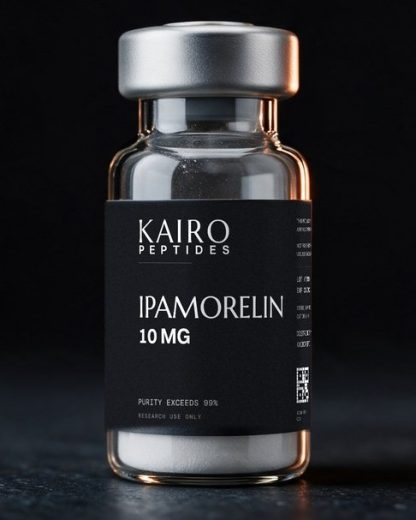
A selective peptide, studied in research on growth hormone signaling.
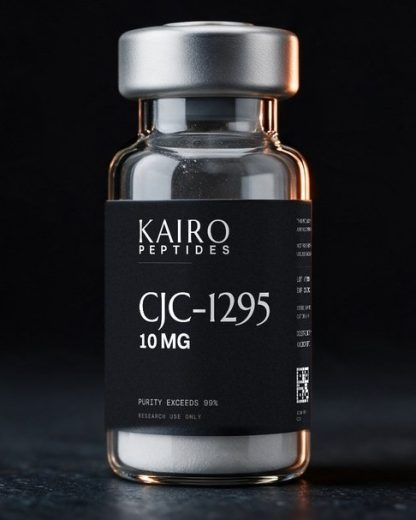
A steady peptide, studied in research on growth hormone release.
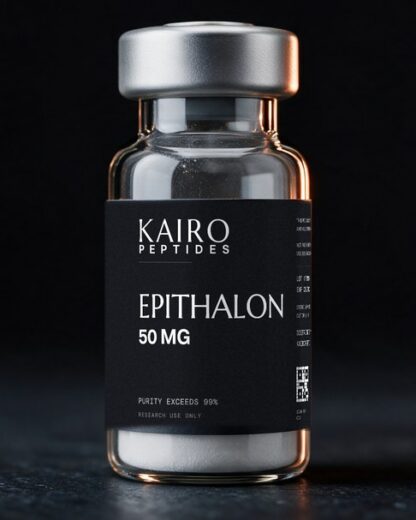
A telomere-focused peptide, studied in research on cellular aging and lifespan.