
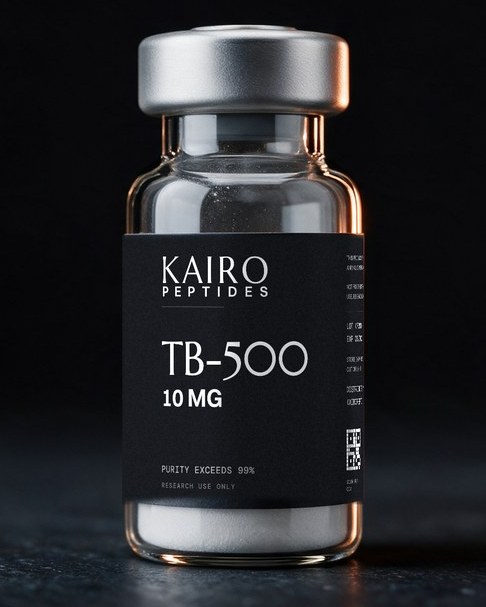
TB-500
10MGStudied for wound healing and skin closure, new blood vessel formation, cells moving toward damaged tissue, heart function and the surface of the eye. Almost all of that work used the full-length parent protein rather than this fragment, and every paper behind them is linked below.
$54.00
- PURITY EXCEEDS 99%
- COA WITH EVERY BATCH
- 3RD-PARTY VERIFIED
| Title | Range | Discount |
|---|---|---|
| Pack tier: TB-500 (KAIRO-TB-500-10MG) | 1 - 2 | $54.00 |
| Pack of 3+: 10% off | 3 - 4 | $48.60 |
| Pack of 5+: 15% off | 5 - 9 | $45.90 |
| Pack of 10+: 20% off | 10 + | $43.20 |
For laboratory research use only. Not for human or veterinary use, not for diagnostic or therapeutic use, and not for food or drug manufacture. No preparation or usage guidance is provided anywhere on this page.
Cells move toward the damage. New blood vessels follow.
That sequence is why the same molecule turns up in skin research, heart research and eye research, and nearly all of that work was done in animals and laboratory dishes on thymosin beta-4, the full-length protein TB-500 is a fragment of.
-
Cell migration toward damaged tissue
Preclinical moderate A well-described result with several independent outcome measures, but from a single laboratory or a single study design.TB-500 carries the actin-binding segment of thymosin beta-4, the grip a cell uses to change shape and crawl toward damaged tissue. In laboratory dishes the full-length protein was reported to increase skin cell movement 2 to 3 times over culture medium alone, and blood vessel lining cell movement 4 to 6 times.
How the molecule works: gripping actin Dermal wound healing, angiogenesis and collagen deposition Blood vessel cell migration and angiogenesis
-
Wound healing and skin closure
Preclinical moderate A well-described result with several independent outcome measures, but from a single laboratory or a single study design.Thymosin beta-4, the protein TB-500 is drawn from, was reported to close skin wounds faster in rats: 42% more surface regrowth than saline controls at 4 days and as much as 61% more at 7 days, with more collagen laid down in the healing tissue.
-
Angiogenesis and new blood vessel formation
Preclinical moderate A well-described result with several independent outcome measures, but from a single laboratory or a single study design.Thymosin beta-4, the protein TB-500 is drawn from, was reported to increase new blood vessel growth in healing rat wounds, and to pull blood vessel lining cells toward it in laboratory dishes.
Dermal wound healing, angiogenesis and collagen deposition Blood vessel cell migration and angiogenesis
-
Cardiac and cardiovascular
Preclinical moderate A well-described result with several independent outcome measures, but from a single laboratory or a single study design.Thymosin beta-4, the protein TB-500 is drawn from, was reported to keep more heart muscle cells alive and improve heart function in mice after a coronary artery was tied off.
-
Ocular and corneal
Preclinical preliminary A single study, an early mechanistic observation, or a result whose interpretation is the authors' own inference.Thymosin beta-4, the protein TB-500 is drawn from, was reported to reduce surface damage on the eye in a small mouse study. It is also the only form of this molecule taken into a randomized human trial, a 72-person eye drop study that missed both of its main goals.
Every line above describes what was measured in a laboratory. None of it establishes what the compound would do in a person.
Frequently paired with
What shoppers usually add alongside this one
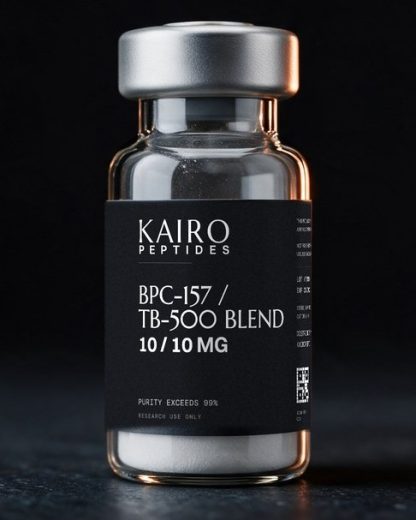
A recovery-focused blend, studied in research on tissue repair.
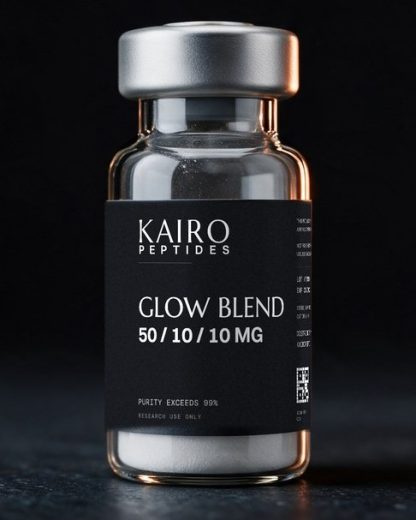
A multi-peptide skin blend, studied in research on skin and tissue.
What the research says about pairing these
BPC-157
BPC-157 is the peptide most often discussed alongside TB-500 in consumer marketing. The proposed rationale is complementary mechanisms studied separately in animal and laboratory models: BPC-157 for local blood-vessel and growth-factor signaling at an injury site, TB-500 for actin-related cell movement and remodeling. That is a rationale assembled from 2 separate literatures, not a finding about the pair.
No rigorous published study testing the 2 compounds together was identified, in animals or in people. The pairing is a marketing pairing, not a researched one, and no claim of a combined effect is made anywhere on this page.
-
Studied for
How the molecule works: gripping actin
Cells build and rebuild an internal scaffold out of a protein called actin, and rearranging that scaffold is how cells change shape and crawl. Biochemical work identified thymosin beta-4 as the same molecule as a previously described platelet peptide called Fx, and showed it forms a 1:1 complex with actin building blocks in a way that blocks them from assembling into scaffolding. Later work using chemically made variants of the full protein mapped the actin contact to 2 separate parts: a front section (residues 1 to 16) that has to coil into a helix, and a motif of 6 amino acids at residues 17 to 22, with 2 specific lysine residues, number 18 in the motif and number 14 in the helix, appearing important for binding. A solution NMR study of mutants, carried out in 60% trifluoroethanol (a helix-promoting, non-physiological solvent, which is a real limitation on how far those conformations generalize), placed the first helix at residues 5 to 16 and reported that letting it extend over the LKK segment abolishes activity. The LKKTETQ sequence carried by TB-500 spans residues 17 to 23 of mature thymosin beta-4 and therefore contains this mapped motif. This is the mechanistic reason the fragment is studied. These are biochemistry and solution NMR experiments, not X-ray crystallography, and thymosin beta-4 is an intrinsically disordered protein. IN VITRO purified protein and chemically synthesized peptide variants studied in vitro by biochemistry and solution NMR Preclinical strong Convergent results from more than one independent laboratory across more than one experimental system. Still preclinical: 'strong' here never means clinical-grade evidence in people. Open for the full finding and the paper it came from.In the literatureHow the molecule works: gripping actin
Cells build and rebuild an internal scaffold out of a protein called actin, and rearranging that scaffold is how cells change shape and crawl. Biochemical work identified thymosin beta-4 as the same molecule as a previously described platelet peptide called Fx, and showed it forms a 1:1 complex with actin building blocks in a way that blocks them from assembling into scaffolding. Later work using chemically made variants of the full protein mapped the actin contact to 2 separate parts: a front section (residues 1 to 16) that has to coil into a helix, and a motif of 6 amino acids at residues 17 to 22, with 2 specific lysine residues, number 18 in the motif and number 14 in the helix, appearing important for binding. A solution NMR study of mutants, carried out in 60% trifluoroethanol (a helix-promoting, non-physiological solvent, which is a real limitation on how far those conformations generalize), placed the first helix at residues 5 to 16 and reported that letting it extend over the LKK segment abolishes activity. The LKKTETQ sequence carried by TB-500 spans residues 17 to 23 of mature thymosin beta-4 and therefore contains this mapped motif. This is the mechanistic reason the fragment is studied. These are biochemistry and solution NMR experiments, not X-ray crystallography, and thymosin beta-4 is an intrinsically disordered protein.References 1, 2, 3
Modelpurified protein and chemically synthesized peptide variants studied in vitro by biochemistry and solution NMR
-
Studied for
Dry eye: a randomized human trial
Read the identity note first, because it governs everything in this entry: this trial tested full-length thymosin beta-4 formulated as an eye drop. That is a different molecule and a different formulation from the TB-500 fragment, so nothing here is evidence about TB-500, and no safety or effectiveness conclusion carries across. In that trial, a thymosin beta-4 ophthalmic solution (RGN-259) was studied in 72 people with moderate to severe dry eye in a randomized, double-masked, placebo-controlled Phase 2 study using a controlled adverse environment model, over a 28-day period. The trial did not meet either of its main goals: the published report states that neither ocular discomfort nor inferior corneal staining differed significantly between the active and control groups at visit 5. Among the secondary measures, discomfort scores in the controlled adverse environment on day 28 were reported reduced by 27% in the active group compared with placebo (P=0.0244), and central and superior corneal staining showed statistically significant improvement versus control (P=0.0075 and P=0.0210). The confidence rating below describes the strength of the study DESIGN, a randomized placebo-controlled human trial, and not the strength of any effect: this trial's primary endpoints were not met. Eye research is where the most human interventional work on thymosin beta-4 sits, and all of it is topical eye work. HUMAN a randomized, double-masked, placebo-controlled human trial in 72 people, using a topical eye formulation of the full-length parent protein Preclinical strong Convergent results from more than one independent laboratory across more than one experimental system. Still preclinical: 'strong' here never means clinical-grade evidence in people. Open for the full finding and the paper it came from.In the literatureDry eye: a randomized human trial
Read the identity note first, because it governs everything in this entry: this trial tested full-length thymosin beta-4 formulated as an eye drop. That is a different molecule and a different formulation from the TB-500 fragment, so nothing here is evidence about TB-500, and no safety or effectiveness conclusion carries across. In that trial, a thymosin beta-4 ophthalmic solution (RGN-259) was studied in 72 people with moderate to severe dry eye in a randomized, double-masked, placebo-controlled Phase 2 study using a controlled adverse environment model, over a 28-day period. The trial did not meet either of its main goals: the published report states that neither ocular discomfort nor inferior corneal staining differed significantly between the active and control groups at visit 5. Among the secondary measures, discomfort scores in the controlled adverse environment on day 28 were reported reduced by 27% in the active group compared with placebo (P=0.0244), and central and superior corneal staining showed statistically significant improvement versus control (P=0.0075 and P=0.0210). The confidence rating below describes the strength of the study DESIGN, a randomized placebo-controlled human trial, and not the strength of any effect: this trial's primary endpoints were not met. Eye research is where the most human interventional work on thymosin beta-4 sits, and all of it is topical eye work.References 4, 5, 6, 7
Modela randomized, double-masked, placebo-controlled human trial in 72 people, using a topical eye formulation of the full-length parent protein
-
Studied for
Dermal wound healing, angiogenesis and collagen deposition
In rats with full-thickness skin wounds, thymosin beta-4, the full-length parent protein rather than the TB-500 fragment, was reported to speed up the regrowth of the skin surface: 42% more regrowth than saline controls at 4 days and as much as 61% more at 7 days. The wounds that received it were also reported to contract at least 11% more than controls by day 7, with more collagen laid down and more new blood vessel growth seen in those wounds. In the same report, skin cells in a laboratory migration chamber moved 2 to 3 times more than with plain culture medium. This is preclinical animal and cell observation only. IN VITRO RODENT rodent (rat full-thickness skin wound) plus in vitro (keratinocytes in culture) Preclinical moderate A well-described result with several independent outcome measures, but from a single laboratory or a single study design. Open for the full finding and the paper it came from.In the literatureDermal wound healing, angiogenesis and collagen deposition
In rats with full-thickness skin wounds, thymosin beta-4, the full-length parent protein rather than the TB-500 fragment, was reported to speed up the regrowth of the skin surface: 42% more regrowth than saline controls at 4 days and as much as 61% more at 7 days. The wounds that received it were also reported to contract at least 11% more than controls by day 7, with more collagen laid down and more new blood vessel growth seen in those wounds. In the same report, skin cells in a laboratory migration chamber moved 2 to 3 times more than with plain culture medium. This is preclinical animal and cell observation only.References 8
Modelrodent (rat full-thickness skin wound) plus in vitro (keratinocytes in culture)
-
Studied for
Cardiac cell migration, survival and repair
In mice, researchers reported that heart muscle cells and blood vessel cells moved more readily and survived better in the presence of thymosin beta-4, the full-length parent protein rather than the TB-500 fragment. The published report describes the protein promoting cell movement in the embryonic heart and keeping that property in newborn heart muscle cells, and describes better survival of heart muscle cells grown in a dish. It also describes the protein joining with 2 other proteins, PINCH and integrin-linked kinase, to switch on a survival signal called Akt. After a coronary artery was tied off in mice, the protein was reported to raise integrin-linked kinase and Akt activity in the heart, improve early survival of heart muscle cells, and improve heart function in that model. The report's abstract contains no scar-size measurement, so no such claim is made here. This is investigational animal and cell work, and it is not a claim about people. IN VITRO RODENT rodent (mouse, coronary artery tied off) plus in vitro (heart muscle cells in culture) Preclinical moderate A well-described result with several independent outcome measures, but from a single laboratory or a single study design. Open for the full finding and the paper it came from.In the literatureCardiac cell migration, survival and repair
In mice, researchers reported that heart muscle cells and blood vessel cells moved more readily and survived better in the presence of thymosin beta-4, the full-length parent protein rather than the TB-500 fragment. The published report describes the protein promoting cell movement in the embryonic heart and keeping that property in newborn heart muscle cells, and describes better survival of heart muscle cells grown in a dish. It also describes the protein joining with 2 other proteins, PINCH and integrin-linked kinase, to switch on a survival signal called Akt. After a coronary artery was tied off in mice, the protein was reported to raise integrin-linked kinase and Akt activity in the heart, improve early survival of heart muscle cells, and improve heart function in that model. The report's abstract contains no scar-size measurement, so no such claim is made here. This is investigational animal and cell work, and it is not a claim about people.References 9, 10
Modelrodent (mouse, coronary artery tied off) plus in vitro (heart muscle cells in culture)
-
Studied for
Blood vessel cell migration and angiogenesis
In laboratory dishes, thymosin beta-4, the full-length parent protein rather than the TB-500 fragment, was reported to act as an attractant that pulls blood vessel lining cells toward it, increasing the movement of human umbilical vein endothelial cells 4 to 6 times over medium alone in a standard migration chamber. The same report describes those cells moving faster across a scratched-open gap in a cell layer, producing more of the enzymes that break down surrounding matrix during new vessel growth, and migrating into a gel implanted under the skin of a living animal. The animal's species is not stated in the abstract, so it is left unnamed here. Laboratory and animal observation only. IN VITRO in vitro (human blood vessel lining cells grown in culture) plus an implanted gel in a living animal whose species the abstract does not name Preclinical moderate A well-described result with several independent outcome measures, but from a single laboratory or a single study design. Open for the full finding and the paper it came from.In the literatureBlood vessel cell migration and angiogenesis
In laboratory dishes, thymosin beta-4, the full-length parent protein rather than the TB-500 fragment, was reported to act as an attractant that pulls blood vessel lining cells toward it, increasing the movement of human umbilical vein endothelial cells 4 to 6 times over medium alone in a standard migration chamber. The same report describes those cells moving faster across a scratched-open gap in a cell layer, producing more of the enzymes that break down surrounding matrix during new vessel growth, and migrating into a gel implanted under the skin of a living animal. The animal's species is not stated in the abstract, so it is left unnamed here. Laboratory and animal observation only.References 11
Modelin vitro (human blood vessel lining cells grown in culture) plus an implanted gel in a living animal whose species the abstract does not name
-
Studied for
What the literature covers, and where it is sparse
A 2026 scoping review searched PubMed, Europe PMC and ClinicalTrials.gov through March 2026, screened 1,772 records and included 80 studies. It reports that the evidence base leans toward mixed and laboratory-dish designs; that most included studies evaluated the full-length parent protein rather than TB-500, and that direct TB-500 evidence was limited to a single included study; that the best-covered tissue categories were wound and skin, blood vessels, eye and cornea, and bone; and that the musculoskeletal categories people most associate with this compound (tendon, ligament, muscle, cartilage, spine and disc) were comparatively sparse. It also reports that human evidence was concentrated in eye and skin settings. Its stated conclusion is that the mapped literature remains unevenly distributed and largely preclinical, with limited human evidence directly relevant to musculoskeletal uses. This page describes no tendon, ligament, skeletal-muscle, bone or cartilage result at all, and any such effect described elsewhere for this compound comes from animal and laboratory models and remains investigational. a scoping review of 80 studies, weighted toward laboratory-dish and mixed designs Preclinical moderate A well-described result with several independent outcome measures, but from a single laboratory or a single study design. Open for the full finding and the paper it came from.In the literatureWhat the literature covers, and where it is sparse
A 2026 scoping review searched PubMed, Europe PMC and ClinicalTrials.gov through March 2026, screened 1,772 records and included 80 studies. It reports that the evidence base leans toward mixed and laboratory-dish designs; that most included studies evaluated the full-length parent protein rather than TB-500, and that direct TB-500 evidence was limited to a single included study; that the best-covered tissue categories were wound and skin, blood vessels, eye and cornea, and bone; and that the musculoskeletal categories people most associate with this compound (tendon, ligament, muscle, cartilage, spine and disc) were comparatively sparse. It also reports that human evidence was concentrated in eye and skin settings. Its stated conclusion is that the mapped literature remains unevenly distributed and largely preclinical, with limited human evidence directly relevant to musculoskeletal uses. This page describes no tendon, ligament, skeletal-muscle, bone or cartilage result at all, and any such effect described elsewhere for this compound comes from animal and laboratory models and remains investigational.References 12
Modela scoping review of 80 studies, weighted toward laboratory-dish and mixed designs
-
Studied for
Dry eye: a rodent model
In mice given experimentally induced dry eye, full-length thymosin beta-4 (again the parent protein, not the TB-500 fragment) was reported to significantly reduce the signs of dry eye compared with controls that received none, judged by a standard dye stain of the eye surface. The study used 5 mice per group over 12 days. This is a single small animal study and preclinical observation only. RODENT rodent (mouse, experimentally induced dry eye), 5 animals per group Preclinical preliminary A single study, an early mechanistic observation, or a result whose interpretation is the authors' own inference. Open for the full finding and the paper it came from.In the literatureDry eye: a rodent model
In mice given experimentally induced dry eye, full-length thymosin beta-4 (again the parent protein, not the TB-500 fragment) was reported to significantly reduce the signs of dry eye compared with controls that received none, judged by a standard dye stain of the eye surface. The study used 5 mice per group over 12 days. This is a single small animal study and preclinical observation only.References 13
Modelrodent (mouse, experimentally induced dry eye), 5 animals per group
2 strong / 4 moderate / 1 preliminaryRated by how many independent labs and how many kinds of experiment found the same thing.
What is in the vial.
| Compound | TB-500 |
| Dosage form | Lyophilized powder |
| Purity | PURITY EXCEEDS 99% |
| Storage | STORE LYOPHILIZED. KEEP COLD AND OUT OF LIGHT. |
| Lot format | LOT + EXP printed per vial |
| Distribution | DISTRIBUTED BY KAIRO, KAIROPEPTIDES.COM |
A synthetic fragment of thymosin beta-4.
The full technical write-up 3 paragraphs, plus the fact row
TB-500 is a synthetic research peptide: an N-acetylated chain of 7 amino acids, sequence Ac-LKKTETQ, corresponding to a short segment of the naturally occurring protein thymosin beta-4. That LKKTETQ segment sits at residues 17 to 23 of the mature 43-residue thymosin beta-4 sequence, which was confirmed by retrieving the UniProt P62328 sequence and locating the segment directly. Mutational and NMR work maps the actin-binding motif to residues 17 to 22 inside that stretch, which is why the fragment is used in laboratory work as a targeted stand-in for that region. In the chemical registries the name resolves to this molecule: TB-500, TB500 and TB 500 all appear in the PubChem synonym list for CID 62707662.
This identity point governs how everything below should be read. TB-500 is chemically distinct from full-length thymosin beta-4, which is 43 amino acids rather than 7, and full-length thymosin beta-4 is what nearly all of the primary literature on this page actually studied. A 2026 scoping review searching through March 2026 screened 1,772 records, included 80 studies, and reports that most of them evaluated thymosin beta-4 rather than TB-500, and that direct TB-500 evidence was limited to a single included study. That same review reports the best-covered tissue categories as wound and skin, blood vessels, eye and cornea, and bone, with the musculoskeletal categories comparatively sparse, and human evidence concentrated in eye and skin settings. Its stated conclusion is that the mapped literature remains unevenly distributed and largely preclinical.
Everything described below is what researchers observed in laboratory systems: cultured cells, purified protein, studies in mice and rats, and a single randomized trial of the parent protein given as an eye drop. No claim about the regulatory status of TB-500 is made here, because this verification pass located no primary regulatory document for it, and the absence of one in this pass is not evidence that no such listing exists. None of what follows is a statement about effects in a person, and no preparation or usage guidance is given anywhere on this page.References 2, 3, 12, 14, 15
- Length
- 7 amino acids (an N-acetylated heptapeptide, Ac-LKKTETQ, with a free C-terminal acid)
- Also known as
- TB500, TB 500, Ac-LKKTETQ; the parent protein is thymosin beta-4 (UniProt P62328)
- Status
- Not an approved drug in the United States or anywhere else
Sold as a laboratory research material.
Molecular identity
Sequence, formula and registry numbers 7 residues
- L Leu
- K Lys
- K Lys
- T Thr
- E Glu
- T Thr
- Q Gln
7 residues.
- Formula
- Free base C38H68N10O14
- Molar mass
- Free base 889.0 g/mol
- CAS
- Free base 885340-08-9
- PubChem CID
- Free base 62707662
Registry identifiers for the supplied form: CAS 885340-08-9, PubChem CID 62707662, UNII QHK6Z47GTG. The N-terminal acetyl group is part of this molecule rather than a counterion, so the record carries one form here and not a free-base and salt pair; which salt form any given lot is supplied as is a supplier-specific fact and is not asserted here.References 14, 15
Once it is mixed, it goes in the fridge.
Water is what ages a peptide, so the rules change the moment you add it.
The longer version 3 rows
- Before you mix it
- Supplied as a lyophilized (freeze-dried) powder. Standard laboratory practice for lyophilized research peptides is to hold the sealed vial frozen for long-term storage, commonly at or below -4 F (-20 C), with about -112 F (-80 C) used for longer archival storage, kept dry and protected from light, and to avoid repeated freeze-thaw cycles, which degrade peptide material. Removing the water is what limits water-driven degradation in the dry form. That is general practice for this class of material, not validated stability data for this peptide, and not a claim attributed to any supplier or brand.
- Once it is mixed
- Refrigerated, 36 to 46 F (2 to 8 C), on an ordinary fridge shelf rather than in the freezer or the door. Mixed with bacteriostatic water, the conventional window is up to 28 days. That figure is the USP <797> beyond-use limit for a preserved vial of this kind, not a measured chemical stability window for this peptide, and it must never be written as 'stable for 28 days'. Solvent is added gently down the vial wall and the vial is swirled rather than shaken hard, because high-shear agitation and foaming promote aggregation of peptides in solution, and freeze-thaw cycling is minimized because each cycle adds mechanical and moisture stress. Volumes, concentrations, routes, schedules and every other preparation-for-administration detail are withheld, because this material is supplied for laboratory research use only.
- In the literature
- None located. No compound-specific stability or shelf-life result for the TB-500 heptapeptide was identified in this verification pass, so every figure in the two entries above is general handling convention for lyophilized research peptides and is stated as convention rather than as measured data for this material. Specific shelf-life figures vary between handling guides and should be read the same way. The vendor storage pages that carried firmer-sounding numbers were dropped at the research stage, because they presented trade convention as measured data.
Every paper this page is built on.
Click any journal to open the paper.
- J Biol Chem
- EMBO J
- Eur J Biochem
- Clin Ophthalmol
- J Invest Dermatol
- Nature
- Ann N Y Acad Sci
- FASEB J
- Appl Sci
- Expert Opin Biol Ther
The full list 15 references, each linked
-
1
Safer D, Elzinga M, Nachmias VT. Thymosin beta 4 and Fx, an actin-sequestering peptide, are indistinguishable. J Biol Chem. 1991;266(7):4029-4032.
-
2
Van Troys M, Dewitte D, Goethals M, Carlier MF, Vandekerckhove J, Ampe C. The actin binding site of thymosin beta 4 mapped by mutational analysis. EMBO J. 1996;15(2):201-210.
-
3
Simenel C, Van Troys M, Vandekerckhove J, Ampe C, Delepierre M. Structural requirements for thymosin beta4 in its contact with actin. An NMR-analysis of thymosin beta4 mutants in solution and correlation with their biological activity. Eur J Biochem. 2000;267(12):3530-3538.
-
4
Sosne G, Ousler GW. Thymosin beta 4 ophthalmic solution for dry eye: a randomized, placebo-controlled, Phase II clinical trial conducted using the controlled adverse environment (CAE) model. Clin Ophthalmol. 2015;9:877-884.
-
5
ClinicalTrials.gov NCT01387347. Phase 2, status COMPLETED, randomized, actual enrollment 72. Registry record for the thymosin beta 4 ophthalmic solution dry eye trial reported in reference 4.
-
6
Sosne G, Qiu P, Kurpakus-Wheater M. Thymosin beta 4: a novel corneal wound healing and anti-inflammatory agent. Clin Ophthalmol. 2007;1(3):201-207.
-
7
ClinicalTrials.gov NCT00598871. Phase 2, status TERMINATED, whyStopped 'slow recruitment', actual enrollment 12. Registered study of thymosin beta 4 in corneal wounds after epithelial debridement during vitrectomy. Listed as a factual record of the registry, not offered as evidence.
-
8
Malinda KM, Sidhu GS, Mani H, Banaudha K, Maheshwari RK, Goldstein AL, Kleinman HK. Thymosin beta4 accelerates wound healing. J Invest Dermatol. 1999;113(3):364-368.
-
9
Bock-Marquette I, Saxena A, White MD, Dimaio JM, Srivastava D. Thymosin beta4 activates integrin-linked kinase and promotes cardiac cell migration, survival and cardiac repair. Nature. 2004;432(7016):466-472.
-
10
Srivastava D, Saxena A, Michael Dimaio J, Bock-Marquette I. Thymosin beta4 is cardioprotective after myocardial infarction. Ann N Y Acad Sci. 2007;1112:161-170.
-
11
Malinda KM, Goldstein AL, Kleinman HK. Thymosin beta 4 stimulates directional migration of human umbilical vein endothelial cells. FASEB J. 1997;11(6):474-481.
-
12
McGuire F, Hughes E, Maak TG, Cushman DM. Thymosin Beta-4 and TB-500 in Tissue Healing, Regeneration, and Musculoskeletal Repair: A Scoping Review. Appl Sci. 2026;16(12):6202.
-
13
Sosne G, Kim C, Kleinman HK. Thymosin beta4 significantly reduces the signs of dryness in a murine controlled adverse environment model of experimental dry eye. Expert Opin Biol Ther. 2015;15(Suppl 1):S155-S161.
-
14
PubChem Compound Summary for CID 62707662, TB-500 (Ac-LKKTETQ). National Center for Biotechnology Information. Retrieved July 28, 2026.
-
15
UniProt P62328, thymosin beta-4, Homo sapiens. The mature 43-residue chain and the position of the LKKTETQ segment were taken from this record. Retrieved July 28, 2026.
15 sources: 11 peer-reviewed papers and 4 primary documents.
Sources re-verified July 28, 2026
THIS PRODUCT IS NOT FOR HUMAN OR ANIMAL CONSUMPTION OF ANY KIND.
NOT FOR THERAPEUTIC OR DIAGNOSTIC USE. RESEARCH USE ONLY.
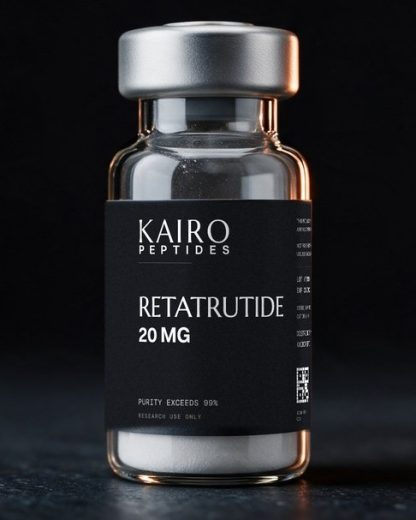
An investigational peptide, studied in research on metabolism.
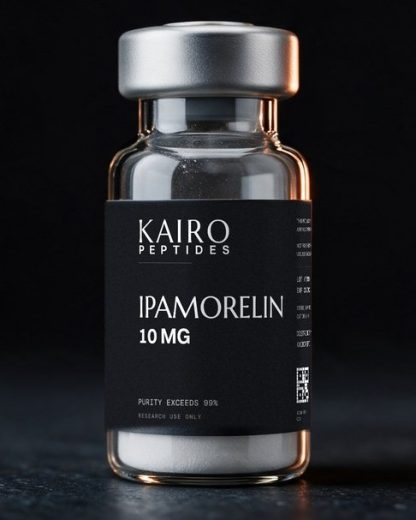
A selective peptide, studied in research on growth hormone signaling.
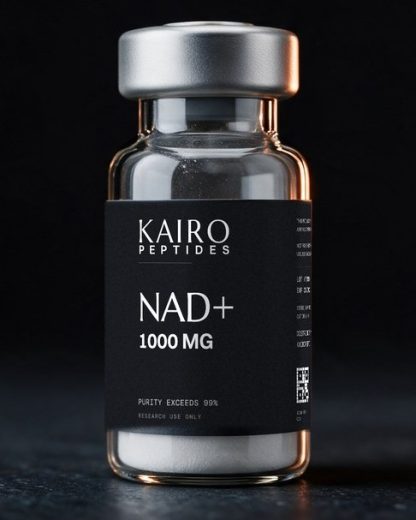
A cellular coenzyme, studied in research on energy metabolism and cellular aging.