
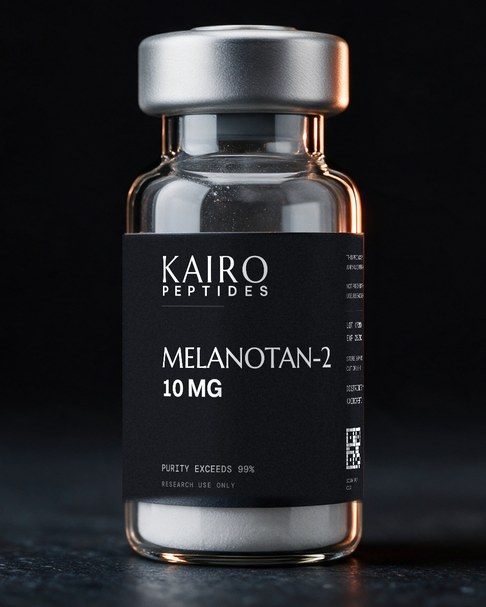
Melanotan-2
10MGStudied for erectile response and skin pigmentation in human trials, and appetite suppression in laboratory animals. Every paper behind those is linked below.
$40.00
- PURITY EXCEEDS 99%
- COA WITH EVERY BATCH
- 3RD-PARTY VERIFIED
| Title | Range | Discount |
|---|---|---|
| Pack tier: Melanotan-2 (KAIRO-MELANOTAN-2-10MG) | 1 - 2 | $40.00 |
| Pack of 3+: 10% off | 3 - 4 | $36.00 |
| Pack of 5+: 15% off | 5 - 9 | $34.00 |
| Pack of 10+: 20% off | 10 + | $32.00 |
For laboratory research use only. Not for human or veterinary use, not for diagnostic or therapeutic use, and not for food or drug manufacture. No preparation or usage guidance is provided anywhere on this page.
Reliable erections. Darker skin, no sun.
Both were measured in small, named human trials. This compound also carries real published harm reports and a market that routinely borrows 2 other, chemically different drugs' FDA approvals; the fuller record, including all of that, is below.
-
Erectile function
Preclinical strong Convergent results from more than one independent, well-designed human trial. Still the ceiling of what this page shows: 'strong' here never means the compound is an approved or recommended treatment.Melanotan-II is studied for its effect on erections. In 2 placebo-controlled human trials, most men who received it developed measurable erections without any deliberate stimulation, alongside nausea and a stretching-and-yawning pattern reported more often than with placebo.
-
Skin pigmentation and tanning
Preclinical moderate A well-described result with several independent outcome measures, but from a single laboratory, a single small trial, or a single research program.Melanotan-II is studied for skin pigmentation. In the compound's first human pilot trial, 2 of 3 volunteers showed measurably increased pigmentation a week after their schedule ended, alongside nausea and the same erection and stretching-and-yawning pattern seen in the trials above.
-
Appetite and feeding, in animals
Preclinical moderate A well-described result with several independent outcome measures, but from a single laboratory, a single small trial, or a single research program.Melanotan-II is studied in animals for appetite suppression. Given directly into the brain, it reduced feeding across several mouse models of overeating, and a separate rat study found the size of the effect depended on how much fat was in the diet. No human food-intake or weight trial of Melanotan-2 has been located.
Every line above describes what was measured in a laboratory. None of it establishes what the compound would do in a person.
Frequently paired with
What shoppers usually add alongside this one
A versatile peptide, studied in research on cell movement and tissue repair.
A recovery-focused blend, studied in research on tissue repair.
A multi-peptide skin blend, studied in research on skin and tissue.
What the research says about pairing these
Bremelanotide / PT-141
Flagged here as a NON-synergy and an identity caution, not a researched combination. The market pairing is really an identity blur: bremelanotide is not a complementary compound but Melanotan-2's own close structural relative, differing only at 1 end of the molecule (see molecular_facts), sold under its own name and, separately, as the FDA-approved drug Vyleesi. No published study of deliberately combining Melanotan-2 with bremelanotide was located, and combining 2 molecules this structurally close has no stated pharmacological rationale in anything reviewed here. Several vendor and consumer pages checked for the companion benefits file present the 2 as interchangeable or as a natural pair without disclosing that relationship. This dossier does not recommend or describe a combination.
No study of deliberately combining or stacking Melanotan-2 with bremelanotide was located in PubMed, PMC or Europe PMC in this pass. The 2 molecules are analytically distinguishable and separately regulated; presenting them as interchangeable, which several market sources do, is the confusion this synergies entry exists to correct rather than encourage.
-
Studied for
Erectile function and sexual desire in men (human trials)
In 2 double-blind, placebo-controlled, crossover human trials from the same research group, subcutaneous Melanotan-II reliably triggered penile erections without any deliberate sexual stimulation, measured objectively with a RigiScan monitor rather than by self-report alone. In the first trial, in 10 men with erectile dysfunction of no identified organic cause, 8 of 10 developed clinically apparent erections after Melanotan-II, with tip rigidity above 80% lasting a mean of 38.0 minutes versus 3.0 minutes after placebo; nausea, a stretching-and-yawning complex, and decreased appetite were reported more often after Melanotan-II than after placebo. In the second trial, in 10 men whose erectile dysfunction had an identified organic risk factor, Melanotan-II started subjectively reported erections in 12 of 19 uses versus 1 of 21 placebo uses, mean tip rigidity above 80% lasted 45.3 minutes versus 1.9 minutes, and reported sexual desire was higher after Melanotan-II than after placebo; several uses were associated with severe nausea. A third paper by the same group pools both trials into a combined 20-man dataset and restates the same findings; it is not independent evidence. Together these are the strongest primary human data that exist for this compound by name, not for a related molecule. HUMAN 2 double-blind, placebo-controlled, crossover human trials, 10 men each (the first in psychogenic erectile dysfunction, the second in men with organic risk factors), plus a pooled restatement of both by the same authors Preclinical strong Convergent results from more than one independent, well-designed human trial. Still the ceiling of what this page shows: 'strong' here never means the compound is an approved or recommended treatment. Open for the full finding and the paper it came from.In the literatureErectile function and sexual desire in men (human trials)
In 2 double-blind, placebo-controlled, crossover human trials from the same research group, subcutaneous Melanotan-II reliably triggered penile erections without any deliberate sexual stimulation, measured objectively with a RigiScan monitor rather than by self-report alone. In the first trial, in 10 men with erectile dysfunction of no identified organic cause, 8 of 10 developed clinically apparent erections after Melanotan-II, with tip rigidity above 80% lasting a mean of 38.0 minutes versus 3.0 minutes after placebo; nausea, a stretching-and-yawning complex, and decreased appetite were reported more often after Melanotan-II than after placebo. In the second trial, in 10 men whose erectile dysfunction had an identified organic risk factor, Melanotan-II started subjectively reported erections in 12 of 19 uses versus 1 of 21 placebo uses, mean tip rigidity above 80% lasted 45.3 minutes versus 1.9 minutes, and reported sexual desire was higher after Melanotan-II than after placebo; several uses were associated with severe nausea. A third paper by the same group pools both trials into a combined 20-man dataset and restates the same findings; it is not independent evidence. Together these are the strongest primary human data that exist for this compound by name, not for a related molecule.References 1, 2, 3
Model2 double-blind, placebo-controlled, crossover human trials, 10 men each (the first in psychogenic erectile dysfunction, the second in men with organic risk factors), plus a pooled restatement of both by the same authors
-
Studied for
Pigmentation and the first human pilot trial
The first published human trial of Melanotan-II tested it in exactly 3 healthy male volunteers, using a single-blind design that alternated Melanotan-II and saline placebo on an escalating schedule over 2 weeks. 2 of the 3 subjects showed increased pigmentation of the face, upper body and buttock, measured both by a reflectance instrument and by visual assessment, a week after the schedule ended; this is the origin of this compound's reputation as a tanning peptide. The same small trial is also the origin of the classic Melanotan-II side-effect profile: mild nausea at most levels tested, a stretching-and-yawning complex tied to the onset of spontaneous, unstimulated penile erections lasting 1 to 5 hours, and, at the highest level tested, marked drowsiness and fatigue in 1 of 2 subjects. This is real primary human data for Melanotan-II itself, not a related molecule, but the sample is 3 people, so it is read as an early pilot rather than a settled result. HUMAN a single-blind, alternating-day, placebo-controlled pilot human trial in 3 healthy male volunteers, subcutaneous use on an escalating schedule over 2 weeks Preclinical moderate A well-described result with several independent outcome measures, but from a single laboratory, a single small trial, or a single research program. Open for the full finding and the paper it came from.In the literaturePigmentation and the first human pilot trial
The first published human trial of Melanotan-II tested it in exactly 3 healthy male volunteers, using a single-blind design that alternated Melanotan-II and saline placebo on an escalating schedule over 2 weeks. 2 of the 3 subjects showed increased pigmentation of the face, upper body and buttock, measured both by a reflectance instrument and by visual assessment, a week after the schedule ended; this is the origin of this compound's reputation as a tanning peptide. The same small trial is also the origin of the classic Melanotan-II side-effect profile: mild nausea at most levels tested, a stretching-and-yawning complex tied to the onset of spontaneous, unstimulated penile erections lasting 1 to 5 hours, and, at the highest level tested, marked drowsiness and fatigue in 1 of 2 subjects. This is real primary human data for Melanotan-II itself, not a related molecule, but the sample is 3 people, so it is read as an early pilot rather than a settled result.References 4
Modela single-blind, alternating-day, placebo-controlled pilot human trial in 3 healthy male volunteers, subcutaneous use on an escalating schedule over 2 weeks
-
Studied for
Central appetite suppression (animal mechanism)
In a landmark 1997 mouse study that helped establish how the brain's melanocortin system controls hunger, researchers gave MTII directly into the brain's ventricles and found it suppressed feeding across 4 different mouse models of overeating: fasted normal mice, 2 genetically obese strains, and mice given neuropeptide Y to induce hunger. Giving a melanocortin-receptor blocker at the same time completely reversed the effect, showing the suppression worked through the melanocortin receptors themselves rather than some side effect. A separate 2015 study in rats, using the same direct-brain route, found the size of the feeding-suppression response to MTII depended on what the rats had been eating: rats kept on a free-choice high-fat diet showed a larger drop in food intake after MTII than rats on standard chow or high-sugar diets, an effect the authors linked to dietary fat content rather than how overweight the animals were. A third study, in female mice with excess androgen, found MTII's usual ability to suppress body weight failed in that specific hormonal context, showing the effect is not universal across physiological states. All of this is animal pharmacology: direct-brain-ventricle delivery, an experimental route rather than a usage instruction, confirmed for the Fan 1997 and van den Heuvel 2015 studies specifically, while the Nohara 2014 abstract does not state MTII's route. No human food-intake trial of Melanotan-II was located in this pass. mice and rats; direct brain-ventricle delivery confirmed for the Fan 1997 and van den Heuvel 2015 studies specifically, route not stated in the Nohara 2014 abstract Preclinical moderate A well-described result with several independent outcome measures, but from a single laboratory, a single small trial, or a single research program. Open for the full finding and the paper it came from.In the literatureCentral appetite suppression (animal mechanism)
In a landmark 1997 mouse study that helped establish how the brain's melanocortin system controls hunger, researchers gave MTII directly into the brain's ventricles and found it suppressed feeding across 4 different mouse models of overeating: fasted normal mice, 2 genetically obese strains, and mice given neuropeptide Y to induce hunger. Giving a melanocortin-receptor blocker at the same time completely reversed the effect, showing the suppression worked through the melanocortin receptors themselves rather than some side effect. A separate 2015 study in rats, using the same direct-brain route, found the size of the feeding-suppression response to MTII depended on what the rats had been eating: rats kept on a free-choice high-fat diet showed a larger drop in food intake after MTII than rats on standard chow or high-sugar diets, an effect the authors linked to dietary fat content rather than how overweight the animals were. A third study, in female mice with excess androgen, found MTII's usual ability to suppress body weight failed in that specific hormonal context, showing the effect is not universal across physiological states. All of this is animal pharmacology: direct-brain-ventricle delivery, an experimental route rather than a usage instruction, confirmed for the Fan 1997 and van den Heuvel 2015 studies specifically, while the Nohara 2014 abstract does not state MTII's route. No human food-intake trial of Melanotan-II was located in this pass.References 5, 6, 7
Modelmice and rats; direct brain-ventricle delivery confirmed for the Fan 1997 and van den Heuvel 2015 studies specifically, route not stated in the Nohara 2014 abstract
-
Studied for
Molecular design and non-selective receptor pharmacology
The specific ring-closed structure that became Melanotan-II traces to a 1989 medicinal chemistry paper that systematically tested cyclic, lactam-bridged versions of alpha-MSH's active core in frog and lizard skin-darkening bioassays, looking for a shape that would hold its potency longer than the natural hormone. One of the 7 cyclic analogues made in that paper is an exact structural match for what would later be sold as Melanotan-II, and showed markedly higher potency than natural alpha-MSH in the lizard skin assay; the paper does not yet use the name Melanotan-II. A 2024 review of standard tool compounds for the melanocortin receptor family describes Melanotan-II, alongside afamelanotide and an antagonist compound, as one of a small set of reference molecules that shaped the field's understanding of these receptors and now serves as a scaffold for FDA-approved drugs, a description consistent with Melanotan-II's structural relationship to bremelanotide (see molecular_facts). Independent sources elsewhere in this dossier separately describe Melanotan-II as a non-selective melanocortin-receptor agonist, meaning it activates several of the 5 melanocortin receptor subtypes at once rather than being narrowly selective. That non-selectivity is the same underlying reason the compound produces effects on skin, the brain's appetite circuits and sexual response together rather than through any single pathway alone. structure-activity relationship studies in frog and lizard skin bioassays (1989 design paper), plus a later narrative review of receptor pharmacology Preclinical moderate A well-described result with several independent outcome measures, but from a single laboratory, a single small trial, or a single research program. Open for the full finding and the paper it came from.In the literatureMolecular design and non-selective receptor pharmacology
The specific ring-closed structure that became Melanotan-II traces to a 1989 medicinal chemistry paper that systematically tested cyclic, lactam-bridged versions of alpha-MSH's active core in frog and lizard skin-darkening bioassays, looking for a shape that would hold its potency longer than the natural hormone. One of the 7 cyclic analogues made in that paper is an exact structural match for what would later be sold as Melanotan-II, and showed markedly higher potency than natural alpha-MSH in the lizard skin assay; the paper does not yet use the name Melanotan-II. A 2024 review of standard tool compounds for the melanocortin receptor family describes Melanotan-II, alongside afamelanotide and an antagonist compound, as one of a small set of reference molecules that shaped the field's understanding of these receptors and now serves as a scaffold for FDA-approved drugs, a description consistent with Melanotan-II's structural relationship to bremelanotide (see molecular_facts). Independent sources elsewhere in this dossier separately describe Melanotan-II as a non-selective melanocortin-receptor agonist, meaning it activates several of the 5 melanocortin receptor subtypes at once rather than being narrowly selective. That non-selectivity is the same underlying reason the compound produces effects on skin, the brain's appetite circuits and sexual response together rather than through any single pathway alone.References 8, 9
Modelstructure-activity relationship studies in frog and lizard skin bioassays (1989 design paper), plus a later narrative review of receptor pharmacology
-
Studied for
What's actually in the vial: analytical testing of the unregulated market
2 independent forensic and analytical chemistry teams have directly tested what unregulated Melanotan-II products actually contain. A 2015 Danish study bought vials labeled as containing 10 mg of Melanotan-II from 3 online shops and measured them by LC-UV and tandem mass spectrometry: vials from 2 of the 3 shops contained unidentified impurities of 4.1% to 5.9%, and actual Melanotan-II content across the purchased vials ranged from 4.32 mg to 8.84 mg, meaning some vials held well under half of what the label claimed. A 2021 Italian forensic toxicology study used high-resolution mass spectrometry to characterize Melanotan-II and bremelanotide separately in 8 unlabeled samples seized by police alongside anabolic steroids and other performance and image-enhancing drugs, confirming the 2 peptides are analytically distinguishable compounds rather than the same substance sold under 2 names. Together these findings describe the real, tested contents of the unregulated market this compound is sold into, not the biological action of Melanotan-II itself. analytical chemistry (LC-UV, tandem mass spectrometry, high-resolution mass spectrometry) applied to vials and seized samples purchased or confiscated from the unregulated market Preclinical moderate A well-described result with several independent outcome measures, but from a single laboratory, a single small trial, or a single research program. Open for the full finding and the paper it came from.In the literatureWhat's actually in the vial: analytical testing of the unregulated market
2 independent forensic and analytical chemistry teams have directly tested what unregulated Melanotan-II products actually contain. A 2015 Danish study bought vials labeled as containing 10 mg of Melanotan-II from 3 online shops and measured them by LC-UV and tandem mass spectrometry: vials from 2 of the 3 shops contained unidentified impurities of 4.1% to 5.9%, and actual Melanotan-II content across the purchased vials ranged from 4.32 mg to 8.84 mg, meaning some vials held well under half of what the label claimed. A 2021 Italian forensic toxicology study used high-resolution mass spectrometry to characterize Melanotan-II and bremelanotide separately in 8 unlabeled samples seized by police alongside anabolic steroids and other performance and image-enhancing drugs, confirming the 2 peptides are analytically distinguishable compounds rather than the same substance sold under 2 names. Together these findings describe the real, tested contents of the unregulated market this compound is sold into, not the biological action of Melanotan-II itself.References 10, 11
Modelanalytical chemistry (LC-UV, tandem mass spectrometry, high-resolution mass spectrometry) applied to vials and seized samples purchased or confiscated from the unregulated market
-
Studied for
Acute systemic toxicity: rhabdomyolysis and kidney injury
A 2012 emergency-medicine case report describes a 39-year-old man who took a subcutaneous amount of Melanotan-II several times his usual starting amount and presented within hours with body aches, sweating, anxiety, a fast heart rate peaking at 146 beats per minute, dilated pupils and muscle tremors. His creatine kinase, a marker of muscle breakdown, was 1,760 IU/L on arrival and rose to 17,773 IU/L over the following 12 hours; his creatinine also rose, and his urine showed blood with red cell casts. He was managed in an intensive care unit with intravenous fluids and sodium bicarbonate for rhabdomyolysis, improving over 3 days. The substance he had used was confirmed by mass spectrometry against an industry reference standard to actually be Melanotan-II; his urine drug screen was also positive for opiates, a confound the case report itself does not resolve. A separate 2020 nephrology case report and literature review describes a case of renal infarction, a blockage of blood flow to part of the kidney, attributed by the authors to Melanotan-II use through a proposed clotting or direct toxic mechanism distinct from rhabdomyolysis-driven kidney injury; that paper cites the 2012 case above as prior literature. Both are single-case reports; neither establishes how often these events occur among people who use Melanotan-II generally. 2 independent single-case reports (emergency medicine and nephrology) Preclinical preliminary A single study, a single case report, or a result whose interpretation is the authors' own inference; several harm reports on this page are rated preliminary for exactly this reason, which describes the evidentiary design, not the seriousness of what happened. Open for the full finding and the paper it came from.In the literatureAcute systemic toxicity: rhabdomyolysis and kidney injury
A 2012 emergency-medicine case report describes a 39-year-old man who took a subcutaneous amount of Melanotan-II several times his usual starting amount and presented within hours with body aches, sweating, anxiety, a fast heart rate peaking at 146 beats per minute, dilated pupils and muscle tremors. His creatine kinase, a marker of muscle breakdown, was 1,760 IU/L on arrival and rose to 17,773 IU/L over the following 12 hours; his creatinine also rose, and his urine showed blood with red cell casts. He was managed in an intensive care unit with intravenous fluids and sodium bicarbonate for rhabdomyolysis, improving over 3 days. The substance he had used was confirmed by mass spectrometry against an industry reference standard to actually be Melanotan-II; his urine drug screen was also positive for opiates, a confound the case report itself does not resolve. A separate 2020 nephrology case report and literature review describes a case of renal infarction, a blockage of blood flow to part of the kidney, attributed by the authors to Melanotan-II use through a proposed clotting or direct toxic mechanism distinct from rhabdomyolysis-driven kidney injury; that paper cites the 2012 case above as prior literature. Both are single-case reports; neither establishes how often these events occur among people who use Melanotan-II generally.References 12, 13
Model2 independent single-case reports (emergency medicine and nephrology)
-
Studied for
Priapism
At least 3 published case reports describe priapism, a painful erection lasting well beyond ordinary sexual response, after Melanotan-II use. The earliest, a 2013 letter to the editor responding to the rhabdomyolysis case above, describes a case of priapism following Melanotan-II use well beyond typical amounts; PubMed carries no abstract for this letter, so beyond its title and its status as an early published instance, no further clinical detail from it is stated here. A 2019 case report describes a man who developed acute low-flow priapism after abdominal subcutaneous use of melanotan, managed with cavernosal aspiration, irrigation and intracavernosal phenylephrine, avoiding surgery but not having recovered erectile function at 4-week follow-up. A 2021 case report describes a man with acute ischemic priapism after subcutaneous Melanotan-II use whose conservative management failed, requiring operative penoscrotal decompression; that paper states priapism after Melanotan-II had, to its authors' knowledge, been reported in the literature only twice before. Read together, the pattern across these reports is that Melanotan-II-associated priapism is not self-limiting in every case, with outcomes ranging from unresolved erectile function at 1 month to a surgical emergency. 3 independent single-case reports, 1 available as title and metadata only Preclinical preliminary A single study, a single case report, or a result whose interpretation is the authors' own inference; several harm reports on this page are rated preliminary for exactly this reason, which describes the evidentiary design, not the seriousness of what happened. Open for the full finding and the paper it came from.In the literaturePriapism
At least 3 published case reports describe priapism, a painful erection lasting well beyond ordinary sexual response, after Melanotan-II use. The earliest, a 2013 letter to the editor responding to the rhabdomyolysis case above, describes a case of priapism following Melanotan-II use well beyond typical amounts; PubMed carries no abstract for this letter, so beyond its title and its status as an early published instance, no further clinical detail from it is stated here. A 2019 case report describes a man who developed acute low-flow priapism after abdominal subcutaneous use of melanotan, managed with cavernosal aspiration, irrigation and intracavernosal phenylephrine, avoiding surgery but not having recovered erectile function at 4-week follow-up. A 2021 case report describes a man with acute ischemic priapism after subcutaneous Melanotan-II use whose conservative management failed, requiring operative penoscrotal decompression; that paper states priapism after Melanotan-II had, to its authors' knowledge, been reported in the literature only twice before. Read together, the pattern across these reports is that Melanotan-II-associated priapism is not self-limiting in every case, with outcomes ranging from unresolved erectile function at 1 month to a surgical emergency.References 14, 15, 16
Model3 independent single-case reports, 1 available as title and metadata only
-
Studied for
Melanocytic lesion changes and melanoma
A 2017 dermatology review states that a growing number of case reports link unregulated use of both afamelanotide and Melanotan-II to skin complications, particularly changes in existing moles and newly emerging moles, and that several case reports at the time described melanoma emerging from existing moles during or shortly after melanotan use, while noting that conclusive evidence linking these events is lacking even as multiple national health organizations had issued safety warnings. Individual case reports since then and before it, several verified here only at the title-and-metadata level because they carry no indexed abstract, describe: a 20-year-old woman whose melanoma was diagnosed 3 months after a several-week course of self-directed Melanotan-II use alongside sunbed tanning; a UK report of newly emerging moles following melanotan use; a Belgian report of melanoma associated with melanotan use; a 2026 report of a man with brown pigmentation of the gums and inner cheeks after several weeks of self-directed Melanotan-II use, which faded over the following months after he stopped; and a 2026 report of 5 separate melanomas in situ in a 49-year-old man who had used tanning beds, Melanotan-II followed by Melanotan-I, and testosterone at the same time, in which the authors state plainly that causality could not be established and call tanning-bed use a well-established and likely significant independent risk factor for melanoma and a major confounding variable, while listing testosterone as a further possible confounder and noting the short melanotan exposure window raised the possibility the lesions were already present and only became visible rather than newly forming. No case report located in this pass isolates Melanotan-II as the sole exposure; every detailed report available in full names at least 1 other tanning or hormonal exposure at the same time. a 2017 review plus individual case reports, 2009 to 2026, multiple countries, several accessible only as verified titles Preclinical preliminary A single study, a single case report, or a result whose interpretation is the authors' own inference; several harm reports on this page are rated preliminary for exactly this reason, which describes the evidentiary design, not the seriousness of what happened. Open for the full finding and the paper it came from.In the literatureMelanocytic lesion changes and melanoma
A 2017 dermatology review states that a growing number of case reports link unregulated use of both afamelanotide and Melanotan-II to skin complications, particularly changes in existing moles and newly emerging moles, and that several case reports at the time described melanoma emerging from existing moles during or shortly after melanotan use, while noting that conclusive evidence linking these events is lacking even as multiple national health organizations had issued safety warnings. Individual case reports since then and before it, several verified here only at the title-and-metadata level because they carry no indexed abstract, describe: a 20-year-old woman whose melanoma was diagnosed 3 months after a several-week course of self-directed Melanotan-II use alongside sunbed tanning; a UK report of newly emerging moles following melanotan use; a Belgian report of melanoma associated with melanotan use; a 2026 report of a man with brown pigmentation of the gums and inner cheeks after several weeks of self-directed Melanotan-II use, which faded over the following months after he stopped; and a 2026 report of 5 separate melanomas in situ in a 49-year-old man who had used tanning beds, Melanotan-II followed by Melanotan-I, and testosterone at the same time, in which the authors state plainly that causality could not be established and call tanning-bed use a well-established and likely significant independent risk factor for melanoma and a major confounding variable, while listing testosterone as a further possible confounder and noting the short melanotan exposure window raised the possibility the lesions were already present and only became visible rather than newly forming. No case report located in this pass isolates Melanotan-II as the sole exposure; every detailed report available in full names at least 1 other tanning or hormonal exposure at the same time.References 17, 18, 19, 20, 21, 22
Modela 2017 review plus individual case reports, 2009 to 2026, multiple countries, several accessible only as verified titles
-
Studied for
Female sexual behavior: animal-verified, human claim unresolved
In ovariectomized, hormone-primed rats, intravenous Melanotan-II increased proceptive sexual behaviors, solicitations such as hops, darts and ear-wiggling, in females primed with both estrogen and progesterone, though it did not change pacing or the lordosis reflex, and had no effect in females primed with estrogen alone; the authors read this as evidence that progesterone interacts with Melanotan-II to increase solicitation behavior specifically. This is animal data. Separately, a University of Arizona investigator involved in the original human trials above later wrote, in a short first-person historical account, that Melanotan-II can enhance sexual function in human males and in females, framing the discovery as accidental during skin-pigmentation studies. That sentence is the only source located in this pass for a human female effect; no peer-reviewed trial report giving a method, a sample size or a statistical result for Melanotan-II and female sexual response in humans was found. This dossier does not carry a human female finding beyond flagging that the claim exists in the literature without a located primary trial behind it. 1 animal study (ovariectomized, hormone-primed rats, intravenous route) plus 1 first-person historical account asserting an unreferenced human female effect Preclinical preliminary A single study, a single case report, or a result whose interpretation is the authors' own inference; several harm reports on this page are rated preliminary for exactly this reason, which describes the evidentiary design, not the seriousness of what happened. Open for the full finding and the paper it came from.In the literatureFemale sexual behavior: animal-verified, human claim unresolved
In ovariectomized, hormone-primed rats, intravenous Melanotan-II increased proceptive sexual behaviors, solicitations such as hops, darts and ear-wiggling, in females primed with both estrogen and progesterone, though it did not change pacing or the lordosis reflex, and had no effect in females primed with estrogen alone; the authors read this as evidence that progesterone interacts with Melanotan-II to increase solicitation behavior specifically. This is animal data. Separately, a University of Arizona investigator involved in the original human trials above later wrote, in a short first-person historical account, that Melanotan-II can enhance sexual function in human males and in females, framing the discovery as accidental during skin-pigmentation studies. That sentence is the only source located in this pass for a human female effect; no peer-reviewed trial report giving a method, a sample size or a statistical result for Melanotan-II and female sexual response in humans was found. This dossier does not carry a human female finding beyond flagging that the claim exists in the literature without a located primary trial behind it.References 23, 24
Model1 animal study (ovariectomized, hormone-primed rats, intravenous route) plus 1 first-person historical account asserting an unreferenced human female effect
-
Studied for
Posterior reversible encephalopathy syndrome
A short clinical report on Melanotan and posterior reversible encephalopathy syndrome was published in a general-medicine journal in 2013, describing a case of PRES, a syndrome of seizures, visual disturbance, confusion, headache and vomiting together with a characteristic pattern of reversible brain swelling on MRI, in the setting of melanotan use. The full text sits behind a subscription paywall; PubMed and Europe PMC both carry only the title for this record, with no indexed abstract, and a direct fetch of the publisher page returned an access-denied response. This dossier states only what is independently confirmable: the citation is real and correctly resolves in both PubMed and Crossref, it was published in a high-profile general-medicine journal, a real editorial bar for a case report to clear, and its title describes a reported case of PRES associated with melanotan use. No age, sex, amount used, timeline or outcome is stated here, because none of it was accessible in this pass. 1 case report, content inaccessible beyond title and bibliographic metadata Preclinical preliminary A single study, a single case report, or a result whose interpretation is the authors' own inference; several harm reports on this page are rated preliminary for exactly this reason, which describes the evidentiary design, not the seriousness of what happened. Open for the full finding and the paper it came from.In the literaturePosterior reversible encephalopathy syndrome
A short clinical report on Melanotan and posterior reversible encephalopathy syndrome was published in a general-medicine journal in 2013, describing a case of PRES, a syndrome of seizures, visual disturbance, confusion, headache and vomiting together with a characteristic pattern of reversible brain swelling on MRI, in the setting of melanotan use. The full text sits behind a subscription paywall; PubMed and Europe PMC both carry only the title for this record, with no indexed abstract, and a direct fetch of the publisher page returned an access-denied response. This dossier states only what is independently confirmable: the citation is real and correctly resolves in both PubMed and Crossref, it was published in a high-profile general-medicine journal, a real editorial bar for a case report to clear, and its title describes a reported case of PRES associated with melanotan use. No age, sex, amount used, timeline or outcome is stated here, because none of it was accessible in this pass.References 25
Model1 case report, content inaccessible beyond title and bibliographic metadata
1 strong / 4 moderate / 5 preliminaryRated by how many independent labs and how many kinds of experiment found the same thing.
What is in the vial.
| Compound | Melanotan-2 |
| Dosage form | Lyophilized powder |
| Purity | PURITY EXCEEDS 99% |
| Storage | STORE LYOPHILIZED. KEEP COLD AND OUT OF LIGHT. |
| Lot format | LOT + EXP printed per vial |
| Distribution | DISTRIBUTED BY KAIRO, KAIROPEPTIDES.COM |
A cyclic melanocortin analog.
The full technical write-up 3 paragraphs, plus the fact row
Melanotan-2, also written MT-2 or MT-II, is a synthetic research peptide: a ring-closed, 7-residue analog of the 4-10 fragment of the body's own alpha-melanocyte-stimulating hormone (alpha-MSH), the natural signal that activates melanocortin receptors on skin, in the brain and elsewhere. Its designed structure carries a norleucine swapped in at position 4, a mirror-image D-phenylalanine at position 7, and a lactam bridge locking 2 side chains into a ring, ending in an amide rather than a free acid. The ring closure and the 2 substitutions are what make it far more potent and longer-acting than natural alpha-MSH. The name Melanotan-II first appears in the peer-reviewed literature in a 1996 pilot human trial; the 1989 design paper that describes the identical structure does not yet use that name.
The naming problem is handled explicitly here, because casual use of the word 'melanotan' online, and even on some vendor and explainer pages checked for the companion benefits file, blurs together 3 separate molecules. First, Melanotan-2 itself, described above, never approved by the FDA or any other regulator for any human use. Second, bremelanotide, also sold as PT-141: comparing the 2 molecules' structures directly shows bremelanotide is chemically identical to Melanotan-2 across the entire ring and side-chain structure, differing only at one end, a free acid in bremelanotide versus an amide in Melanotan-2. Unlike Melanotan-2, bremelanotide went through its own separate clinical trial program and received its own FDA approval, as Vyleesi, in 2019, for acquired, generalized low sexual desire in premenopausal women. That approval, and any trial data behind it, belongs to bremelanotide and is not carried into this dossier as evidence about Melanotan-2. Third, afamelanotide, also called Melanotan-1 or NDP-MSH: a substantially different, larger, linear 13-residue molecule, not a truncated or ring-closed fragment like Melanotan-2, carrying an unrelated formula and registry number. Afamelanotide received its own separate FDA approval, as the Scenesse implant, in 2019, to increase pain-free light exposure in adults with a history of light-triggered skin reactions from a specific porphyria condition. A mainstream consumer health reference checked for the companion benefits file does not distinguish melanotan-1 from melanotan-2 at all, using 'melanotan (also known as melanotan II)' interchangeably; that is real, documented evidence that this confusion is not confined to fringe vendor pages.
Regulatory and research-registry status, checked directly. The FDA has never approved Melanotan-2 for any use. This dossier's own text search of the current WADA Prohibited List found no mention of 'melanotan,' 'melanocortin,' 'melanocyte,' 'MSH' or 'tanning' anywhere in the document, so Melanotan-2 is not specifically named on that list, though that does not mean a general non-approved-substance clause could never reach it. A live clinical-trial registry search for 'melanotan II' returns exactly 1 record, a Phase 2, recruiting study pairing it with UV-B light for vitiligo, with no posted results and an oddly templated-sounding summary field; it is noted here for completeness, not as evidence, and is not cited in research_areas. Research use only. This material is not an approved drug and this dossier makes no claim of any kind about what it does to a person.References 8, 9, 26, 27, 28
- Length
- 7 amino acids, cyclic, N-acetylated, with a C-terminal amide rather than a free acid; not expressible as a simple linear chain of standard residues, so no sequence rail renders for this compound (see page_render_notes)
- Also known as
- Melanotan II, Melanotan-II, MT-II, MTII
- Status
- Not an approved drug in the United States or anywhere else
Sold as a laboratory research material.
Molecular identity
Sequence, formula and registry numbers
- Formula
- Registered form C50H69N15O9
- Molar mass
- Registered form 1024.2 g/mol(monoisotopic mass 1023.54026884)
- CAS
- Registered form 121062-08-6
- PubChem CID
- Registered form 92432
PubChem's identifier fields for this compound (formula, mass, CAS, UNII) all agree across every field checked, unlike the CAS ambiguity documented for CJC-1295 elsewhere in this catalog; no CAS ambiguity is flagged here. 2 other molecules are routinely confused with this one and are directly compared rather than merely named. Bremelanotide (PubChem CID 9941379): C50H68N14O10, 1025.2 g/mol, CAS 189691-06-3. Placing its structure beside Melanotan-2's shows both are identical atom-for-atom and bond-for-bond across the entire ring, side chains and backbone, differing only at the C-terminus: Melanotan-2 ends in a primary amide, bremelanotide ends in a free carboxylic acid. Bremelanotide is FDA-approved as Vyleesi (2019) for acquired, generalized low sexual desire in premenopausal women; that approval belongs to bremelanotide, not to this compound. Afamelanotide (PubChem CID 16197727), also called Melanotan-1 or NDP-MSH: C78H111N21O19, 1646.8 g/mol, CAS 75921-69-6, a much larger, linear, 13-residue molecule carrying the same 2 substitutions used in Melanotan-2 but with no ring closure and no truncation, unrelated to Melanotan-2 in formula, mass or CAS number. Afamelanotide is FDA-approved as the Scenesse implant (2019) to increase pain-free light exposure in adults with a history of light-triggered skin reactions from erythropoietic protoporphyria; that approval likewise belongs to afamelanotide, not to this compound.References 26, 27, 28
Once it is mixed, it goes in the fridge.
Water is what ages a peptide, so the rules change the moment you add it.
The longer version 3 rows
- Before you mix it
- Supplied as a lyophilized (freeze-dried) powder. Standard laboratory practice for lyophilized research peptides is to hold the sealed vial frozen for long-term storage, commonly at or below -4 F, protected from light, and to avoid repeated freeze-thaw cycles, which degrade peptide material. That is general practice for this class of material, not a claim attributed to any supplier or brand.
- Once it is mixed
- Once mixed, keep the vial refrigerated at 36 to 46 F (2 to 8 C), for up to 28 days. The 28 days is a USP <797> sterility limit for a preserved multiple-use vial, the same limit that applies regardless of which peptide the vial holds, not a measured chemical stability window for this peptide specifically. Mixing volumes, concentrations, routes and schedules are preparation-for-administration details and remain withheld here as they are on every page in this catalog.
- In the literature
- None located. No primary-literature or manufacturer stability study specific to Melanotan-2 was found in this search pass. Specific day-count or potency-retention figures that circulate on vendor and forum pages trace to those pages, not to any stability study independently verified here, and this dossier does not restate them. A specific chemical-stability window should come only from a seller's own certificate of analysis or stability testing.
Every paper this page is built on.
Click any journal to open the paper.
- J Urol
- Urology
- Int J Impot Res
- Life Sci
- Nature
- Front Behav Neurosci
- Obesity (Silver Spring)
- J Med Chem
- ACS Pharmacol Transl Sci
- Drug Test Anal
- Clin Toxicol (Phila)
- CEN Case Rep
- BMJ Case Rep
- Sex Med
- Int J Dermatol
- Dermatology
- Br J Dermatol
- Life (Basel)
- JAAD Case Rep
- Pharmacol Biochem Behav
- Peptides
- Ann Intern Med
The full list 28 references, each linked
-
1
Wessells H, Fuciarelli K, Hansen J, Hadley ME, Hruby VJ, Dorr R, Levine N. Synthetic melanotropic peptide initiates erections in men with psychogenic erectile dysfunction: double-blind, placebo controlled crossover study. J Urol. 1998;160(2):389-393.
-
2
Wessells H, Gralnek D, Dorr R, Hruby VJ, Hadley ME, Levine N. Effect of an alpha-melanocyte stimulating hormone analog on penile erection and sexual desire in men with organic erectile dysfunction. Urology. 2000;56(4):641-646.
-
3
Wessells H, Levine N, Hadley ME, Dorr R, Hruby V. Melanocortin receptor agonists, penile erection, and sexual motivation: human studies with Melanotan II. Int J Impot Res. 2000;12(Suppl 4):S74-S79.
-
4
Dorr RT, Lines R, Levine N, Brooks C, Xiang L, Hruby VJ, Hadley ME. Evaluation of melanotan-II, a superpotent cyclic melanotropic peptide in a pilot phase-I clinical study. Life Sci. 1996;58(20):1777-1784.
-
5
Fan W, Boston BA, Kesterson RA, Hruby VJ, Cone RD. Role of melanocortinergic neurons in feeding and the agouti obesity syndrome. Nature. 1997;385(6612):165-168.
-
6
van den Heuvel JK, Eggels L, van Rozen AJ, Fliers E, Kalsbeek A, Adan RA, la Fleur SE. Inhibitory Effect of the Melanocortin Receptor Agonist Melanotan-II (MTII) on Feeding Depends on Dietary Fat Content and not Obesity in Rats on Free-Choice Diets. Front Behav Neurosci. 2015;9:358.
-
7
Nohara K, Laque A, Allard C, Munzberg H, Mauvais-Jarvis F. Central mechanisms of adiposity in adult female mice with androgen excess. Obesity (Silver Spring). 2014;22(6):1477-1484.
-
8
Al-Obeidi F, Castrucci AM, Hadley ME, Hruby VJ. Potent and prolonged acting cyclic lactam analogues of alpha-melanotropin: design based on molecular dynamics. J Med Chem. 1989;32(12):2555-2561.
-
9
Weirath NA, Haskell-Luevano C. Recommended Tool Compounds for the Melanocortin Receptor (MCR) G Protein-Coupled Receptors (GPCRs). ACS Pharmacol Transl Sci. 2024;7(9):2706-2724.
-
10
Breindahl T, Evans-Brown M, Hindersson P, McVeigh J, Bellis M, Stensballe A, Kimergard A. Identification and characterization by LC-UV-MS/MS of melanotan II skin-tanning products sold illegally on the Internet. Drug Test Anal. 2015;7(2):164-172.
-
11
Mestria S, Odoardi S, Frison G, Strano Rossi S. LC-HRMS characterization of the skin pigmentation and sexual enhancers melanotan II and bremelanotide sold on the black market of performance and image enhancing drugs. Drug Test Anal. 2021;13(4):876-882.
-
12
Nelson ME, Bryant SM, Aks SE. Melanotan II injection resulting in systemic toxicity and rhabdomyolysis. Clin Toxicol (Phila). 2012;50(10):1169-1173.
-
13
Peters B, Hadimeri H, Wahlberg R, Afghahi H. Melanotan II: a possible cause of renal infarction: review of the literature and case report. CEN Case Rep. 2020;9(2):159-161.
PubMed 31953620 doi:10.1007/s13730-020-00447-z Free full text
-
14
Devlin J, Pomerleau A, Foote J. Melanotan II overdose associated with priapism. Clin Toxicol (Phila). 2013;51(4):383.
-
15
Dreyer BA, Amer T, Fraser M. Melanotan-induced priapism: a hard-earned tan. BMJ Case Rep. 2019;12(2):e227644.
-
16
Mallory CW, Lopategui DM, Cordon BH. Melanotan Tanning Injection: A Rare Cause of Priapism. Sex Med. 2021;9(1):100298.
-
17
Habbema L, Halk AB, Neumann M, Bergman W. Risks of unregulated use of alpha-melanocyte-stimulating hormone analogues: a review. Int J Dermatol. 2017;56(10):975-980.
-
18
Hjuler KF, Lorentzen HF. Melanoma associated with the use of melanotan-II. Dermatology. 2014;228(1):34-36.
-
19
Cousen P, Colver G, Helbling I. Eruptive melanocytic naevi following melanotan injection. Br J Dermatol. 2009;161(3):707-708.
-
20
Paurobally D, Jason F, Dezfoulian B, Nikkels AF. Melanotan-associated melanoma. Br J Dermatol. 2011;164(6):1403-1405.
-
21
Bonchev A. Changes in Oral Mucosa Associated with Melanotan II Injections: A Case Report. Life (Basel). 2026;16(2):265.
-
22
Vadner DJ, Smith S. Five primary melanomas in situ in a patient with recent tanning bed use, melanotan exposure, and anabolic hormone use. JAAD Case Rep. 2026;73:111-114.
PubMed 42328529 doi:10.1016/j.jdcr.2026.05.009 Free full text
-
23
Rossler AS, Pfaus JG, Kia HK, Bernabe J, Alexandre L, Giuliano F. The melanocortin agonist, melanotan II, enhances proceptive sexual behaviors in the female rat. Pharmacol Biochem Behav. 2006;85(3):514-521.
-
24
Hadley ME. Discovery that a melanocortin regulates sexual functions in male and female humans. Peptides. 2005;26(10):1687-1689.
-
25
Kaski D, Stafford N, Mehta A, Jenkins IH, Malhotra P. Melanotan and the Posterior Reversible Encephalopathy Syndrome. Ann Intern Med. 2013;158(9):707-708.
-
26
PubChem Compound Summary for CID 92432, Melanotan II. National Center for Biotechnology Information. Retrieved July 28, 2026.
-
27
PubChem Compound Summary for CID 9941379, Bremelanotide. National Center for Biotechnology Information. Retrieved July 28, 2026.
-
28
PubChem Compound Summary for CID 16197727, Afamelanotide. National Center for Biotechnology Information. Retrieved July 28, 2026.
28 sources: 25 peer-reviewed papers and 3 primary documents.
Sources re-verified July 28, 2026
THIS PRODUCT IS NOT FOR HUMAN OR ANIMAL CONSUMPTION OF ANY KIND.
NOT FOR THERAPEUTIC OR DIAGNOSTIC USE. RESEARCH USE ONLY.
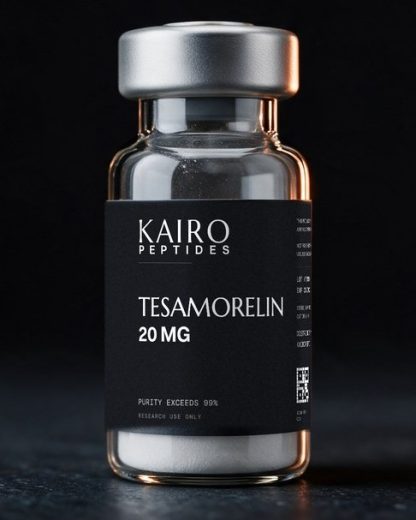
A well-documented peptide, studied in research on growth hormone release.
A versatile peptide, studied in research on cell movement and tissue repair.
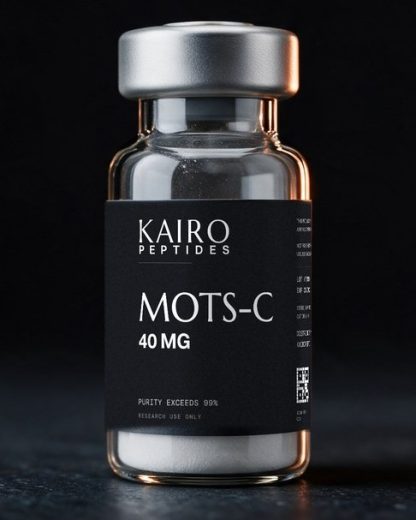
A mitochondrial peptide, studied in research on metabolism and exercise.