
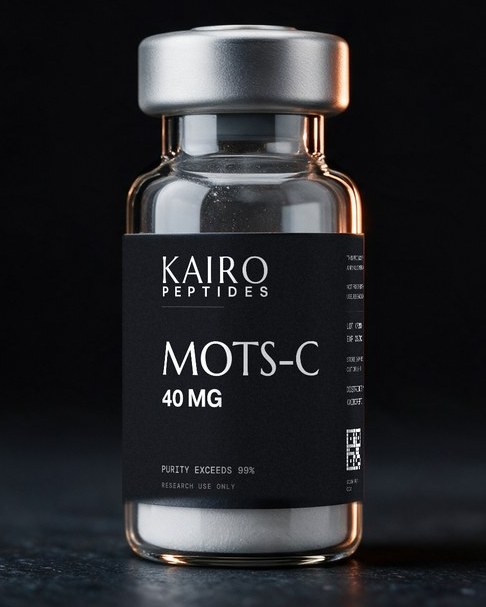
MOTS-c
40MGStudied for blood sugar and insulin sensitivity, physical performance, body fat, muscle and lower-body strength, cellular energy, and the physical decline that comes with age. Every paper behind those is linked below.
$110.00
- PURITY EXCEEDS 99%
- COA WITH EVERY BATCH
- 3RD-PARTY VERIFIED
| Title | Range | Discount |
|---|---|---|
| Pack tier: MOTS-c (KAIRO-MOTS-C-40MG) | 1 - 2 | $110.00 |
| Pack of 3+: 10% off | 3 - 4 | $99.00 |
| Pack of 5+: 15% off | 5 - 9 | $93.50 |
| Pack of 10+: 20% off | 10 + | $88.00 |
For laboratory research use only. Not for human or veterinary use, not for diagnostic or therapeutic use, and not for food or drug manufacture. No preparation or usage guidance is provided anywhere on this page.
Metabolism and muscle. Almost nowhere else.
MOTS-c is thought to be the signal the mitochondria send when fuel runs short, which is why this research keeps landing on blood sugar, body fat, exercise and the physical decline that comes with age.
-
Blood sugar and insulin sensitivity
Preclinical moderate A well-described result with several independent outcome measures, but from a single laboratory or a single study design.In mice, MOTS-c is reported to have prevented the loss of insulin sensitivity that age and a high-fat diet normally cause. That is a single mouse and cell-culture study, not a study in people.
-
Exercise and physical performance
Preclinical moderate A well-described result with several independent outcome measures, but from a single laboratory or a single study design.The body's own MOTS-c is reported to rise 11.9-fold in human muscle tissue after a single bout of exercise. In mice, giving the peptide was reported to improve treadmill running at young, middle and old ages.
-
Physical decline with age
Preclinical moderate A well-described result with several independent outcome measures, but from a single laboratory or a single study design.In old mice at 22 months, MOTS-c is reported to have raised treadmill running time 2-fold and distance 2.16-fold against control animals. The same work found no grip-strength gain in young mice.
-
Body fat and weight
Preclinical moderate A well-described result with several independent outcome measures, but from a single laboratory or a single study design.In mice fed a high-fat diet, MOTS-c is reported to have prevented the weight gain that diet caused. Nothing comparable has been tested in people.
-
Muscle and lower-body strength
Preclinical preliminary A single study, an early mechanistic observation, or a result whose interpretation is the authors' own inference.In physically active adults who were given nothing, blood MOTS-c is reported to track with leg muscle mass and with the power and force produced in a jump test. That is a correlation in 20 people, not a test of giving the peptide.
Blood MOTS-c and muscle strength in people (an observational correlation) Blood MOTS-c in trained athletes
-
Cellular energy
Preclinical preliminary A single study, an early mechanistic observation, or a result whose interpretation is the authors' own inference.In cultured human cells starved of glucose, MOTS-c is reported to move out of the mitochondria into the nucleus and change which genes switch on. That is cell-culture work, and it records which genes changed rather than any measured energy output.
Mechanism: a signal sent from the mitochondria to the cell nucleus
Every line above describes what was measured in a laboratory. None of it establishes what the compound would do in a person.
Frequently paired with
What shoppers usually add alongside this one
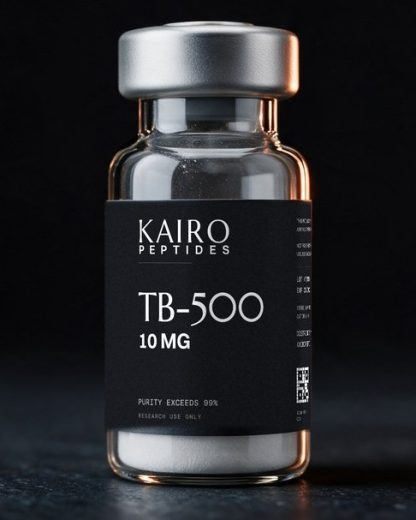
A versatile peptide, studied in research on cell movement and tissue repair.
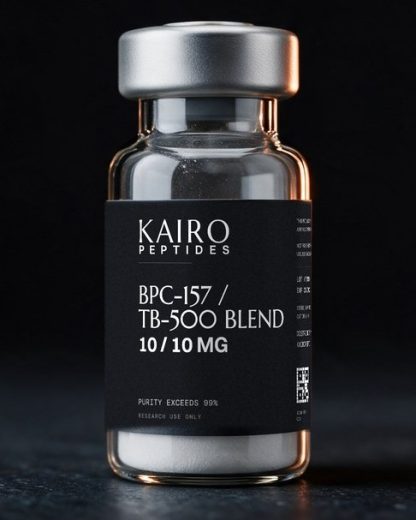
A recovery-focused blend, studied in research on tissue repair.
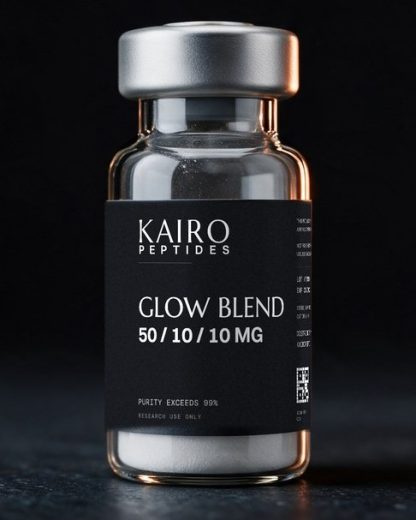
A multi-peptide skin blend, studied in research on skin and tissue.
What the research says about pairing these
5-Amino-1MQ and NAD+
The 3 are marketed together as a metabolic combination, and NAD+ is sold in this catalog. No mechanism for the combination is narrated here, because describing how a combination would work is not evidence that it was studied.
The verification pass that built this page searched Crossref and PubMed and located no controlled study of this combination with MOTS-c, in any model. The grouping is co-marketed, not jointly validated.
SS-31 (elamipretide)
Grouped with MOTS-c in mitochondrial-health writeups on category adjacency alone: both are discussed as mitochondria-related peptides. That is a shelf category, not a shared result.
The verification pass searched Crossref and PubMed and located no study of the 2 given together with MOTS-c, in any model.
Epitalon
Appears alongside MOTS-c in stack marketing built on claims about aging. This page carries no finding of that kind for MOTS-c, so the grouping rests on marketing adjacency rather than on evidence.
The verification pass searched Crossref and PubMed and located no study investigating the 2 together.
-
Studied for
Genetics: the K14Q mitochondrial variant
A single-letter change in mitochondrial DNA, found specifically in Asian populations, swaps a single amino acid in MOTS-c and produces a version called K14Q. Pooling 3 large Japanese and Japanese-ancestry cohorts totaling 27,527 people, researchers reported that men carrying that change had a higher prevalence of type 2 diabetes, while women did not. In 1 of the 3 cohorts, the raised prevalence appeared only in the men who were least physically active, which the authors describe as a gene-by-exercise interaction. In mice on a high-fat diet, males given normal MOTS-c showed reduced weight and improved glucose tolerance while males given the K14Q version did not, and female mice were unaffected either way. In cell experiments, the K14Q version was worse at making cells insulin-sensitive. Human population genetics, animal work and cell work point the same direction here, which is why this is the strongest-supported entry on this page. human population genetics (27,527 people across 3 cohorts), plus mouse studies and cultured cells Preclinical strong Convergent results from more than one independent laboratory across more than one experimental system. Still preclinical: 'strong' here never means clinical-grade evidence in people. Open for the full finding and the paper it came from.In the literatureGenetics: the K14Q mitochondrial variant
A single-letter change in mitochondrial DNA, found specifically in Asian populations, swaps a single amino acid in MOTS-c and produces a version called K14Q. Pooling 3 large Japanese and Japanese-ancestry cohorts totaling 27,527 people, researchers reported that men carrying that change had a higher prevalence of type 2 diabetes, while women did not. In 1 of the 3 cohorts, the raised prevalence appeared only in the men who were least physically active, which the authors describe as a gene-by-exercise interaction. In mice on a high-fat diet, males given normal MOTS-c showed reduced weight and improved glucose tolerance while males given the K14Q version did not, and female mice were unaffected either way. In cell experiments, the K14Q version was worse at making cells insulin-sensitive. Human population genetics, animal work and cell work point the same direction here, which is why this is the strongest-supported entry on this page.References 1
Modelhuman population genetics (27,527 people across 3 cohorts), plus mouse studies and cultured cells
-
Studied for
Glucose handling and insulin signaling (discovery paper)
The paper that first identified MOTS-c reported that, in mice, giving the peptide prevented the loss of insulin sensitivity that normally comes with age and with a high-fat diet, and prevented the weight gain that diet caused. In cultured cells, the authors traced this to the peptide blocking a metabolic route called the folate cycle and the purine-building pathway attached to it, which switches on an energy-sensing enzyme called AMPK. Skeletal muscle appeared to be the main tissue affected; the abstract's own wording is that its primary target organ appears to be the skeletal muscle. This is a single mouse-and-cell-culture study, not a study in people. in cultured cells and in mouse studies Preclinical moderate A well-described result with several independent outcome measures, but from a single laboratory or a single study design. Open for the full finding and the paper it came from.In the literatureGlucose handling and insulin signaling (discovery paper)
The paper that first identified MOTS-c reported that, in mice, giving the peptide prevented the loss of insulin sensitivity that normally comes with age and with a high-fat diet, and prevented the weight gain that diet caused. In cultured cells, the authors traced this to the peptide blocking a metabolic route called the folate cycle and the purine-building pathway attached to it, which switches on an energy-sensing enzyme called AMPK. Skeletal muscle appeared to be the main tissue affected; the abstract's own wording is that its primary target organ appears to be the skeletal muscle. This is a single mouse-and-cell-culture study, not a study in people.References 2
Modelin cultured cells and in mouse studies
-
Studied for
Exercise response and age-related physical decline
In people, a single bout of exercise raised the body's own MOTS-c in muscle tissue (11.9-fold above each person's pre-exercise value) and in the bloodstream (1.6-fold during exercise and 1.5-fold after), with blood levels returning to baseline after 4 hours of rest. In mice, giving the peptide improved physical performance at young (2 months), middle (12 months) and old (22 months) ages; in the old animals specifically, mice given MOTS-c ran 2-fold longer and 2.16-fold farther than control animals. Grip strength was not improved in young mice. Grip strength, stride length and walking performance did improve in a separate arm where the peptide was first given late in life. The striking running results are mouse results. Nothing comparable was tested in people: the human part of this study measured the body's own peptide around exercise and gave the participants nothing. in mouse studies (young, middle-aged and aged), plus muscle biopsy and blood sampling in human volunteers Preclinical moderate A well-described result with several independent outcome measures, but from a single laboratory or a single study design. Open for the full finding and the paper it came from.In the literatureExercise response and age-related physical decline
In people, a single bout of exercise raised the body's own MOTS-c in muscle tissue (11.9-fold above each person's pre-exercise value) and in the bloodstream (1.6-fold during exercise and 1.5-fold after), with blood levels returning to baseline after 4 hours of rest. In mice, giving the peptide improved physical performance at young (2 months), middle (12 months) and old (22 months) ages; in the old animals specifically, mice given MOTS-c ran 2-fold longer and 2.16-fold farther than control animals. Grip strength was not improved in young mice. Grip strength, stride length and walking performance did improve in a separate arm where the peptide was first given late in life. The striking running results are mouse results. Nothing comparable was tested in people: the human part of this study measured the body's own peptide around exercise and gave the participants nothing.References 3
Modelin mouse studies (young, middle-aged and aged), plus muscle biopsy and blood sampling in human volunteers
-
Studied for
Mechanism: a signal sent from the mitochondria to the cell nucleus
In cultured human cells under metabolic stress, MOTS-c moved out of the mitochondria and into the nucleus, where it changed which genes were switched on, and this depended on the energy-sensing enzyme AMPK. When the cells were starved of glucose, the peptide altered a wide set of genes, including a group governed by a stress-response switch called NRF2, and it interacted with the proteins that control that switch. The authors present this as evidence that the mitochondrial genome and the nuclear genome signal to each other in both directions. This is cell-culture work only, with no animal or human arm, and it reports which genes changed rather than any measured outcome downstream of them. in cultured human cells (HEK293 and HepG2 cell lines) Preclinical preliminary A single study, an early mechanistic observation, or a result whose interpretation is the authors' own inference. Open for the full finding and the paper it came from.In the literatureMechanism: a signal sent from the mitochondria to the cell nucleus
In cultured human cells under metabolic stress, MOTS-c moved out of the mitochondria and into the nucleus, where it changed which genes were switched on, and this depended on the energy-sensing enzyme AMPK. When the cells were starved of glucose, the peptide altered a wide set of genes, including a group governed by a stress-response switch called NRF2, and it interacted with the proteins that control that switch. The authors present this as evidence that the mitochondrial genome and the nuclear genome signal to each other in both directions. This is cell-culture work only, with no animal or human arm, and it reports which genes changed rather than any measured outcome downstream of them.References 4
Modelin cultured human cells (HEK293 and HepG2 cell lines)
-
Studied for
Blood MOTS-c and muscle strength in people (an observational correlation)
In a small group of physically active volunteers who were given nothing, the amount of MOTS-c circulating in the blood at rest tracked with the power and force they produced in a jump test, and with how much muscle they carried overall and in their legs. It did not track with body fat percentage, and it did not track at all with peak oxygen uptake, the treadmill measure of how much oxygen the body can use at maximum effort. This is a correlation observed in people who received nothing, not a test of giving the peptide, and the authors themselves call it a preliminary study. in a human observational study (20 physically active volunteers: 17 male, 3 female, median age 30), no peptide was given Preclinical preliminary A single study, an early mechanistic observation, or a result whose interpretation is the authors' own inference. Open for the full finding and the paper it came from.In the literatureBlood MOTS-c and muscle strength in people (an observational correlation)
In a small group of physically active volunteers who were given nothing, the amount of MOTS-c circulating in the blood at rest tracked with the power and force they produced in a jump test, and with how much muscle they carried overall and in their legs. It did not track with body fat percentage, and it did not track at all with peak oxygen uptake, the treadmill measure of how much oxygen the body can use at maximum effort. This is a correlation observed in people who received nothing, not a test of giving the peptide, and the authors themselves call it a preliminary study.References 5
Modelin a human observational study (20 physically active volunteers: 17 male, 3 female, median age 30), no peptide was given
-
Studied for
Blood MOTS-c in trained athletes
In a pilot comparison of professional athletes against sedentary people matched for age and body size, the athletes had lower blood MOTS-c and higher blood humanin than the sedentary group. Within the athlete groups, MOTS-c did not differ between the sport-type subgroups the authors defined by training demand, although humanin did. MOTS-c and humanin levels tracked closely with each other in athletes but not in sedentary people. The authors describe this as pilot data. The direction is worth stating plainly: years of training went with lower circulating MOTS-c, which sits alongside, rather than confirming, the short-term rises measured after a single bout of exercise. in a human observational pilot study (30 non-athlete controls and 75 professional athletes), no peptide was given Preclinical preliminary A single study, an early mechanistic observation, or a result whose interpretation is the authors' own inference. Open for the full finding and the paper it came from.In the literatureBlood MOTS-c in trained athletes
In a pilot comparison of professional athletes against sedentary people matched for age and body size, the athletes had lower blood MOTS-c and higher blood humanin than the sedentary group. Within the athlete groups, MOTS-c did not differ between the sport-type subgroups the authors defined by training demand, although humanin did. MOTS-c and humanin levels tracked closely with each other in athletes but not in sedentary people. The authors describe this as pilot data. The direction is worth stating plainly: years of training went with lower circulating MOTS-c, which sits alongside, rather than confirming, the short-term rises measured after a single bout of exercise.References 6
Modelin a human observational pilot study (30 non-athlete controls and 75 professional athletes), no peptide was given
-
Studied for
Blood MOTS-c and body and liver fat in people
In people without diabetes, blood MOTS-c and a related mitochondrial peptide called SHLP2 were higher, not lower, in those with metabolic syndrome. Fat carried around the middle raised blood MOTS-c more than total body fat did, and once total fat was accounted for, more fat in the liver went with more MOTS-c in the blood. Both peptides were also higher in people with raised liver damage markers, and higher in male mice fed a diet that loads the liver with fat. The authors propose that a stressed liver is what pushes these peptides up, meaning a high level may be a distress signal rather than a sign of health. That runs opposite to the simple idea that more MOTS-c means better metabolic health, and it is the reason this page makes no claim in that direction. in a human observational study (125 Chinese participants, 91 male and 34 female, plus 34 European Caucasian female participants for imaging), with a supporting male mouse arm; no peptide was given to the human participants Preclinical preliminary A single study, an early mechanistic observation, or a result whose interpretation is the authors' own inference. Open for the full finding and the paper it came from.In the literatureBlood MOTS-c and body and liver fat in people
In people without diabetes, blood MOTS-c and a related mitochondrial peptide called SHLP2 were higher, not lower, in those with metabolic syndrome. Fat carried around the middle raised blood MOTS-c more than total body fat did, and once total fat was accounted for, more fat in the liver went with more MOTS-c in the blood. Both peptides were also higher in people with raised liver damage markers, and higher in male mice fed a diet that loads the liver with fat. The authors propose that a stressed liver is what pushes these peptides up, meaning a high level may be a distress signal rather than a sign of health. That runs opposite to the simple idea that more MOTS-c means better metabolic health, and it is the reason this page makes no claim in that direction.References 7
Modelin a human observational study (125 Chinese participants, 91 male and 34 female, plus 34 European Caucasian female participants for imaging), with a supporting male mouse arm; no peptide was given to the human participants
1 strong / 2 moderate / 4 preliminaryRated by how many independent labs and how many kinds of experiment found the same thing.
What is in the vial.
| Compound | MOTS-c |
| Dosage form | Lyophilized powder |
| Purity | PURITY EXCEEDS 99% |
| Storage | STORE LYOPHILIZED. KEEP COLD AND OUT OF LIGHT. |
| Lot format | LOT + EXP printed per vial |
| Distribution | DISTRIBUTED BY KAIRO, KAIROPEPTIDES.COM |
A mitochondrial-derived peptide.
The full technical write-up 3 paragraphs, plus the fact row
MOTS-c is a research peptide: a chain of 16 amino acids. What makes it unusual is where the instructions for it live. Most of the body's protein recipes sit in the cell nucleus, but this one is written inside the DNA of the mitochondria, the compartments that turn food into usable energy. That places it in a small family scientists call mitochondrial-derived peptides, alongside humanin and the SHLP peptides. Its technical name is mitochondrial open reading frame of the 12S rRNA type-c. The paper that first described it, by Changhan Lee and colleagues in Cell Metabolism in 2015, reports that 'Multiple peptide sequence alignment of 14 species and its deduced phylogenetic tree suggest that MOTS-c is highly conserved, especially the first 11 residues.'
Nearly all of the published work on MOTS-c is preclinical: cultured cells, mice and rats. The human record is thin, and it does not all point one way. It is also different in kind from the animal record and easy to mistake for it. 3 of the studies on this page measured the body's own MOTS-c in people who were given nothing, so they report correlations rather than effects, and those correlations disagree with each other. The only large human dataset is genetic: 27,527 people, in whom an inherited change to a single amino acid of the peptide tracks with a higher rate of type 2 diabetes in men. No clinical efficacy trial of native MOTS-c in people has been published, and it is not an approved drug.
2 identity points matter more here than they do for most compounds, because the market runs both of them together. First, results published for chemically modified versions of MOTS-c do not belong to the native peptide: a modified analogue built to reach tissue the native peptide does not reach behaves differently by design, and nothing reported for one is counted for the other. Second, a molecule called CB4211 that has appeared in company announcements rather than in the peer-reviewed record is, on the verification pass that built this page, a different molecule from native MOTS-c; it is not what is described here and nothing reported for it is counted here. Everything described below is what researchers observed in laboratory systems. None of it is a statement about effects in a person, and no preparation or usage guidance is given anywhere on this page.References 1, 2, 8
- Length
- 16 amino acids
- Proline content
- 1 of 16 residues (6.3%)
- Also known as
- Mitochondrial open reading frame of the 12S rRNA type-c; H-MRWQEMGYIFYPRKLR-OH; UNII A5CV6JFB78
- Status
- Not an approved drug in the United States or anywhere else
Sold as a laboratory research material.
Molecular identity
Sequence, formula and registry numbers 16 residues
- M Met
- R Arg
- W Trp
- Q Gln
- E Glu
- M Met
- G Gly
- Y Tyr
- I Ile
- F Phe
- Y Tyr
- P Pro
- R Arg
- K Lys
- L Leu
- R Arg
16 residues. The 1 prolines carry a filled node.
- Formula
- Free base C101H152N28O22S2
- Molar mass
- Free base 2174.6 g/mol(about 2.17 kDa)
- CAS
- Free base 1627580-64-6(listed by PubChem as a synonym for CID 146675088, alongside UNII A5CV6JFB78; not checked against an authoritative CAS registry record)
- PubChem CID
- Free base 146675088
No separate acetate record for this peptide was located on PubChem in the verification pass, so no acetate formula, mass, CAS or CID is asserted here rather than inferred from how other peptides are supplied. Which salt form any given lot is supplied as is a supplier-specific fact and is not asserted here either. Physical form is a white to off-white lyophilized powder, water soluble.References 8, 2
Once it is mixed, it goes in the fridge.
Water is what ages a peptide, so the rules change the moment you add it.
The longer version 3 rows
- Before you mix it
- Supplied as a lyophilized (freeze-dried) powder. Keep the vial sealed with an intact desiccant and protected from light and moisture. Standard laboratory practice for long-term integrity of a lyophilized peptide is to hold it frozen, commonly at or below -4 F (-20 C); short holding periods at refrigerated temperatures of 36 to 46 F (2 to 8 C) are typical, and freeze-dried powder generally tolerates brief room-temperature transit. That is general practice for this class of material, not a claim attributed to any supplier or brand.
- Once it is mixed
- Holding conditions for a laboratory stock solution, and nothing about how one is made. Hold a stock solution refrigerated at 36 to 46 F (2 to 8 C). For holds beyond a short working window, divide it into single-use aliquots and freeze at -4 F (-20 C) or colder; repeated freeze-thaw cycling is the most commonly described cause of peptide degradation in routine laboratory handling. No diluent is named here, no volume, concentration or schedule is given, and no method for making a solution appears anywhere on this page, because all of those are preparation-for-administration details. No in-use window in days is printed for this compound either: no stability study specific to MOTS-c was located, and no preserved diluent is named that a sterility limit could attach to.
- In the literature
- One compound-specific property is worth stating, and it is chemistry read off the verified sequence rather than a published stability result: MRWQEMGYIFYPRKLR carries 2 methionine residues (positions 1 and 6) and 1 tryptophan (position 3), all oxidation-prone side chains. Residual moisture in a lyophilized cake accelerates deamidation and oxidation, so an intact desiccant and a properly sealed vial matter more for this sequence than for a simple peptide. Beyond that inference, no published forced-degradation study and no long-term stability study specific to MOTS-c was located, and 3 specifics carried by earlier drafts were removed rather than repeated: a residual-moisture threshold, a refrigerated working life in days, and the recommendation of a preservative-containing diluent. None could be traced to peer-reviewed stability literature for this peptide, and no supplier or brand is cited as an authority for anything in this section. References 8
Every paper this page is built on.
Click any journal to open the paper.
- Aging (Albany NY)
- Cell Metab
- Nat Commun
- Int J Mol Sci
- Rev Cardiovasc Med
- Biochim Biophys Acta Gen Subj
The full list 8 references, each linked
-
1
Zempo H, Kim SJ, Fuku N, et al. A pro-diabetogenic mtDNA polymorphism in the mitochondrial-derived peptide, MOTS-c. Aging (Albany NY). 2021;13(2):1692-1717.
-
2
Lee C, Zeng J, Drew BG, et al. The mitochondrial-derived peptide MOTS-c promotes metabolic homeostasis and reduces obesity and insulin resistance. Cell Metab. 2015;21(3):443-454.
PubMed 25738459 doi:10.1016/j.cmet.2015.02.009 Free full text
-
3
Reynolds JC, Lai RW, Woodhead JST, et al. MOTS-c is an exercise-induced mitochondrial-encoded regulator of age-dependent physical decline and muscle homeostasis. Nat Commun. 2021;12(1):470.
PubMed 33473109 doi:10.1038/s41467-020-20790-0 Free full text
-
4
Kim KH, Son JM, Benayoun BA, Lee C. The mitochondrial-encoded peptide MOTS-c translocates to the nucleus to regulate nuclear gene expression in response to metabolic stress. Cell Metab. 2018;28(3):516-524.e7.
PubMed 29983246 doi:10.1016/j.cmet.2018.06.008 Free full text
-
5
Domin R, Pytka M, Zolynski M, et al. MOTS-c serum concentration positively correlates with lower-body muscle strength and is not related to maximal oxygen uptake-A preliminary study. Int J Mol Sci. 2023;24(19):14951.
-
6
Alser M, Ramanjaneya M, Anwardeen NR, et al. The effect of chronic endurance exercise on serum levels of MOTS-c and humanin in professional athletes. Rev Cardiovasc Med. 2022;23(5):181.
-
7
Sequeira IR, Woodhead JST, Chan A, et al. Plasma mitochondrial derived peptides MOTS-c and SHLP2 positively associate with android and liver fat in people without diabetes. Biochim Biophys Acta Gen Subj. 2021;1865(11):129991.
-
8
PubChem Compound Summary for CID 146675088, MOTS-c. National Center for Biotechnology Information. Retrieved July 28, 2026.
8 sources: 7 peer-reviewed papers and 1 primary documents.
Sources re-verified July 28, 2026
THIS PRODUCT IS NOT FOR HUMAN OR ANIMAL CONSUMPTION OF ANY KIND.
NOT FOR THERAPEUTIC OR DIAGNOSTIC USE. RESEARCH USE ONLY.
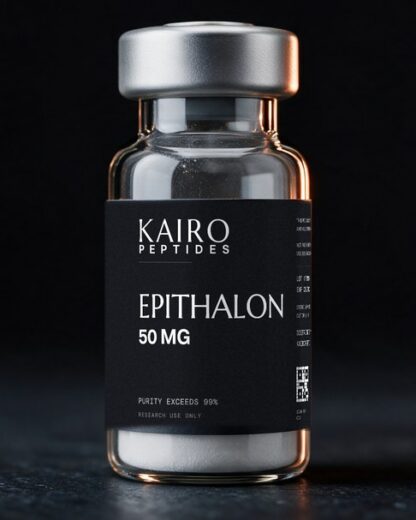
A telomere-focused peptide, studied in research on cellular aging and lifespan.
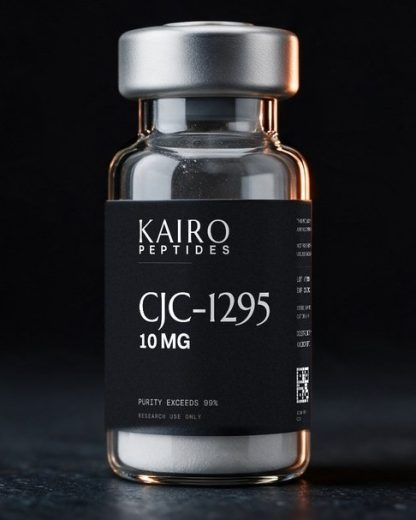
A steady peptide, studied in research on growth hormone release.
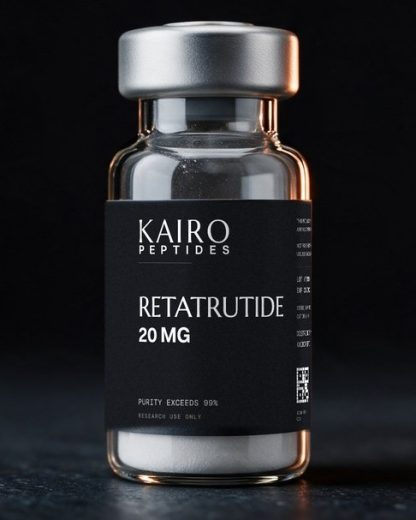
An investigational peptide, studied in research on metabolism.