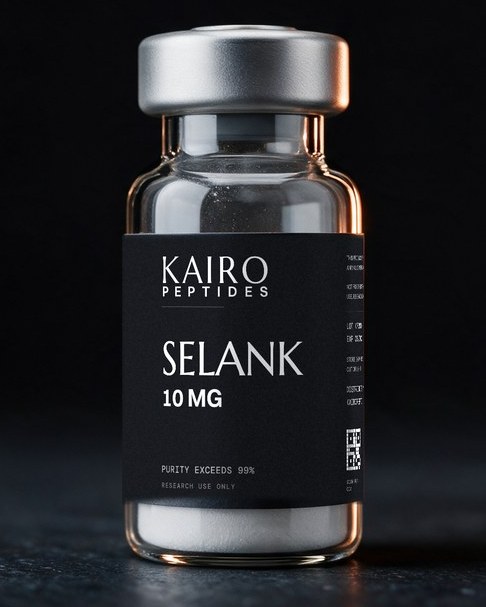
Selank
10MGStudied for anxiety, learning, memory and attention, stress resilience, and immune signaling. Every paper behind those is linked below.
$48.00
- PURITY EXCEEDS 99%
- COA WITH EVERY BATCH
- 3RD-PARTY VERIFIED
| Title | Range | Discount |
|---|---|---|
| Pack tier: Selank (KAIRO-SELANK-10MG) | 1 - 2 | $48.00 |
| Pack of 3+: 10% off | 3 - 4 | $43.20 |
| Pack of 5+: 15% off | 5 - 9 | $40.80 |
| Pack of 10+: 20% off | 10 + | $38.40 |
For laboratory research use only. Not for human or veterinary use, not for diagnostic or therapeutic use, and not for food or drug manufacture. No preparation or usage guidance is provided anywhere on this page.
Calm that shows up under stress, not before it.
That is what nearly all of this research comes down to, something stress knocked out of place moving back toward normal, and it is why the unstressed animals in these studies mostly showed no change at all.
-
Anxiety reduction
Preclinical moderate A well-described result with several independent outcome measures, but from a single laboratory or a single study design.Selank is studied for anxiety in 3 small Russian trials of 192 people, reported to lower scores on standard anxiety rating scales. The earliest of the 3 also reported less fatigue, and all 3 were small, unblinded, published in Russian and never repeated outside Russia.
Anxiety-related endpoints in human clinical studies (Russian literature) Co-administration with a benzodiazepine under chronic stress Anxiety-like behavior in rats with dopamine-neuron lesions
-
Learning, memory and attention
Preclinical moderate A well-described result with several independent outcome measures, but from a single laboratory or a single study design.Selank is studied for learning and memory, reported to help rats that started out poor at a task learn it faster and with fewer errors. A 60-person Russian trial also reported a mild memory and attention effect, and the rest of this work is animal only.
Learning, memory and attention in animal models Anxiety-related endpoints in human clinical studies (Russian literature)
-
Neurotransmitter modulation
Preclinical moderate A well-described result with several independent outcome measures, but from a single laboratory or a single study design.Selank is studied for how it acts on the brain's own calming chemistry, reported to slow the enzymes that break down enkephalins, the calming molecules the body makes for itself. The GABA and serotonin work is rodent, cell and test-tube only, and some of it changes direction between animal strains.
Inhibition of enkephalin-degrading enzymes (proposed mechanism) GABAergic system: gene expression, receptor binding, and synaptic electrophysiology Monoamine and serotonin neurochemistry in rodents
-
Immune modulation
Preclinical moderate A well-described result with several independent outcome measures, but from a single laboratory or a single study design.Selank is studied for immune signaling under stress, reported to bring inflammatory signals in the blood of socially stressed rats back down close to normal. Those signals move both ways depending on timing, and the direction here is a return toward normal, not a lift.
-
Stress resilience and stress response
Preclinical preliminary A single study, an early mechanistic observation, or a result whose interpretation is the authors' own inference.Selank is studied for the physical side of stress, reported to hold the gut bacteria of restrained rats closer to normal and to lower the rodent stress hormone. The same work reported less thinning and inflammation in the colon wall, in small single-group rodent reports rather than a developed line of evidence.
Co-administration with a benzodiazepine under chronic stress Immune and cytokine signaling Gut, liver and stomach endpoints under stress
Every line above describes what was measured in a laboratory. None of it establishes what the compound would do in a person.
Frequently paired with
What shoppers usually add alongside this one
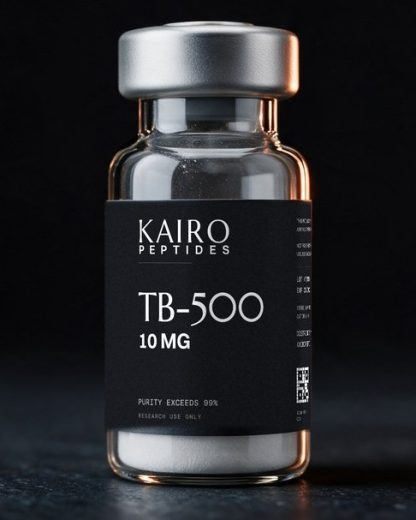
A versatile peptide, studied in research on cell movement and tissue repair.
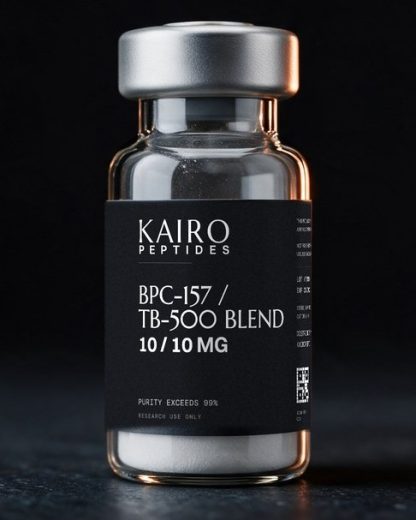
A recovery-focused blend, studied in research on tissue repair.
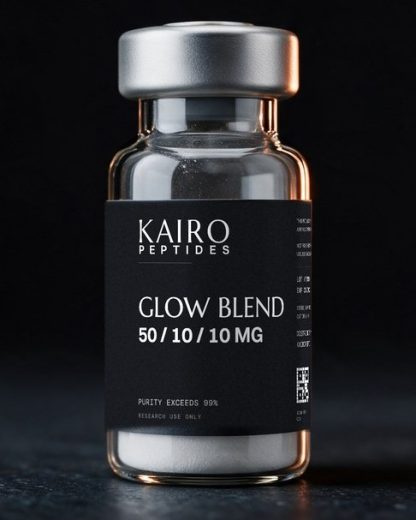
A multi-peptide skin blend, studied in research on skin and tissue.
What the research says about pairing these
Semax
Semax is the compound most often sold and discussed alongside Selank, and the two come out of the same Russian research program. The rationale offered in that discourse is that they are complementary regulatory peptides, one framed as calming and one as activating. That is a story assembled from 2 separate literatures, not a finding about the pair.
Selank and Semax do appear together in published research: the 52-participant human resting-state fMRI protocol examined both, the 6-hydroxydopamine rat lesion model examined both, a test-tube study found both inhibit enkephalin-degrading enzymes in human serum, and both were identified in the same seized preparations by an EU control laboratory. In every case located they were separate arms or separately tested, never given together. No published study of the Selank-plus-Semax combination was found. Co-studied is not co-validated.
Tuftsin
Tuftsin is Selank's parent peptide, the 4-amino-acid immunoglobulin G fragment whose sequence sits at the front of the Selank chain. It appears alongside Selank in the literature as a comparator, not as a partner, and it is not co-marketed in the way the rest of this list is.
Selank has been compared directly against tuftsin on serotonin turnover in the brain of Wistar rats whose serotonin production was blocked beforehand, where Selank increased brain-stem serotonin turnover and tuftsin did not, lowering it in the neocortex instead. That is a comparison, not a stack, and no study giving the 2 together was located.
Noopept
Widely co-marketed in nootropic contexts with an additive-BDNF story attached. That story runs against this page's own BDNF finding, where the one confirmable direction is Selank preventing an elevated BDNF rise rather than causing one.
No published study of Selank plus Noopept was located in PubMed or Europe PMC, searched 2026-07-28. Co-marketing only.
Magnesium L-threonate
Co-marketed on the basis that both are described as touching GABA signaling. This page's own GABA evidence is unsettled and internally conflicting, so the shared-mechanism premise is not solid ground even before the pairing is considered.
No co-administration study located in PubMed or Europe PMC, searched 2026-07-28. Speculative pairing.
Adaptogens (ashwagandha, rhodiola and similar)
Co-marketed on a stress-axis rationale.
No published Selank co-administration study with any of these was located in PubMed or Europe PMC, searched 2026-07-28. Speculative pairing.
BPC-157 or TB-500
Frequently bundled in vendor stacks alongside Selank. These are tissue-repair research compounds with an entirely separate literature.
No study combining either with Selank was located in PubMed or Europe PMC, searched 2026-07-28. Pure co-marketing, and the mechanistic rationale linking them is not supported by any located research.
-
Studied for
Anxiety-related endpoints in human clinical studies (Russian literature)
3 small studies conducted in Russia make up the entire human record. In the first, 62 people enrolled on anxiety-related diagnoses were split between selank (30 people) and the benzodiazepine medazepam (32 people); the researchers reported that the two eased anxiety about equally on standard rating scales, and that selank additionally appeared to reduce fatigue and to have a mild stimulating quality. They also measured a marker of how long a natural calming molecule survives in blood, found it was shortened in these people at the start, and reported it rising while selank was being given, mostly in the group enrolled for generalized anxiety. The second compared selank against the benzodiazepine phenazepam in 60 people enrolled on anxiety-related diagnoses and reported a pronounced anxiety-reducing effect plus a mild memory-and-attention effect, with the anxiety effect described as persisting for a week after the last administration. The third compared phenazepam alone (30 people) against phenazepam plus selank (40 people) and reported the benefit arriving sooner on a clinician-rated symptom scale, along with fewer of the unwanted effects that come with the benzodiazepine. These limitations are part of the finding and must travel with it: all 3 are small, published in Russian, come from overlapping investigator groups at the same Russian institutions, report no blinding in the retrievable abstracts, and none has been repeated in a Western registration trial. This is a research record about investigational endpoints, not evidence of a benefit to any person. human clinical studies (62, 60 and 70 participants), all conducted in Russia Preclinical moderate A well-described result with several independent outcome measures, but from a single laboratory or a single study design. Open for the full finding and the paper it came from.In the literatureAnxiety-related endpoints in human clinical studies (Russian literature)
3 small studies conducted in Russia make up the entire human record. In the first, 62 people enrolled on anxiety-related diagnoses were split between selank (30 people) and the benzodiazepine medazepam (32 people); the researchers reported that the two eased anxiety about equally on standard rating scales, and that selank additionally appeared to reduce fatigue and to have a mild stimulating quality. They also measured a marker of how long a natural calming molecule survives in blood, found it was shortened in these people at the start, and reported it rising while selank was being given, mostly in the group enrolled for generalized anxiety. The second compared selank against the benzodiazepine phenazepam in 60 people enrolled on anxiety-related diagnoses and reported a pronounced anxiety-reducing effect plus a mild memory-and-attention effect, with the anxiety effect described as persisting for a week after the last administration. The third compared phenazepam alone (30 people) against phenazepam plus selank (40 people) and reported the benefit arriving sooner on a clinician-rated symptom scale, along with fewer of the unwanted effects that come with the benzodiazepine. These limitations are part of the finding and must travel with it: all 3 are small, published in Russian, come from overlapping investigator groups at the same Russian institutions, report no blinding in the retrievable abstracts, and none has been repeated in a Western registration trial. This is a research record about investigational endpoints, not evidence of a benefit to any person.References 1, 2, 3
Modelhuman clinical studies (62, 60 and 70 participants), all conducted in Russia
-
Studied for
Inhibition of enkephalin-degrading enzymes (proposed mechanism)
The body makes its own calming molecules, called enkephalins, and enzymes in the blood chop them up. In test tubes using human blood serum, Selank slowed those enzymes down, and did so more strongly than 2 standard laboratory enzyme blockers, puromycin and bacitracin (the concentration needed to halve enzyme activity was about 20 micromolar for Selank and about 10 micromolar for the related peptide Semax; a second report measured about 15 micromolar for Selank acting on enkephalin breakdown in plasma). That second report also observed, in people assessed against DSM-IV criteria, a shortened enkephalin lifetime and reduced total enkephalin-degrading activity in 1 anxiety-related group but not in the other 2; that is an observation about the people themselves, not an effect of Selank on them. In mice, Selank lengthened the plasma lifetime of one enkephalin and produced calmer behavior in the open-field test, but only in BALB/c animals: in C57Bl/6 animals it changed neither behavior nor enzyme activity at all. That strain-dependence is part of the finding and limits how far the proposed mechanism generalizes. A further mouse study gave the opioid blocker naloxone beforehand and reported that this dampened sensitivity to Selank in BALB/c mice while increasing the response in C57Bl/6 mice, which the authors read as evidence that the enkephalin-opioid system governs how strongly an individual animal responds to the peptide. IN VITRO in vitro (human blood serum and plasma) and in mice (BALB/c and C57Bl/6 strains) Preclinical moderate A well-described result with several independent outcome measures, but from a single laboratory or a single study design. Open for the full finding and the paper it came from.In the literatureInhibition of enkephalin-degrading enzymes (proposed mechanism)
The body makes its own calming molecules, called enkephalins, and enzymes in the blood chop them up. In test tubes using human blood serum, Selank slowed those enzymes down, and did so more strongly than 2 standard laboratory enzyme blockers, puromycin and bacitracin (the concentration needed to halve enzyme activity was about 20 micromolar for Selank and about 10 micromolar for the related peptide Semax; a second report measured about 15 micromolar for Selank acting on enkephalin breakdown in plasma). That second report also observed, in people assessed against DSM-IV criteria, a shortened enkephalin lifetime and reduced total enkephalin-degrading activity in 1 anxiety-related group but not in the other 2; that is an observation about the people themselves, not an effect of Selank on them. In mice, Selank lengthened the plasma lifetime of one enkephalin and produced calmer behavior in the open-field test, but only in BALB/c animals: in C57Bl/6 animals it changed neither behavior nor enzyme activity at all. That strain-dependence is part of the finding and limits how far the proposed mechanism generalizes. A further mouse study gave the opioid blocker naloxone beforehand and reported that this dampened sensitivity to Selank in BALB/c mice while increasing the response in C57Bl/6 mice, which the authors read as evidence that the enkephalin-opioid system governs how strongly an individual animal responds to the peptide.References 4, 5, 6, 7
Modelin vitro (human blood serum and plasma) and in mice (BALB/c and C57Bl/6 strains)
-
Studied for
GABAergic system: gene expression, receptor binding, and synaptic electrophysiology
GABA is the brain's main braking signal, and 3 preclinical lines have probed whether Selank works through it. They do not fully agree. (1) Gene readouts in rat frontal cortex: researchers measured 84 neurotransmission genes 1 and 3 hours after a single intranasal administration, discarded 7 for having too little readable mRNA, and analyzed the remaining 77. Pooled across the Selank arm and the GABA arm together, 45 of those 77 genes changed at 1 hour and 22 at 3 hours; taken alone, the Selank arm accounted for 29 of 77 at 1 hour and 17 of 77 at 3 hours. Among GABA-A receptor subunits specifically, and in the Selank arm specifically, Gabrb3 rose about 1.6-fold at 1 hour, while Gabre and Gabrq each fell roughly 20-fold at 1 hour and then rose 16.1-fold and 13.3-fold at 3 hours. The authors proposed that Selank nudges the GABA system indirectly, from a side site rather than the main one. (2) Receptor binding in isolated brain-cell membrane preparations: radioligand assays described Selank as a positive side-site modulator of GABA binding, and reported that Selank BLOCKS the modulating activity of both diazepam and olanzapine, with the authors concluding that the peptide and benzodiazepine binding sites are apparently not the same though they may partially overlap. (3) Electrophysiology in rat brain slices: applying Selank to hippocampal slices increased the size and rate of the spontaneous inhibitory signals arriving at CA1 neurons, in some neurons preceded by a brief dip, with no clear dependence on concentration across the range tested. IMPORTANT COUNTERWEIGHT: in a human neuroblastoma cell line (IMR-32), Selank on its own changed none of the GABA-system genes studied; it only altered what GABA or olanzapine did when the two were incubated together. THE LINES CONFLICT: one rat behavior study reports Selank enhancing diazepam's calming effect, while the binding study reports Selank blocking diazepam's modulating activity. Both sit in the record and have not been reconciled. The mechanism is an active hypothesis, not a settled one. in rats (frontal cortex gene expression and hippocampal brain slices), in isolated brain-cell membrane preparations, and in cultured human neuroblastoma cells Preclinical moderate A well-described result with several independent outcome measures, but from a single laboratory or a single study design. Open for the full finding and the paper it came from.In the literatureGABAergic system: gene expression, receptor binding, and synaptic electrophysiology
GABA is the brain's main braking signal, and 3 preclinical lines have probed whether Selank works through it. They do not fully agree. (1) Gene readouts in rat frontal cortex: researchers measured 84 neurotransmission genes 1 and 3 hours after a single intranasal administration, discarded 7 for having too little readable mRNA, and analyzed the remaining 77. Pooled across the Selank arm and the GABA arm together, 45 of those 77 genes changed at 1 hour and 22 at 3 hours; taken alone, the Selank arm accounted for 29 of 77 at 1 hour and 17 of 77 at 3 hours. Among GABA-A receptor subunits specifically, and in the Selank arm specifically, Gabrb3 rose about 1.6-fold at 1 hour, while Gabre and Gabrq each fell roughly 20-fold at 1 hour and then rose 16.1-fold and 13.3-fold at 3 hours. The authors proposed that Selank nudges the GABA system indirectly, from a side site rather than the main one. (2) Receptor binding in isolated brain-cell membrane preparations: radioligand assays described Selank as a positive side-site modulator of GABA binding, and reported that Selank BLOCKS the modulating activity of both diazepam and olanzapine, with the authors concluding that the peptide and benzodiazepine binding sites are apparently not the same though they may partially overlap. (3) Electrophysiology in rat brain slices: applying Selank to hippocampal slices increased the size and rate of the spontaneous inhibitory signals arriving at CA1 neurons, in some neurons preceded by a brief dip, with no clear dependence on concentration across the range tested. IMPORTANT COUNTERWEIGHT: in a human neuroblastoma cell line (IMR-32), Selank on its own changed none of the GABA-system genes studied; it only altered what GABA or olanzapine did when the two were incubated together. THE LINES CONFLICT: one rat behavior study reports Selank enhancing diazepam's calming effect, while the binding study reports Selank blocking diazepam's modulating activity. Both sit in the record and have not been reconciled. The mechanism is an active hypothesis, not a settled one.References 8, 9, 10, 11
Modelin rats (frontal cortex gene expression and hippocampal brain slices), in isolated brain-cell membrane preparations, and in cultured human neuroblastoma cells
-
Studied for
BDNF and the hippocampal transcriptome
BDNF is a protein that helps brain cells grow and survive, and it is the single most over-claimed Selank endpoint in consumer marketing. 3 rodent studies exist and they do not tell one story. (1) A rat study reported that intranasal Selank regulates BDNF expression in the hippocampus. LIMIT OF VERIFICATION: neither PubMed nor Europe PMC carries an abstract for this record, so the direction, timing and size of the reported BDNF change could not be independently confirmed and are not asserted here. (2) In outbred rats given 10 percent ethanol as their only fluid for 30 weeks, chronic alcohol RAISED BDNF, and Selank PREVENTED that rise in the hippocampus and frontal cortex. Selank also prevented the memory and attention problems that developed during alcohol withdrawal in an object-recognition test, and produced a cognition-stimulating effect in 9-month-old rats that had never been given ethanol. Read the direction carefully: here Selank normalized an elevated BDNF level rather than raising it. (3) Using gene-chip arrays on rat hippocampus, a single intranasal administration changed the levels of 36 genes by more than 2-fold, and a repeated course changed 20; most of those genes encode proteins sitting in the cell membrane, which the authors linked to control of ion balance. Taken together, these do NOT establish that Selank raises BDNF, and there is no human BDNF data at all. in rats Preclinical moderate A well-described result with several independent outcome measures, but from a single laboratory or a single study design. Open for the full finding and the paper it came from.In the literatureBDNF and the hippocampal transcriptome
BDNF is a protein that helps brain cells grow and survive, and it is the single most over-claimed Selank endpoint in consumer marketing. 3 rodent studies exist and they do not tell one story. (1) A rat study reported that intranasal Selank regulates BDNF expression in the hippocampus. LIMIT OF VERIFICATION: neither PubMed nor Europe PMC carries an abstract for this record, so the direction, timing and size of the reported BDNF change could not be independently confirmed and are not asserted here. (2) In outbred rats given 10 percent ethanol as their only fluid for 30 weeks, chronic alcohol RAISED BDNF, and Selank PREVENTED that rise in the hippocampus and frontal cortex. Selank also prevented the memory and attention problems that developed during alcohol withdrawal in an object-recognition test, and produced a cognition-stimulating effect in 9-month-old rats that had never been given ethanol. Read the direction carefully: here Selank normalized an elevated BDNF level rather than raising it. (3) Using gene-chip arrays on rat hippocampus, a single intranasal administration changed the levels of 36 genes by more than 2-fold, and a repeated course changed 20; most of those genes encode proteins sitting in the cell membrane, which the authors linked to control of ion balance. Taken together, these do NOT establish that Selank raises BDNF, and there is no human BDNF data at all.References 12, 13, 14
Modelin rats
-
Studied for
Learning, memory and attention in animal models
In rats that started out poor at learning a task, repeated Selank administration significantly improved how quickly they learned an active-avoidance task, with more correct solutions and fewer errors, and an effect already visible after the first administration; in normal rats the peak effect landed on day 3, and the study ran the reference nootropic piracetam as a comparator. In adult Wistar rats that had been given a toxin during their first 3 days of life to damage catecholamine-producing nerve cells, Selank restored the learning, memory and attention that this permanent damage had disrupted. In monkeys with experimentally induced neurosis, intranasal Selank was reported to produce long-lasting changes in disturbed behavior (the authors describe elimination of fear and aggression and increased exploratory activity) and lasting compensation of disrupted memory. These are exploratory animal studies of learning and memory endpoints. NO controlled human cognition trial was located in this search, and the single human imaging study in this dossier carried no cognitive outcome measure. in rats and in monkeys Preclinical moderate A well-described result with several independent outcome measures, but from a single laboratory or a single study design. Open for the full finding and the paper it came from.In the literatureLearning, memory and attention in animal models
In rats that started out poor at learning a task, repeated Selank administration significantly improved how quickly they learned an active-avoidance task, with more correct solutions and fewer errors, and an effect already visible after the first administration; in normal rats the peak effect landed on day 3, and the study ran the reference nootropic piracetam as a comparator. In adult Wistar rats that had been given a toxin during their first 3 days of life to damage catecholamine-producing nerve cells, Selank restored the learning, memory and attention that this permanent damage had disrupted. In monkeys with experimentally induced neurosis, intranasal Selank was reported to produce long-lasting changes in disturbed behavior (the authors describe elimination of fear and aggression and increased exploratory activity) and lasting compensation of disrupted memory. These are exploratory animal studies of learning and memory endpoints. NO controlled human cognition trial was located in this search, and the single human imaging study in this dossier carried no cognitive outcome measure.References 15, 16, 17
Modelin rats and in monkeys
-
Studied for
Co-administration with a benzodiazepine under chronic stress
48 male Wistar rats were split evenly: 24 left alone and 24 put through 14 days of unpredictable mild stress. Anxiety was measured on an elevated plus maze before and after a 14-day course of test substances. Under chronic stress, the animals that received diazepam and Selank together ended up with anxiety readings that did not differ from what they had shown before the stress began, and the authors identified that combination as the most effective condition under chronic stress. AN IMPORTANT NUANCE THE HEADLINE HIDES: in the animals that were never stressed, the course of test substances actually moved anxiety readings in the direction of getting worse, though less so for Selank than for the others, and in that unstressed condition Selank alone was the most effective at reducing the substance-driven rise. This is also the study whose binding-level counterpart above reports Selank blocking diazepam's modulating activity, so the interaction between the two is not characterized in a single direction. Rodent only, and nothing here is a combination suggestion. in rats (48 male Wistar rats) Preclinical moderate A well-described result with several independent outcome measures, but from a single laboratory or a single study design. Open for the full finding and the paper it came from.In the literatureCo-administration with a benzodiazepine under chronic stress
48 male Wistar rats were split evenly: 24 left alone and 24 put through 14 days of unpredictable mild stress. Anxiety was measured on an elevated plus maze before and after a 14-day course of test substances. Under chronic stress, the animals that received diazepam and Selank together ended up with anxiety readings that did not differ from what they had shown before the stress began, and the authors identified that combination as the most effective condition under chronic stress. AN IMPORTANT NUANCE THE HEADLINE HIDES: in the animals that were never stressed, the course of test substances actually moved anxiety readings in the direction of getting worse, though less so for Selank than for the others, and in that unstressed condition Selank alone was the most effective at reducing the substance-driven rise. This is also the study whose binding-level counterpart above reports Selank blocking diazepam's modulating activity, so the interaction between the two is not characterized in a single direction. Rodent only, and nothing here is a combination suggestion.References 18
Modelin rats (48 male Wistar rats)
-
Studied for
Withdrawal-related and ethanol-related behavior in rodents
In outbred rats that had drunk 10 percent ethanol as their only fluid for 24 weeks, the researchers then worked with the alcohol-preferring animals (those above a defined average daily intake) and gave them a free choice between ethanol and water. In that selected subgroup, a single administration of Selank eliminated the anxiety brought on by 48 hours of alcohol withdrawal on 2 separate behavioral tests, and prevented touch-triggered pain sensitivity from developing, without changing how much ethanol the animals drank. Note the scope: this is a selected alcohol-preferring subgroup under free-choice conditions, not the whole cohort. In a separate model where morphine withdrawal was triggered in dependent rats, a single administration of Selank reduced the overall withdrawal score by 39.6 percent, significantly reduced convulsive reactions, drooping eyelids and posture problems, and raised the touch-sensitivity threshold 9-fold; the authors explicitly described Selank as slightly inferior to diazepam, which reduced the score by 49.3 percent and raised the threshold 13-fold. Not equivalent to a benzodiazepine, on the authors' own reading. In DBA/2 mice, Selank prevented alcohol-induced hyperactivity from developing and blocked the display of motor sensitization, though not its formation. in rats (outbred) and in DBA/2 mice Preclinical moderate A well-described result with several independent outcome measures, but from a single laboratory or a single study design. Open for the full finding and the paper it came from.In the literatureWithdrawal-related and ethanol-related behavior in rodents
In outbred rats that had drunk 10 percent ethanol as their only fluid for 24 weeks, the researchers then worked with the alcohol-preferring animals (those above a defined average daily intake) and gave them a free choice between ethanol and water. In that selected subgroup, a single administration of Selank eliminated the anxiety brought on by 48 hours of alcohol withdrawal on 2 separate behavioral tests, and prevented touch-triggered pain sensitivity from developing, without changing how much ethanol the animals drank. Note the scope: this is a selected alcohol-preferring subgroup under free-choice conditions, not the whole cohort. In a separate model where morphine withdrawal was triggered in dependent rats, a single administration of Selank reduced the overall withdrawal score by 39.6 percent, significantly reduced convulsive reactions, drooping eyelids and posture problems, and raised the touch-sensitivity threshold 9-fold; the authors explicitly described Selank as slightly inferior to diazepam, which reduced the score by 49.3 percent and raised the threshold 13-fold. Not equivalent to a benzodiazepine, on the authors' own reading. In DBA/2 mice, Selank prevented alcohol-induced hyperactivity from developing and blocked the display of motor sensitization, though not its formation.References 19, 20, 21
Modelin rats (outbred) and in DBA/2 mice
-
Studied for
Immune and cytokine signaling
Selank descends from tuftsin, an immune-signaling fragment, which keeps immune endpoints in the research picture. The reported changes are time-dependent and go in both directions rather than being a one-way immune boost. In mouse spleen after a single administration, the C3 gene's message level fell about 3-fold within 30 minutes, the Casp1 message rose and fell in a wave, Il2rg changed at early timepoints, and Xcr1 fell at 90 minutes; a 2-amino-acid fragment of Selank produced largely the same profiles, which the authors read as the fragment contributing to the whole peptide's effect. In outbred white rats put through a 20-day social-confrontation stress model, the authors concluded that Selank brought serum IL-1-beta, IL-6, TNF-alpha and TGF-beta1 back down to close to control values. A precision point worth stating rather than smoothing over: the restoration of IL-4 reported in that same paper is attributed by its authors to Semax, not to Selank, and the paper also states that the stress-driven change in IL-4 was not statistically significant, so no IL-4 claim is made here for Selank. In a small human study, Selank added to cells in a dish completely suppressed IL-6 gene expression in blood cells from one enrolled clinical group but not in blood cells from healthy controls, while raising IL-6 concentration in those same cell cultures; separately, over 14 days of administration, shifts in Th1/Th2 cytokine balance were observed in the serum of a second enrolled group. Nothing here supports a directional consumer immunity claim. in mice (spleen), in outbred white rats, and one small human study with both cell-culture and in-body arms Preclinical moderate A well-described result with several independent outcome measures, but from a single laboratory or a single study design. Open for the full finding and the paper it came from.In the literatureImmune and cytokine signaling
Selank descends from tuftsin, an immune-signaling fragment, which keeps immune endpoints in the research picture. The reported changes are time-dependent and go in both directions rather than being a one-way immune boost. In mouse spleen after a single administration, the C3 gene's message level fell about 3-fold within 30 minutes, the Casp1 message rose and fell in a wave, Il2rg changed at early timepoints, and Xcr1 fell at 90 minutes; a 2-amino-acid fragment of Selank produced largely the same profiles, which the authors read as the fragment contributing to the whole peptide's effect. In outbred white rats put through a 20-day social-confrontation stress model, the authors concluded that Selank brought serum IL-1-beta, IL-6, TNF-alpha and TGF-beta1 back down to close to control values. A precision point worth stating rather than smoothing over: the restoration of IL-4 reported in that same paper is attributed by its authors to Semax, not to Selank, and the paper also states that the stress-driven change in IL-4 was not statistically significant, so no IL-4 claim is made here for Selank. In a small human study, Selank added to cells in a dish completely suppressed IL-6 gene expression in blood cells from one enrolled clinical group but not in blood cells from healthy controls, while raising IL-6 concentration in those same cell cultures; separately, over 14 days of administration, shifts in Th1/Th2 cytokine balance were observed in the serum of a second enrolled group. Nothing here supports a directional consumer immunity claim.References 22, 23, 24
Modelin mice (spleen), in outbred white rats, and one small human study with both cell-culture and in-body arms
-
Studied for
Monoamine and serotonin neurochemistry in rodents
In Wistar rats whose serotonin production had been chemically blocked beforehand, Selank increased serotonin turnover in the brain stem 30 minutes after a single administration, whereas its parent peptide tuftsin did nothing in the brain stem and lowered turnover in the neocortex. In a strain-comparison study in BALB/c and C57Bl/6 mice, Selank raised norepinephrine in the hypothalamus of both strains, but produced OPPOSITE effects on dopamine breakdown products: those rose in the frontal cortex and hippocampus of C57Bl/6 mice and fell in BALB/c mice. Selank also lowered serotonin and its breakdown product in the hippocampus of BALB/c mice while leaving both untouched in C57Bl/6 mice. The strain-dependence and the outright reversal of direction are the notable results. These are mechanistic animal neurochemistry studies and establish nothing about human neurotransmitter levels, which is why no statement anywhere on this page says the compound balances or optimizes anyone's neurotransmitters. in rats (Wistar) and in mice (BALB/c and C57Bl/6) Preclinical moderate A well-described result with several independent outcome measures, but from a single laboratory or a single study design. Open for the full finding and the paper it came from.In the literatureMonoamine and serotonin neurochemistry in rodents
In Wistar rats whose serotonin production had been chemically blocked beforehand, Selank increased serotonin turnover in the brain stem 30 minutes after a single administration, whereas its parent peptide tuftsin did nothing in the brain stem and lowered turnover in the neocortex. In a strain-comparison study in BALB/c and C57Bl/6 mice, Selank raised norepinephrine in the hypothalamus of both strains, but produced OPPOSITE effects on dopamine breakdown products: those rose in the frontal cortex and hippocampus of C57Bl/6 mice and fell in BALB/c mice. Selank also lowered serotonin and its breakdown product in the hippocampus of BALB/c mice while leaving both untouched in C57Bl/6 mice. The strain-dependence and the outright reversal of direction are the notable results. These are mechanistic animal neurochemistry studies and establish nothing about human neurotransmitter levels, which is why no statement anywhere on this page says the compound balances or optimizes anyone's neurotransmitters.References 25, 26
Modelin rats (Wistar) and in mice (BALB/c and C57Bl/6)
-
Studied for
Despair-like behavior in rodent strain models
Selank was tested against despair-like behavior that is built into the genetics of inbred WAG/Rij rats and against despair-like behavior provoked by circumstance in BALB/c mice, with ordinary outbred Wistar rats as controls. Given repeatedly at higher amounts, Selank counteracted the WAG/Rij pattern: those rats normally give up sooner in a forced-swim test and drink less sugar water, and both signs were reduced. In BALB/c mice, a single administration at lower amounts shortened the time spent immobile in the forced-swim test, but repeated administration and higher amounts did not. Selank did not meaningfully change the behavior of the control Wistar rats and did not change general movement or anxiety in the WAG/Rij rats. The strain-dependence and the fact that more was not better are themselves the notable results, and they limit how far this generalizes. This same report is also the source of the uncorroborated Russian third-phase claim flagged in the description above. in rats (WAG/Rij and Wistar) and in BALB/c mice Preclinical moderate A well-described result with several independent outcome measures, but from a single laboratory or a single study design. Open for the full finding and the paper it came from.In the literatureDespair-like behavior in rodent strain models
Selank was tested against despair-like behavior that is built into the genetics of inbred WAG/Rij rats and against despair-like behavior provoked by circumstance in BALB/c mice, with ordinary outbred Wistar rats as controls. Given repeatedly at higher amounts, Selank counteracted the WAG/Rij pattern: those rats normally give up sooner in a forced-swim test and drink less sugar water, and both signs were reduced. In BALB/c mice, a single administration at lower amounts shortened the time spent immobile in the forced-swim test, but repeated administration and higher amounts did not. Selank did not meaningfully change the behavior of the control Wistar rats and did not change general movement or anxiety in the WAG/Rij rats. The strain-dependence and the fact that more was not better are themselves the notable results, and they limit how far this generalizes. This same report is also the source of the uncorroborated Russian third-phase claim flagged in the description above.References 27
Modelin rats (WAG/Rij and Wistar) and in BALB/c mice
-
Studied for
Anxiety-like behavior in rats with dopamine-neuron lesions
In rats given a toxin that destroys dopamine-producing neurons, neither Semax nor Selank changed how much the animals moved in a maze or how they responded defensively. Selank did lower the anxiety level of these rats with damaged dopamine neurons, an effect the authors noted had already been seen in healthy rodents, leading them to conclude that damage to the substantia nigra does not change how the animal responds to this peptide. The 2 peptides were tested as separate arms, not given together. in rats with 6-hydroxydopamine lesions Preclinical moderate A well-described result with several independent outcome measures, but from a single laboratory or a single study design. Open for the full finding and the paper it came from.In the literatureAnxiety-like behavior in rats with dopamine-neuron lesions
In rats given a toxin that destroys dopamine-producing neurons, neither Semax nor Selank changed how much the animals moved in a maze or how they responded defensively. Selank did lower the anxiety level of these rats with damaged dopamine neurons, an effect the authors noted had already been seen in healthy rodents, leading them to conclude that damage to the substantia nigra does not change how the animal responds to this peptide. The 2 peptides were tested as separate arms, not given together.References 28
Modelin rats with 6-hydroxydopamine lesions
-
Studied for
Analytical identification, quality control and regulatory context
Belgium's official medicines control laboratory analyzed 2 suspicious seized pharmaceutical preparations, from 2017 and 2018, and identified their contents as the research peptides Selank and Semax. The authors state that, to their knowledge, these peptides 'have not completed any clinical trials', and that an online search found them freely available as lyophilized powder or in nasal sprays. The paper's real contribution is a validated LC-MS/MS testing method, built to comply with the European official medicines control laboratory network's recommendation on interpreting screening results for unknown peptides and validated to the ISO 17025 standard, able to identify 10 putative cognitive-enhancing polypeptides sold online. This is the most useful citation in this dossier for the question 'can an independent laboratory confirm what is in a vial', and it is also the clearest independent statement of Selank's non-approved status outside Russia. analytical chemistry only (LC-MS/MS on seized preparations and reference peptides; no biological model at all) Preclinical moderate A well-described result with several independent outcome measures, but from a single laboratory or a single study design. Open for the full finding and the paper it came from.In the literatureAnalytical identification, quality control and regulatory context
Belgium's official medicines control laboratory analyzed 2 suspicious seized pharmaceutical preparations, from 2017 and 2018, and identified their contents as the research peptides Selank and Semax. The authors state that, to their knowledge, these peptides 'have not completed any clinical trials', and that an online search found them freely available as lyophilized powder or in nasal sprays. The paper's real contribution is a validated LC-MS/MS testing method, built to comply with the European official medicines control laboratory network's recommendation on interpreting screening results for unknown peptides and validated to the ISO 17025 standard, able to identify 10 putative cognitive-enhancing polypeptides sold online. This is the most useful citation in this dossier for the question 'can an independent laboratory confirm what is in a vial', and it is also the clearest independent statement of Selank's non-approved status outside Russia.References 29
Modelanalytical chemistry only (LC-MS/MS on seized preparations and reference peptides; no biological model at all)
-
Studied for
Antiviral endpoints against one influenza A strain
Against one influenza strain, A/Aichi 2/68 (H3N2), antiviral effects of Selank were reported both in cell culture and in infected laboratory animals. Adding Selank to the cell culture 24 hours before the virus was introduced was the most effective schedule and completely stopped the virus from reproducing in that arm; in the animals, survival was likewise highest when the peptide was given before infection rather than after. In the animals, Selank switched on the gene for interferon-alpha, a natural antiviral signal, without changing IL-4, IL-10 or TNF-alpha, and the authors proposed that the antiviral action may come from rebalancing Th1/Th2/Treg cytokines both directly and indirectly by way of the central nervous system. This is preclinical only. No human infection study was located, and no protective claim for a person is made anywhere on this page. in cultured cells and in infected laboratory animals Preclinical preliminary A single study, an early mechanistic observation, or a result whose interpretation is the authors' own inference. Open for the full finding and the paper it came from.In the literatureAntiviral endpoints against one influenza A strain
Against one influenza strain, A/Aichi 2/68 (H3N2), antiviral effects of Selank were reported both in cell culture and in infected laboratory animals. Adding Selank to the cell culture 24 hours before the virus was introduced was the most effective schedule and completely stopped the virus from reproducing in that arm; in the animals, survival was likewise highest when the peptide was given before infection rather than after. In the animals, Selank switched on the gene for interferon-alpha, a natural antiviral signal, without changing IL-4, IL-10 or TNF-alpha, and the authors proposed that the antiviral action may come from rebalancing Th1/Th2/Treg cytokines both directly and indirectly by way of the central nervous system. This is preclinical only. No human infection study was located, and no protective claim for a person is made anywhere on this page.References 30
Modelin cultured cells and in infected laboratory animals
-
Studied for
Resting-state brain connectivity (human imaging)
52 healthy volunteers were scanned by resting-state MRI 3 times: before, then 5 and 20 minutes after receiving Semax, Selank or a placebo. The researchers looked at the amygdala (a fear and anxiety hub) and the dorsolateral prefrontal cortex (an executive-control region) on both sides of the brain. They found differences between groups and between timepoints in how strongly the right amygdala was coupled to a right-hemisphere region spanning the fusiform, inferior and middle temporal, and parahippocampal gyri. This is an exploratory observation about brain network measures with no cognitive or clinical outcome measured at all, and it is a single study. It is also the only placebo-controlled human study in this dossier, which is worth knowing in both directions. HUMAN in a human trial (52 healthy volunteers, placebo-controlled, resting-state fMRI) Preclinical preliminary A single study, an early mechanistic observation, or a result whose interpretation is the authors' own inference. Open for the full finding and the paper it came from.In the literatureResting-state brain connectivity (human imaging)
52 healthy volunteers were scanned by resting-state MRI 3 times: before, then 5 and 20 minutes after receiving Semax, Selank or a placebo. The researchers looked at the amygdala (a fear and anxiety hub) and the dorsolateral prefrontal cortex (an executive-control region) on both sides of the brain. They found differences between groups and between timepoints in how strongly the right amygdala was coupled to a right-hemisphere region spanning the fusiform, inferior and middle temporal, and parahippocampal gyri. This is an exploratory observation about brain network measures with no cognitive or clinical outcome measured at all, and it is a single study. It is also the only placebo-controlled human study in this dossier, which is worth knowing in both directions.References 31
Modelin a human trial (52 healthy volunteers, placebo-controlled, resting-state fMRI)
-
Studied for
Cell-level toxicity screening
In a screen of several peptides applied to mouse embryonic stem cells and the cells they turn into, Selank had only an insignificant effect on the formation of mature neurons, and the authors concluded that the peptides studied do not produce a toxic effect during the embryonic and fetal period of life. One measured change is worth stating plainly rather than burying inside that conclusion: when the researchers looked specifically at stem cells turning into GABA-producing neurons, Selank reduced the proportion of those cells by 61 percent compared with control cells that received nothing (the comparators thyroliberin and nerve growth factor reduced them by 58 and 87 percent). This is a cell-culture observation, not a safety conclusion for any living organism, and it is a single study. It is carried here because it is the only toxicity work in the record and because the number inside it runs against the sentence wrapped around it. in cultured mouse embryonic stem cells and their derivatives Preclinical preliminary A single study, an early mechanistic observation, or a result whose interpretation is the authors' own inference. Open for the full finding and the paper it came from.In the literatureCell-level toxicity screening
In a screen of several peptides applied to mouse embryonic stem cells and the cells they turn into, Selank had only an insignificant effect on the formation of mature neurons, and the authors concluded that the peptides studied do not produce a toxic effect during the embryonic and fetal period of life. One measured change is worth stating plainly rather than burying inside that conclusion: when the researchers looked specifically at stem cells turning into GABA-producing neurons, Selank reduced the proportion of those cells by 61 percent compared with control cells that received nothing (the comparators thyroliberin and nerve growth factor reduced them by 58 and 87 percent). This is a cell-culture observation, not a safety conclusion for any living organism, and it is a single study. It is carried here because it is the only toxicity work in the record and because the number inside it runs against the sentence wrapped around it.References 32
Modelin cultured mouse embryonic stem cells and their derivatives
-
Studied for
Blood clotting behavior (test tube)
A clot-formation test run on 3 related glyproline peptides, including Selank, plus His-Phe-Arg-Trp-Pro-Gly-Pro and Pro-Gly-Pro, showed anticoagulant effects across the concentrations tested, with every measured clotting parameter shifting toward slower, weaker clot formation compared with control. Of the 3 peptides, Selank showed the strongest anticoagulant potency. This is a single test-tube observation and no clinical significance is claimed, but it is included because a blood-thinning signal is exactly the kind of finding a research dossier should not omit. IN VITRO in vitro only (thromboelastography) Preclinical preliminary A single study, an early mechanistic observation, or a result whose interpretation is the authors' own inference. Open for the full finding and the paper it came from.In the literatureBlood clotting behavior (test tube)
A clot-formation test run on 3 related glyproline peptides, including Selank, plus His-Phe-Arg-Trp-Pro-Gly-Pro and Pro-Gly-Pro, showed anticoagulant effects across the concentrations tested, with every measured clotting parameter shifting toward slower, weaker clot formation compared with control. Of the 3 peptides, Selank showed the strongest anticoagulant potency. This is a single test-tube observation and no clinical significance is claimed, but it is included because a blood-thinning signal is exactly the kind of finding a research dossier should not omit.References 33
Modelin vitro only (thromboelastography)
-
Studied for
Gut, liver and stomach endpoints under stress
This is a scattered set of small single-group rodent reports rather than a developed line of evidence, and it is presented that way. Across 3 different laboratory models of stomach ulcer formation, Selank and the breakdown products the body makes from it reduced the area of the ulcers. In Wistar rats held under chronic restraint stress, where stress reduced the beneficial resident gut bacteria and let opportunistic organisms increase, Selank restored the gut bacterial balance. A companion study in the same model found that stress produced thinning of the colon wall, an inflammatory reaction and changes in mast cells alongside raised corticosterone, and that Selank lowered corticosterone and reduced those tissue changes. A separate liver study needs its 2 conditions kept apart, because merging them misleads. Under ACUTE restraint stress, Selank lowered catalase activity, superoxide dismutase activity and malondialdehyde in the liver and raised total antioxidant activity there, and at the highest amount tested it also lowered aminotransferase levels in blood serum. Under CHRONIC restraint stress, the picture was narrower: lower superoxide dismutase activity and lower malondialdehyde in liver tissue plus lower AST in serum, with the other measured parameters unchanged. Note that corticosterone is the rodent stress hormone; this says nothing about cortisol in humans. in rats (Wistar) and in animal gastric ulcer models Preclinical preliminary A single study, an early mechanistic observation, or a result whose interpretation is the authors' own inference. Open for the full finding and the paper it came from.In the literatureGut, liver and stomach endpoints under stress
This is a scattered set of small single-group rodent reports rather than a developed line of evidence, and it is presented that way. Across 3 different laboratory models of stomach ulcer formation, Selank and the breakdown products the body makes from it reduced the area of the ulcers. In Wistar rats held under chronic restraint stress, where stress reduced the beneficial resident gut bacteria and let opportunistic organisms increase, Selank restored the gut bacterial balance. A companion study in the same model found that stress produced thinning of the colon wall, an inflammatory reaction and changes in mast cells alongside raised corticosterone, and that Selank lowered corticosterone and reduced those tissue changes. A separate liver study needs its 2 conditions kept apart, because merging them misleads. Under ACUTE restraint stress, Selank lowered catalase activity, superoxide dismutase activity and malondialdehyde in the liver and raised total antioxidant activity there, and at the highest amount tested it also lowered aminotransferase levels in blood serum. Under CHRONIC restraint stress, the picture was narrower: lower superoxide dismutase activity and lower malondialdehyde in liver tissue plus lower AST in serum, with the other measured parameters unchanged. Note that corticosterone is the rodent stress hormone; this says nothing about cortisol in humans.References 34, 35, 36, 37
Modelin rats (Wistar) and in animal gastric ulcer models
12 moderate / 5 preliminaryRated by how many independent labs and how many kinds of experiment found the same thing.
What is in the vial.
| Compound | Selank |
| Dosage form | Lyophilized powder |
| Purity | PURITY EXCEEDS 99% |
| Storage | STORE LYOPHILIZED. KEEP COLD AND OUT OF LIGHT. |
| Lot format | LOT + EXP printed per vial |
| Distribution | DISTRIBUTED BY KAIRO, KAIROPEPTIDES.COM |
A synthetic analog of tuftsin.
The full technical write-up 3 paragraphs, plus the fact row
Selank is a synthetic peptide: a chain of 7 amino acids built in a laboratory. Its first 4 residues, Thr-Lys-Pro-Arg, reproduce tuftsin, a naturally occurring fragment of the heavy chain of human immunoglobulin G, residues 289 to 292, which carries both immune-stimulating and nerve-cell-supporting activity. Chemists extended that tuftsin core with a 3-amino-acid tail, Pro-Gly-Pro, which places Selank in the glyproline family, a group described in the peer-reviewed literature as unusually stable for regulatory peptides. It was developed in Russia at the Institute of Molecular Genetics of the Russian Academy of Sciences and also carries the designation TP-7.
Almost everything published about Selank comes from that same Russian research program and the institutes around it, which is the first thing to know about the evidence on this page. An independent European official medicines control laboratory, Sciensano in Belgium, published an analytical study in 2020 noting that Selank is sold online as lyophilized powder and in nasal sprays and that, to those authors' knowledge, these peptides 'have not completed any clinical trials'
. A conflicting statement exists in the Russian literature and is flagged here rather than hidden: 1 Russian paper cited on this page describes Selank as the working element of a product that has completed third-phase clinical testing in Russia as a selective anxiolytic. That claim is made by Russian investigators about a Russian regulatory process and is not corroborated by any independent authority outside Russia. The Sciensano statement is the conservative reading and is the one this page relies on. Selank is not an approved drug in the United States.
One naming ambiguity is worth carrying plainly, because it changes what is in the vial. Several vendors sell a product called N-Acetyl Selank Amidate. That is a chemically distinct modified analog, not this molecule: no PubChem-verified identifiers and no primary literature for it were located in this verification pass, so none of the molecular facts, findings or handling conventions on this page are asserted about it, and the half-life and nasal-availability figures attached to it in vendor copy have no primary study behind them that this pass could find. Everything described below is what researchers observed in laboratory systems and in a small number of small Russian studies. None of it is a statement about effects in a person, and no preparation or usage guidance is given anywhere on this page.References 27, 29, 38, 39
- Length
- 7 amino acids (a heptapeptide)
- Proline content
- 3 of 7 residues (42.9%), counted from the sequence above
- Also known as
- TP-7
- Status
- Not an approved drug in the United States or anywhere else
Sold as a laboratory research material.
Molecular identity
Sequence, formula and registry numbers 7 residues
- T Thr
- K Lys
- P Pro
- R Arg
- P Pro
- G Gly
- P Pro
7 residues. The 3 prolines carry a filled node.
- Formula
- Registered form C33H57N11O9
- Molar mass
- Registered form 751.9 g/mol
- CAS
- Registered form 129954-34-3
- PubChem CID
- Registered form 11765600
Which salt form any given lot is supplied as is a supplier-specific fact and is not asserted here. Separately, and more consequentially: 'N-Acetyl Selank Amidate', sold by some vendors, is a chemically distinct modified analog. No PubChem-verified identifiers and no primary literature for it were located in this search, so no molecular or pharmacokinetic fact about it is asserted anywhere on this page.References 4, 5, 9, 18, 40
Once it is mixed, it goes in the fridge.
Water is what ages a peptide, so the rules change the moment you add it.
The longer version 3 rows
- Before you mix it
- Supplied as a lyophilized (freeze-dried) powder. Standard laboratory practice for lyophilized research peptides is to hold the sealed vial frozen for long-term storage, commonly at or below -4 F (-20 C), kept dry and protected from light, and to avoid repeated freeze-thaw cycles, which degrade peptide material. Let a cold vial reach room temperature before opening so condensation does not enter the powder, since moisture is a primary degradation route. That is general practice for this class of material, not a claim attributed to any supplier or brand, and it is not specific to this compound.
- Once it is mixed
- Once it is mixed, keep it in the refrigerator at 36 to 46 F (2 to 8 C) and use it within 28 days. The 28 days is a sterility limit for a preserved vial that will be entered more than once, not a measured chemical stability window for this peptide, so it should never be read as 'stable for 28 days'. That window also depends on what it was mixed with: bacteriostatic water carries benzyl alcohol as a preservative, which is what permits repeated withdrawals from the same vial, while preservative-free sterile water gives a substantially shorter window and is conventionally handled as a single-withdrawal preparation. Beyond about a month, standard laboratory practice is to split the solution into single-use tubes and freeze at -4 F (-20 C), because every freeze-thaw cycle contributes to peptide degradation and aggregation. Protect solutions from light and avoid vigorous shaking, which can denature and aggregate peptides. None of this is preparation or usage guidance: no volumes, no concentrations, no routes and no schedules are given anywhere on this page.
- In the literature
- One property is documented in the peer-reviewed literature rather than inferred, and its limits matter as much as its content. Selank belongs to the glyproline family, and Ashmarin and colleagues report that glyprolines and other Pro-Gly-Pro-containing oligopeptides show stability comparable to that of established pharmaceutical preparations, concluding that the older assumption of inherent regulatory-peptide instability must be amended (Ashmarin IP, et al. Pathophysiology. 2005;11(4):179-185, PMID 15837162). That paper contains no enzymatic-degradation mechanism and no head-to-head comparison against tuftsin, so the widely repeated claim that the Pro-Gly-Pro tail was added specifically to make the molecule far more enzyme-resistant than tuftsin is not supported by it and is not made here. It is a statement about stability inside biological systems, not about shelf life in a vial, and it must not be used to imply the material tolerates warm storage. No published accelerated-stability dataset specific to Selank powder or to Selank in solution was located in this search, so every figure above is a general laboratory handling convention rather than measured data for this compound. References 39
Every paper this page is built on.
Click any journal to open the paper.
- Dokl Biol Sci
- Neurosci Behav Physiol
- Zh Evol Biokhim Fiziol
- Zh Vyssh Nerv Deiat Im I P Pavlova
- Drug Test Anal
- Bull Exp Biol Med
- Pathophysiology
The full list 40 references, each linked
-
1
Zozulia AA et al., Zh Nevrol Psikhiatr Im S S Korsakova, 2008;108(4):38-48
-
2
Medvedev VE et al., Zh Nevrol Psikhiatr Im S S Korsakova, 2014;114(7):17-22
-
3
Medvedev VE et al., Zh Nevrol Psikhiatr Im S S Korsakova, 2015;115(6):33-40
-
4
Kost NV et al., Bioorg Khim, 2001;27(3):180-183
-
5
Zozulya AA et al., Bull Exp Biol Med, 2001;131(4):315-317
-
6
Sokolov OY et al., Effects of Selank on behavioral reactions and activities of plasma enkephalin-degrading enzymes in mice with different phenotypes of emotional and stress reactions, Bull Exp Biol Med, 2002;133(2):133-135
-
7
Kozlovskii II et al., Eksp Klin Farmakol, 2012;75(2):10-13
-
8
Volkova A et al., Front Pharmacol, 2016;7:31
-
9
Vyunova TV et al., Protein Pept Lett, 2018;25(10):914-923
-
10
Povarov IS et al., Bull Exp Biol Med, 2017;162(5):640-642
-
11
Filatova E et al., Front Pharmacol, 2017;8:89
-
12
Inozemtseva LS, Karpenko EA, Dolotov OV, Levitskaya NG, Kamensky AA, Andreeva LA, Grivennikov IA. Intranasal administration of the peptide Selank regulates BDNF expression in the rat hippocampus in vivo. Dokl Biol Sci. 2008;421:241-243.
-
13
Kolik LG et al., Bull Exp Biol Med, 2019;167(5):641-644
-
14
Kolomin TA et al., Zh Vyssh Nerv Deiat Im I P Pavlova, 2013;63(3):365-374
-
15
Kozlovskii II, Danchev ND. Neurosci Behav Physiol. 2003;33(7):639-643.
-
16
Semenova TP et al., Bull Exp Biol Med, 2007;144(5):689-691
-
17
[Compensatory and antiamnestic effects of heptapeptide Selank in monkeys]. Zh Evol Biokhim Fiziol. 2008;44(3):284-290.
-
18
Kasian A et al., Behav Neurol, 2017;2017:5091027
-
19
Kolik LG et al., Bull Exp Biol Med, 2014;157(1):52-55
-
20
Konstantinopolsky MA et al., Bull Exp Biol Med, 2022;173(6):730-733
-
21
Kolik LG et al., Bull Exp Biol Med, 2016;162(1):56-59
-
22
Kolomin T et al., Mol Immunol, 2014;58(1):50-55
-
23
Yasenyavskaya AL (indexed in PubMed as Leonidovna YA) et al., Curr Rev Clin Exp Pharmacol, 2021;16(2):162-167
-
24
Uchakina ON et al., Zh Nevrol Psikhiatr Im S S Korsakova, 2008;108(5):71-75
-
25
Semenova TP et al., Eksp Klin Farmakol, 2009;72(4):6-8
-
26
Narkevich VB et al., Eksp Klin Farmakol, 2008;71(5):8-12
-
27
Sarkisova KIu, Kozlovskii II, Kozlovskaia MM. Zh Vyssh Nerv Deiat Im I P Pavlova. 2008;58(2):226-237.
-
28
Slominsky PA et al., Dokl Biol Sci, 2017;474(1):106-109
-
29
Vanhee C, Francotte A, Janvier S, Deconinck E. Drug Test Anal. 2020;12(3):371-381.
-
30
Ershov FI et al., Vopr Virusol, 2009;54(5):19-24.
-
31
Panikratova YR et al., Dokl Biol Sci, 2020;490(1):9-11
-
32
Kobylyanskii AG et al., Bull Exp Biol Med, 2017;163(6):731-736
-
33
Rogozinskaya EY, Lyapina MG. Bull Exp Biol Med. 2017;164(2):170-172.
-
34
Pavlov TS et al., Bull Exp Biol Med, 2007;143(1):51-53
-
35
Mukhina AY et al., Bull Exp Biol Med, 2019;167(2):226-228
-
36
Mukhina AY et al., Bull Exp Biol Med, 2020;169(2):281-285
-
37
Fomenko EV et al., Bull Exp Biol Med, 2017;163(4):415-418
-
38
Navolotskaya EV, Biochemistry (Mosc), 2014;79(1):1-7
-
39
Ashmarin IP, Samonina GE, Lyapina LA, Kamenskii AA, Levitskaya NG, Grivennikov IA, Dolotov OV, Andreeva LA, Myasoedov NF. Pathophysiology. 2005;11(4):179-185.
-
40
PubChem Compound Summary for CID 11765600, Selank. National Center for Biotechnology Information. Retrieved July 28, 2026.
40 sources: 7 peer-reviewed papers and 33 primary documents.
Sources re-verified July 28, 2026
THIS PRODUCT IS NOT FOR HUMAN OR ANIMAL CONSUMPTION OF ANY KIND.
NOT FOR THERAPEUTIC OR DIAGNOSTIC USE. RESEARCH USE ONLY.