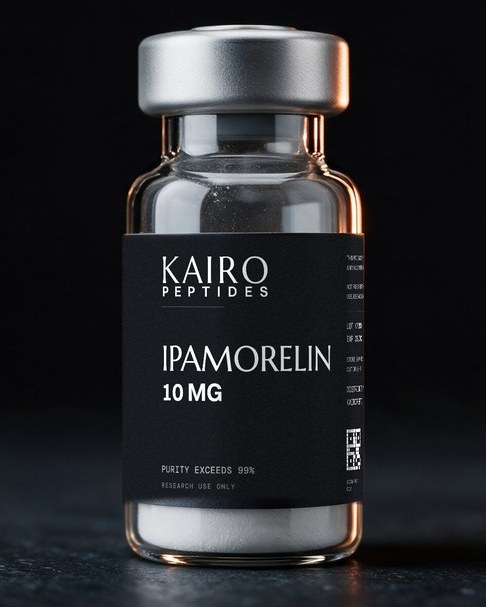
Ipamorelin
10MGStudied for growth hormone release without moving cortisol or prolactin, bone growth, digestion and gastric emptying, nitrogen balance, and appetite. Every paper behind those is linked below.
$50.00
- PURITY EXCEEDS 99%
- COA WITH EVERY BATCH
- 3RD-PARTY VERIFIED
| Title | Range | Discount |
|---|---|---|
| Pack tier: Ipamorelin (KAIRO-IPAMORELIN-10MG) | 1 - 2 | $50.00 |
| Pack of 3+: 10% off | 3 - 4 | $45.00 |
| Pack of 5+: 15% off | 5 - 9 | $42.50 |
| Pack of 10+: 20% off | 10 + | $40.00 |
For laboratory research use only. Not for human or veterinary use, not for diagnostic or therapeutic use, and not for food or drug manufacture. No preparation or usage guidance is provided anywhere on this page.
Growth hormone goes up. The other hormones do not.
Ipamorelin is studied for a single job, getting the pituitary to release the body's own growth hormone, and in pigs it did that while prolactin, thyroid and the reproductive hormones stayed put.
-
Growth hormone release
Preclinical moderate A well-described result with several independent outcome measures, but from a single laboratory or a single study design.Ipamorelin is studied for making the pituitary release the body's own growth hormone. In cultured rat pituitary cells it did that about as strongly as the older peptide GHRP-6, and in a phase 1 study in healthy men it produced a single burst of growth hormone that peaked near 40 minutes and then faded.
Receptor mechanism and pituitary-hormone selectivity (the defining characterization study) Human pharmacokinetics and the shape of the growth hormone response
-
Growth hormone without cortisol or prolactin
Preclinical moderate A well-described result with several independent outcome measures, but from a single laboratory or a single study design.Ipamorelin is studied for releasing growth hormone without pulling the other pituitary hormones up with it. In conscious pigs it left prolactin, thyroid and the reproductive hormones where they were, and cortisol and ACTH matched a GHRH comparison arm rather than sitting flat. That is animal work, and it has never been repeated in people.
Receptor mechanism and pituitary-hormone selectivity (the defining characterization study)
-
Bone growth
Preclinical moderate A well-described result with several independent outcome measures, but from a single laboratory or a single study design.Ipamorelin is studied in rodent bone growth. In rats the growth plate at the shin laid down new bone faster, and faster again at each higher amount given, so the bone got longer. A second rat study measured density directly and found the extra mineral came from bigger bones, not denser ones.
Longitudinal bone growth in rodents, with an explicit dissociation from IGF-1 Bone mineral content in rodents: bigger bones, not denser bone
-
Digestion and gastric emptying
Preclinical moderate A well-described result with several independent outcome measures, but from a single laboratory or a single study design.Ipamorelin is studied for stomach emptying and gut transit. In rats after abdominal surgery, 52 percent of a test meal was still in the stomach after 15 minutes against 78 percent in the comparison group, and the first bowel movement came sooner. The only controlled human trial in this area, in adults after bowel surgery, did not beat placebo.
Stomach emptying and stomach muscle contraction in a rodent model of post-surgical ileus Gut transit in a rodent model of post-surgical ileus Post-surgical ileus in people: the one published controlled trial, which was negative
-
Nitrogen balance
Preclinical moderate A well-described result with several independent outcome measures, but from a single laboratory or a single study design.Ipamorelin is studied for nitrogen balance while a steroid is working against it. In rats driven into negative nitrogen balance over 7 days, adding the peptide brought them back to neutral, and in a separate 3-month study it offset some of the loss of calf muscle force and bone formation the steroid caused. Growth hormone itself did more in the same nitrogen experiment, and every animal in this work was on a steroid at the same time.
Steroid co-exposure: bone formation and muscle force in rodents Nitrogen balance and liver urea production under steroid-induced wasting Whether steroids block the growth hormone signal
-
Appetite
Preclinical moderate A well-described result with several independent outcome measures, but from a single laboratory or a single study design.Ipamorelin is studied for appetite, and the direction in the research is up, not down. In mice it raised food intake, and those mice gained relative body fat rather than losing it, while growth hormone itself did the opposite in the same experiment.
Body fat and food intake in mice: a result that runs opposite to fat-loss marketing
Every line above describes what was measured in a laboratory. None of it establishes what the compound would do in a person.
Frequently paired with
What shoppers usually add alongside this one
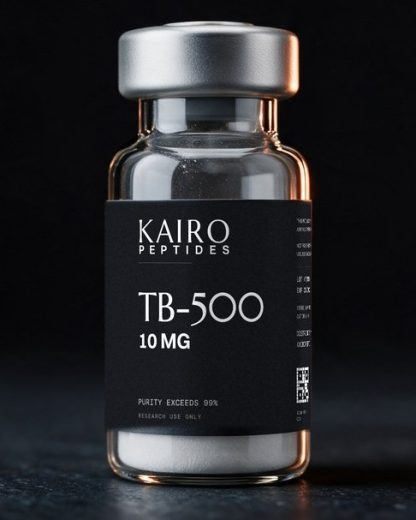
A versatile peptide, studied in research on cell movement and tissue repair.
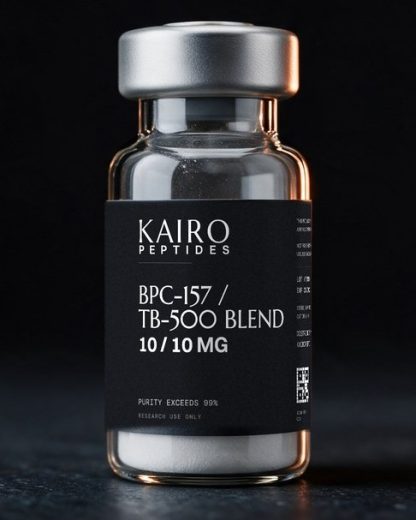
A recovery-focused blend, studied in research on tissue repair.
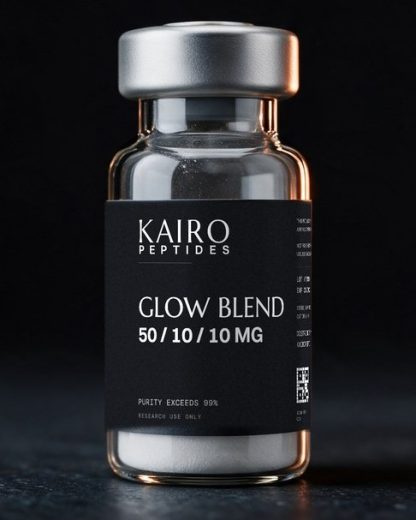
A multi-peptide skin blend, studied in research on skin and tissue.
-
Studied for
Post-surgical ileus in people: the one published controlled trial, which was negative
A multicentre, double-blind, placebo-controlled phase 2 trial gave adults having small and large bowel resection either intravenous ipamorelin or placebo twice a day from the first day after surgery until day 7 or discharge. One hundred seventeen adults were enrolled and 114 made up the safety and analysis populations. The main measure, median time from the first infusion to tolerating a standard solid meal, was 25.3 hours on the peptide and 32.6 hours on placebo, a difference that did not reach statistical significance (p = 0.15). Side effects of any kind were recorded in 87.5 percent of the peptide group and 94.8 percent of the placebo group. The authors reported the regimen was well tolerated and that there were no significant differences between the peptide and placebo in the key or secondary efficacy analyses, and listed as a limitation that the study was small with a broad range of underlying conditions. This is essential context: the only published controlled human efficacy trial of ipamorelin did not work, and it tested gut motility rather than anything growth-hormone-related. The tolerability figures belong to that intravenous hospital setting and to that population, and transfer to nothing else. HUMAN in a human trial (multicentre randomised double-blind placebo-controlled phase 2; 117 enrolled, 114 analysed) Preclinical strong A controlled study in people, or convergent results from more than one independent laboratory across more than one experimental system. It rates how well the work was done, never whether the result was favorable: the one controlled human efficacy trial on this page carries this badge and it missed its main endpoint. Open for the full finding and the paper it came from.In the literaturePost-surgical ileus in people: the one published controlled trial, which was negative
A multicentre, double-blind, placebo-controlled phase 2 trial gave adults having small and large bowel resection either intravenous ipamorelin or placebo twice a day from the first day after surgery until day 7 or discharge. One hundred seventeen adults were enrolled and 114 made up the safety and analysis populations. The main measure, median time from the first infusion to tolerating a standard solid meal, was 25.3 hours on the peptide and 32.6 hours on placebo, a difference that did not reach statistical significance (p = 0.15). Side effects of any kind were recorded in 87.5 percent of the peptide group and 94.8 percent of the placebo group. The authors reported the regimen was well tolerated and that there were no significant differences between the peptide and placebo in the key or secondary efficacy analyses, and listed as a limitation that the study was small with a broad range of underlying conditions. This is essential context: the only published controlled human efficacy trial of ipamorelin did not work, and it tested gut motility rather than anything growth-hormone-related. The tolerability figures belong to that intravenous hospital setting and to that population, and transfer to nothing else.References 1, 2
Modelin a human trial (multicentre randomised double-blind placebo-controlled phase 2; 117 enrolled, 114 analysed)
-
Studied for
Human pharmacokinetics and the shape of the growth hormone response
In a phase 1 study in healthy male volunteers, given as short intravenous infusions at five ascending rates with eight men at each rate, blood levels of the peptide rose in proportion to the amount given and it cleared with a half-life of about 2 hours (clearance 0.078 L/h/kg, steady-state volume of distribution 0.22 L/kg). Growth hormone came out as one single burst that peaked around 40 minutes and then fell away to negligible levels at every level tested; the concentration producing half the maximum growth hormone response was 214 nmol/L. How much growth hormone each man made varied more between individuals than the handling of the peptide itself did. This is the main published human dataset for the compound, and it measured only where the peptide goes and what hormone came out, not any clinical result. in a human phase 1 pharmacokinetic and pharmacodynamic study (healthy male volunteers) Preclinical strong A controlled study in people, or convergent results from more than one independent laboratory across more than one experimental system. It rates how well the work was done, never whether the result was favorable: the one controlled human efficacy trial on this page carries this badge and it missed its main endpoint. Open for the full finding and the paper it came from.In the literatureHuman pharmacokinetics and the shape of the growth hormone response
In a phase 1 study in healthy male volunteers, given as short intravenous infusions at five ascending rates with eight men at each rate, blood levels of the peptide rose in proportion to the amount given and it cleared with a half-life of about 2 hours (clearance 0.078 L/h/kg, steady-state volume of distribution 0.22 L/kg). Growth hormone came out as one single burst that peaked around 40 minutes and then fell away to negligible levels at every level tested; the concentration producing half the maximum growth hormone response was 214 nmol/L. How much growth hormone each man made varied more between individuals than the handling of the peptide itself did. This is the main published human dataset for the compound, and it measured only where the peptide goes and what hormone came out, not any clinical result.References 3
Modelin a human phase 1 pharmacokinetic and pharmacodynamic study (healthy male volunteers)
-
Studied for
Receptor mechanism and pituitary-hormone selectivity (the defining characterization study)
In cultured rat pituitary cells and then in anaesthetised rats and conscious pigs, ipamorelin made the pituitary release growth hormone about as strongly as the older peptide GHRP-6 (half-maximal concentration 1.3 +/- 0.4 nmol/L and maximum effect 85 +/- 5 percent, against 2.2 +/- 0.3 nmol/L and 100 percent for GHRP-6), and blocking experiments showed it works through the ghrelin-type receptor rather than the GHRH receptor. In the pigs, the researchers watched a panel of other pituitary hormones: none of the compounds tested changed FSH, LH, prolactin or TSH, and while GHRP-6 and GHRP-2 pushed up ACTH and cortisol, ipamorelin did not raise them to levels significantly different from a GHRH reference stimulus. That comparison against GHRH is the exact claim the paper makes; it is not a claim that ACTH and cortisol stayed flat, and it has never been tested as a hormone-selectivity endpoint in people. in cultured rat pituitary cells, plus anaesthetised rat and conscious pig studies Preclinical moderate A well-described result with several independent outcome measures, but from a single laboratory or a single study design. Open for the full finding and the paper it came from.In the literatureReceptor mechanism and pituitary-hormone selectivity (the defining characterization study)
In cultured rat pituitary cells and then in anaesthetised rats and conscious pigs, ipamorelin made the pituitary release growth hormone about as strongly as the older peptide GHRP-6 (half-maximal concentration 1.3 +/- 0.4 nmol/L and maximum effect 85 +/- 5 percent, against 2.2 +/- 0.3 nmol/L and 100 percent for GHRP-6), and blocking experiments showed it works through the ghrelin-type receptor rather than the GHRH receptor. In the pigs, the researchers watched a panel of other pituitary hormones: none of the compounds tested changed FSH, LH, prolactin or TSH, and while GHRP-6 and GHRP-2 pushed up ACTH and cortisol, ipamorelin did not raise them to levels significantly different from a GHRH reference stimulus. That comparison against GHRH is the exact claim the paper makes; it is not a claim that ACTH and cortisol stayed flat, and it has never been tested as a hormone-selectivity endpoint in people.References 4
Modelin cultured rat pituitary cells, plus anaesthetised rat and conscious pig studies
-
Studied for
Body fat and food intake in mice: a result that runs opposite to fat-loss marketing
Growth hormone and ipamorelin were given twice daily under the skin to mice that could not make their own growth hormone and to mice that could. The peptide produced a small rise in body weight, about 15 percent by two weeks, which did not grow further by nine weeks, while growth hormone raised body weight markedly in both groups. The peptide increased fat pad weight relative to body weight in both mouse types, and two weeks of secretagogue exposure (this peptide or GHRP-6) increased the proportion of the body that was fat on whole-body scanning in the growth-hormone-intact mice. Growth hormone did the opposite: it lowered relative fat mass in the deficient mice and did nothing in the intact ones. The secretagogues, but not growth hormone, raised blood leptin and food intake. The authors concluded that secretagogues increase body fat by mechanisms that do not run through growth hormone and that may include simply eating more. This mouse result is the direct evidence against fat-loss and body-composition claims made for this compound. in mouse studies (growth-hormone-deficient and growth-hormone-intact mice, twice-daily subcutaneous exposure up to 9 weeks) Preclinical moderate A well-described result with several independent outcome measures, but from a single laboratory or a single study design. Open for the full finding and the paper it came from.In the literatureBody fat and food intake in mice: a result that runs opposite to fat-loss marketing
Growth hormone and ipamorelin were given twice daily under the skin to mice that could not make their own growth hormone and to mice that could. The peptide produced a small rise in body weight, about 15 percent by two weeks, which did not grow further by nine weeks, while growth hormone raised body weight markedly in both groups. The peptide increased fat pad weight relative to body weight in both mouse types, and two weeks of secretagogue exposure (this peptide or GHRP-6) increased the proportion of the body that was fat on whole-body scanning in the growth-hormone-intact mice. Growth hormone did the opposite: it lowered relative fat mass in the deficient mice and did nothing in the intact ones. The secretagogues, but not growth hormone, raised blood leptin and food intake. The authors concluded that secretagogues increase body fat by mechanisms that do not run through growth hormone and that may include simply eating more. This mouse result is the direct evidence against fat-loss and body-composition claims made for this compound.References 5
Modelin mouse studies (growth-hormone-deficient and growth-hormone-intact mice, twice-daily subcutaneous exposure up to 9 weeks)
-
Studied for
Longitudinal bone growth in rodents, with an explicit dissociation from IGF-1
In adult female rats given the peptide under the skin three times a day for 15 days at three different levels, the growth plate of the shin bone laid down new bone faster, and faster at each higher level: 42 micrometres per day in the vehicle group against 44, 50 and 52 micrometres per day in the 3 groups given the peptide (P<0.0001), with a matching effect on weight gain. In the same rats, the peptide did not change total IGF-1, IGF binding proteins, or blood markers of bone build-up and breakdown, and the number of bone-resorbing cells counted in the shin did not change significantly. This is the single most important corrective in this dossier against IGF-1 marketing claims: bone lengthened while total IGF-1 did not move. in rat studies (adult female rats, 15 days of repeated subcutaneous exposure) Preclinical moderate A well-described result with several independent outcome measures, but from a single laboratory or a single study design. Open for the full finding and the paper it came from.In the literatureLongitudinal bone growth in rodents, with an explicit dissociation from IGF-1
In adult female rats given the peptide under the skin three times a day for 15 days at three different levels, the growth plate of the shin bone laid down new bone faster, and faster at each higher level: 42 micrometres per day in the vehicle group against 44, 50 and 52 micrometres per day in the 3 groups given the peptide (P<0.0001), with a matching effect on weight gain. In the same rats, the peptide did not change total IGF-1, IGF binding proteins, or blood markers of bone build-up and breakdown, and the number of bone-resorbing cells counted in the shin did not change significantly. This is the single most important corrective in this dossier against IGF-1 marketing claims: bone lengthened while total IGF-1 did not move.References 6
Modelin rat studies (adult female rats, 15 days of repeated subcutaneous exposure)
-
Studied for
Bone mineral content in rodents: bigger bones, not denser bone
In young adult female rats given a continuous supply of the peptide, GHRP-6, growth hormone or nothing for 12 weeks by implanted pump, with whole-body scans every four weeks and detailed bone analysis afterwards, each of the 3 compounds raised body weight and raised the total mineral content of the shin and spine bones on the scan. But once that mineral content was corrected for the extra body weight, the difference disappeared. Two-dimensional bone mineral density of the shin did go up; total and spinal two-dimensional density did not. The measurements that actually distinguish bigger bone from denser bone all pointed the same way: true volumetric density measured by CT and by water displacement was unchanged, and while ash weight rose, mineral concentration did not. The authors concluded the extra mineral was there because the bones themselves had grown larger. This is a bone-growth result in rats and specifically not a bone-densification result. in rat studies (adult female Sprague-Dawley rats, 12 weeks of continuous subcutaneous infusion) with laboratory analysis of the bones afterwards Preclinical moderate A well-described result with several independent outcome measures, but from a single laboratory or a single study design. Open for the full finding and the paper it came from.In the literatureBone mineral content in rodents: bigger bones, not denser bone
In young adult female rats given a continuous supply of the peptide, GHRP-6, growth hormone or nothing for 12 weeks by implanted pump, with whole-body scans every four weeks and detailed bone analysis afterwards, each of the 3 compounds raised body weight and raised the total mineral content of the shin and spine bones on the scan. But once that mineral content was corrected for the extra body weight, the difference disappeared. Two-dimensional bone mineral density of the shin did go up; total and spinal two-dimensional density did not. The measurements that actually distinguish bigger bone from denser bone all pointed the same way: true volumetric density measured by CT and by water displacement was unchanged, and while ash weight rose, mineral concentration did not. The authors concluded the extra mineral was there because the bones themselves had grown larger. This is a bone-growth result in rats and specifically not a bone-densification result.References 7
Modelin rat studies (adult female Sprague-Dawley rats, 12 weeks of continuous subcutaneous infusion) with laboratory analysis of the bones afterwards
-
Studied for
Steroid co-exposure: bone formation and muscle force in rodents
Eight-month-old female rats were given a synthetic steroid (methylprednisolone), ipamorelin, or both together for three months. In the animals that got the steroid plus the peptide, the maximum force their calf muscles could produce was significantly higher, and the rate at which new bone was laid down on the outer bone surface was four times higher, both compared with the animals that got the steroid alone. The authors concluded that the loss of muscle strength and bone formation caused by the steroid was counteracted by giving the secretagogue at the same time. Read the direction carefully: this is a rat model of steroid-driven wasting, and it describes offsetting a drug-induced deficit, not improving on a normal animal. in rat studies (8-month-old female rats, 3 months of steroid co-administration) Preclinical moderate A well-described result with several independent outcome measures, but from a single laboratory or a single study design. Open for the full finding and the paper it came from.In the literatureSteroid co-exposure: bone formation and muscle force in rodents
Eight-month-old female rats were given a synthetic steroid (methylprednisolone), ipamorelin, or both together for three months. In the animals that got the steroid plus the peptide, the maximum force their calf muscles could produce was significantly higher, and the rate at which new bone was laid down on the outer bone surface was four times higher, both compared with the animals that got the steroid alone. The authors concluded that the loss of muscle strength and bone formation caused by the steroid was counteracted by giving the secretagogue at the same time. Read the direction carefully: this is a rat model of steroid-driven wasting, and it describes offsetting a drug-induced deficit, not improving on a normal animal.References 8
Modelin rat studies (8-month-old female rats, 3 months of steroid co-administration)
-
Studied for
Nitrogen balance and liver urea production under steroid-induced wasting
Five groups of rats were compared over seven days: free-fed controls, food-matched controls, a steroid (prednisolone) alone, steroid plus growth hormone, and steroid plus ipamorelin. The steroid alone pushed the liver to burn off more nitrogen as urea, switched up the urea-cycle genes, and drove the animals into negative nitrogen balance with less nitrogen in their organs. Added to the steroid, ipamorelin cut the liver's urea-nitrogen capacity by 20 percent (P<0.05), turned down the urea-cycle genes, brought nitrogen balance back to neutral, and normalised or improved organ nitrogen. Growth hormone itself did more in the same experiment (a 33 percent cut in urea-nitrogen capacity and a 2.5-fold improvement in nitrogen balance), and the authors concluded that both counteracted the steroid-driven nitrogen wasting, though at the amounts given, less efficiently by the secretagogue. in rat studies (rats given prednisolone, 7 days, with food-matched and growth-hormone comparison groups) Preclinical moderate A well-described result with several independent outcome measures, but from a single laboratory or a single study design. Open for the full finding and the paper it came from.In the literatureNitrogen balance and liver urea production under steroid-induced wasting
Five groups of rats were compared over seven days: free-fed controls, food-matched controls, a steroid (prednisolone) alone, steroid plus growth hormone, and steroid plus ipamorelin. The steroid alone pushed the liver to burn off more nitrogen as urea, switched up the urea-cycle genes, and drove the animals into negative nitrogen balance with less nitrogen in their organs. Added to the steroid, ipamorelin cut the liver's urea-nitrogen capacity by 20 percent (P<0.05), turned down the urea-cycle genes, brought nitrogen balance back to neutral, and normalised or improved organ nitrogen. Growth hormone itself did more in the same experiment (a 33 percent cut in urea-nitrogen capacity and a 2.5-fold improvement in nitrogen balance), and the authors concluded that both counteracted the steroid-driven nitrogen wasting, though at the amounts given, less efficiently by the secretagogue.References 9
Modelin rat studies (rats given prednisolone, 7 days, with food-matched and growth-hormone comparison groups)
-
Studied for
Whether steroids block the growth hormone signal
In one rat experiment, eight days of a synthetic steroid significantly slowed weight gain (P<0.001) but did not change how much growth hormone the pituitary released when the animals were then challenged with either ipamorelin or GHRH. In a second experiment over ten days, the rats on the steroid lost 13.6 +/- 2.9 g of body weight against 4.0 +/- 3.5 g in saline controls, and the rats given the peptide alongside the steroid lost significantly less (P<0.05): 2.3 +/- 2.0 g in the higher-amount group and 1.6 +/- 2.0 g in the lower-amount group. IGF-1 rose alongside. Note the scope: the IGF-1 rise here happened in rats that were also on a steroid, and a separate rat study found no change in total IGF-1 in animals given nothing else. in rat studies (rats given methylprednisolone; an acute-challenge experiment and a 10-day repeated intravenous experiment) Preclinical moderate A well-described result with several independent outcome measures, but from a single laboratory or a single study design. Open for the full finding and the paper it came from.In the literatureWhether steroids block the growth hormone signal
In one rat experiment, eight days of a synthetic steroid significantly slowed weight gain (P<0.001) but did not change how much growth hormone the pituitary released when the animals were then challenged with either ipamorelin or GHRH. In a second experiment over ten days, the rats on the steroid lost 13.6 +/- 2.9 g of body weight against 4.0 +/- 3.5 g in saline controls, and the rats given the peptide alongside the steroid lost significantly less (P<0.05): 2.3 +/- 2.0 g in the higher-amount group and 1.6 +/- 2.0 g in the lower-amount group. IGF-1 rose alongside. Note the scope: the IGF-1 rise here happened in rats that were also on a steroid, and a separate rat study found no change in total IGF-1 in animals given nothing else.References 10
Modelin rat studies (rats given methylprednisolone; an acute-challenge experiment and a 10-day repeated intravenous experiment)
-
Studied for
Stomach emptying and stomach muscle contraction in a rodent model of post-surgical ileus
In a separate rat study, fasted adult males had abdominal surgery with intestinal handling and then received the peptide or plain vehicle into a vein. Stomach emptying was measured as how much of a tagged test meal was still in the stomach 15 minutes later: 78 +/- 5 percent remained in the vehicle group against 52 +/- 11 percent with the peptide, a significant acceleration (P<0.05 versus vehicle). Rats that had never had surgery had 44 +/- 6 percent remaining. The paper reports no statistical comparison between the peptide group and the non-surgical group, so no conclusion should be drawn about whether emptying returned to the non-surgical level. Separately, strips of stomach muscle taken from operated rats and hung in an organ bath had lost most of their contraction response to acetylcholine and to electrical stimulation, and both the peptide and ghrelin restored it. The authors read this as the peptide driving stomach contraction through the ghrelin receptor acting on cholinergic excitatory nerves. in rat studies (stomach emptying) plus isolated rat stomach tissue in an organ bath Preclinical moderate A well-described result with several independent outcome measures, but from a single laboratory or a single study design. Open for the full finding and the paper it came from.In the literatureStomach emptying and stomach muscle contraction in a rodent model of post-surgical ileus
In a separate rat study, fasted adult males had abdominal surgery with intestinal handling and then received the peptide or plain vehicle into a vein. Stomach emptying was measured as how much of a tagged test meal was still in the stomach 15 minutes later: 78 +/- 5 percent remained in the vehicle group against 52 +/- 11 percent with the peptide, a significant acceleration (P<0.05 versus vehicle). Rats that had never had surgery had 44 +/- 6 percent remaining. The paper reports no statistical comparison between the peptide group and the non-surgical group, so no conclusion should be drawn about whether emptying returned to the non-surgical level. Separately, strips of stomach muscle taken from operated rats and hung in an organ bath had lost most of their contraction response to acetylcholine and to electrical stimulation, and both the peptide and ghrelin restored it. The authors read this as the peptide driving stomach contraction through the ghrelin receptor acting on cholinergic excitatory nerves.References 11
Modelin rat studies (stomach emptying) plus isolated rat stomach tissue in an organ bath
-
Studied for
Gut transit in a rodent model of post-surgical ileus
Fasted male rats had abdominal surgery with handling of the intestines, then received the peptide, GHRP-6 or plain saline into a vein, either once or repeatedly over two days. Against saline, a single exposure to the peptide or to GHRP-6 shortened the time to the first bowel movement but changed nothing about total stool output, food intake or weight gain measured 48 hours after surgery. Repeated exposure did move those endpoints: total stool output, food intake and weight gain all went up significantly. This is a rat surgical model only, and the single-exposure arm did not shift the cumulative measures. in rat studies (fasted male rats, laparotomy with intestinal manipulation) Preclinical moderate A well-described result with several independent outcome measures, but from a single laboratory or a single study design. Open for the full finding and the paper it came from.In the literatureGut transit in a rodent model of post-surgical ileus
Fasted male rats had abdominal surgery with handling of the intestines, then received the peptide, GHRP-6 or plain saline into a vein, either once or repeatedly over two days. Against saline, a single exposure to the peptide or to GHRP-6 shortened the time to the first bowel movement but changed nothing about total stool output, food intake or weight gain measured 48 hours after surgery. Repeated exposure did move those endpoints: total stool output, food intake and weight gain all went up significantly. This is a rat surgical model only, and the single-exposure arm did not shift the cumulative measures.References 12
Modelin rat studies (fasted male rats, laparotomy with intestinal manipulation)
-
Studied for
Gut and skin pain sensitivity in rats, and whether it runs through the ghrelin receptor
Rats were made hypersensitive in the colon by infusing dilute acetic acid, a model that produces the sensitivity without inflaming the colon lining. Ipamorelin, described by the authors as a ghrelin receptor agonist that stays outside the brain, was given into a vein, and a second agonist that does reach the brain was given by mouth. Colon sensitivity was scored by the animals' abdominal response to graded pressure in the rectum, and skin sensitivity by paw withdrawals to a calibrated probe. Compared with vehicle controls, both agonists significantly reduced, but did not abolish, both the gut and the skin hypersensitivity, and both effects were blocked by a ghrelin receptor antagonist, which shows the effect runs through that receptor. This is a rat model only, and the paper reports attenuation rather than abolition. in rat studies (a rat model of non-inflammatory gut hypersensitivity and skin mechanical sensitivity) Preclinical moderate A well-described result with several independent outcome measures, but from a single laboratory or a single study design. Open for the full finding and the paper it came from.In the literatureGut and skin pain sensitivity in rats, and whether it runs through the ghrelin receptor
Rats were made hypersensitive in the colon by infusing dilute acetic acid, a model that produces the sensitivity without inflaming the colon lining. Ipamorelin, described by the authors as a ghrelin receptor agonist that stays outside the brain, was given into a vein, and a second agonist that does reach the brain was given by mouth. Colon sensitivity was scored by the animals' abdominal response to graded pressure in the rectum, and skin sensitivity by paw withdrawals to a calibrated probe. Compared with vehicle controls, both agonists significantly reduced, but did not abolish, both the gut and the skin hypersensitivity, and both effects were blocked by a ghrelin receptor antagonist, which shows the effect runs through that receptor. This is a rat model only, and the paper reports attenuation rather than abolition.References 13
Modelin rat studies (a rat model of non-inflammatory gut hypersensitivity and skin mechanical sensitivity)
-
Studied for
Cisplatin-associated weight loss and nausea in ferrets
Ferrets were given anamorelin, ipamorelin or plain vehicle into the abdominal cavity shortly before cisplatin and then every 24 hours, with behaviour recorded for up to 72 hours and food and water intake measured daily. Given that way, neither compound had any effect on cisplatin-induced vomiting, early or late, but both cut the associated weight loss on the last day of the late phase (48 to 72 hours) by about 24 percent. Anamorelin delivered directly into the brain ventricles did reduce early vomiting by 60 percent while leaving late vomiting alone, which the authors read as evidence that reaching the brain matters for the anti-nausea effect. In strips of ferret intestine in a dish, anamorelin and ipamorelin damped electrically driven contractions by 94.4 percent (half-blocking concentration 14.0 micromolar) and 54.4 percent (11.7 micromolar) respectively. in ferret studies plus isolated ferret intestine in a dish Preclinical moderate A well-described result with several independent outcome measures, but from a single laboratory or a single study design. Open for the full finding and the paper it came from.In the literatureCisplatin-associated weight loss and nausea in ferrets
Ferrets were given anamorelin, ipamorelin or plain vehicle into the abdominal cavity shortly before cisplatin and then every 24 hours, with behaviour recorded for up to 72 hours and food and water intake measured daily. Given that way, neither compound had any effect on cisplatin-induced vomiting, early or late, but both cut the associated weight loss on the last day of the late phase (48 to 72 hours) by about 24 percent. Anamorelin delivered directly into the brain ventricles did reduce early vomiting by 60 percent while leaving late vomiting alone, which the authors read as evidence that reaching the brain matters for the anti-nausea effect. In strips of ferret intestine in a dish, anamorelin and ipamorelin damped electrically driven contractions by 94.4 percent (half-blocking concentration 14.0 micromolar) and 54.4 percent (11.7 micromolar) respectively.References 14
Modelin ferret studies plus isolated ferret intestine in a dish
-
Studied for
The growth hormone axis in a diabetic mouse model
Diabetic and non-diabetic female mice were given the peptide or saline once into a vein, with blood taken before and ten minutes after on day 14, and livers analysed afterwards. Ten minutes after that, growth hormone measured 150 +/- 35 micrograms/L in the diabetic mice against 62 +/- 11 micrograms/L in the non-diabetic mice (P<.05). IGF-1 in the blood was lower in the diabetic animals to begin with and rose after the stimulus only in the non-diabetic animals; in the liver, IGF-1 messenger RNA and protein also rose only in the non-diabetic animals, while the already-low levels in the diabetic mice did not budge. The researchers were using the peptide as a probe to characterise the diabetic model, in which the pituitary over-releases growth hormone while the liver fails to respond to it. The finding is about how that model behaves, not about a benefit of the compound. in mouse studies (streptozotocin-diabetic and non-diabetic female mice, a single intravenous challenge) Preclinical moderate A well-described result with several independent outcome measures, but from a single laboratory or a single study design. Open for the full finding and the paper it came from.In the literatureThe growth hormone axis in a diabetic mouse model
Diabetic and non-diabetic female mice were given the peptide or saline once into a vein, with blood taken before and ten minutes after on day 14, and livers analysed afterwards. Ten minutes after that, growth hormone measured 150 +/- 35 micrograms/L in the diabetic mice against 62 +/- 11 micrograms/L in the non-diabetic mice (P<.05). IGF-1 in the blood was lower in the diabetic animals to begin with and rose after the stimulus only in the non-diabetic animals; in the liver, IGF-1 messenger RNA and protein also rose only in the non-diabetic animals, while the already-low levels in the diabetic mice did not budge. The researchers were using the peptide as a probe to characterise the diabetic model, in which the pituitary over-releases growth hormone while the liver fails to respond to it. The finding is about how that model behaves, not about a benefit of the compound.References 15
Modelin mouse studies (streptozotocin-diabetic and non-diabetic female mice, a single intravenous challenge)
-
Studied for
Where the peptide goes in the body and how it leaves
Three peptide secretagogues including ipamorelin were compared with GHRP-2 and GHRP-6 in male rats across several routes of administration. After delivery into a vein, blood levels fell in two phases; ipamorelin stood out from the others, clearing from the circulation about five times more slowly than GHRP-6. It left mostly in urine, whereas GHRP-6 left mostly in bile, and 60 to 80 percent of the amount given could be recovered from bile and urine still intact, meaning it resisted being broken down. Sprayed into the nose, about 20 percent of it reached the bloodstream, lower than the roughly 50 percent measured for the three comparison peptides. in rat studies (male rats, several administration routes) Preclinical moderate A well-described result with several independent outcome measures, but from a single laboratory or a single study design. Open for the full finding and the paper it came from.In the literatureWhere the peptide goes in the body and how it leaves
Three peptide secretagogues including ipamorelin were compared with GHRP-2 and GHRP-6 in male rats across several routes of administration. After delivery into a vein, blood levels fell in two phases; ipamorelin stood out from the others, clearing from the circulation about five times more slowly than GHRP-6. It left mostly in urine, whereas GHRP-6 left mostly in bile, and 60 to 80 percent of the amount given could be recovered from bile and urine still intact, meaning it resisted being broken down. Sprayed into the nose, about 20 percent of it reached the bloodstream, lower than the roughly 50 percent measured for the three comparison peptides.References 16
Modelin rat studies (male rats, several administration routes)
-
Studied for
Medicinal chemistry lineage and use as a reference structure
Ipamorelin was found inside a series of compounds built by removing the central Ala-Trp pair from an older peptide, GHRP-1, as reported in its original characterization paper. It then became the starting structure for a further series aimed at surviving the stomach, built by swapping in a small non-peptide fragment and methylating the backbone; that work produced a four-unit peptide with in-body potency in pigs comparable to ipamorelin, GHRP-2 and GHRP-6, and 10 percent of it reached the bloodstream when given by mouth to dogs. Ipamorelin was also one of the two parent structures for a later hybrid series, tested first in a rat pituitary cell assay and then in pigs. Taken together these papers document its role as a reference scaffold in secretagogue chemistry, not any physiological claim about the compound itself. in cultured rat pituitary cells plus anaesthetised rat, pig and dog studies; structure-activity chemistry Preclinical moderate A well-described result with several independent outcome measures, but from a single laboratory or a single study design. Open for the full finding and the paper it came from.In the literatureMedicinal chemistry lineage and use as a reference structure
Ipamorelin was found inside a series of compounds built by removing the central Ala-Trp pair from an older peptide, GHRP-1, as reported in its original characterization paper. It then became the starting structure for a further series aimed at surviving the stomach, built by swapping in a small non-peptide fragment and methylating the backbone; that work produced a four-unit peptide with in-body potency in pigs comparable to ipamorelin, GHRP-2 and GHRP-6, and 10 percent of it reached the bloodstream when given by mouth to dogs. Ipamorelin was also one of the two parent structures for a later hybrid series, tested first in a rat pituitary cell assay and then in pigs. Taken together these papers document its role as a reference scaffold in secretagogue chemistry, not any physiological claim about the compound itself.References 4, 17, 18
Modelin cultured rat pituitary cells plus anaesthetised rat, pig and dog studies; structure-activity chemistry
-
Studied for
What happens to growth-hormone-making cells after weeks of exposure
Young female rats received the peptide, GHRH or saline for 21 days, and afterwards their pituitary cells were grown and examined in the lab. The growth-hormone-making cells looked structurally normal, but the density of secretion granules inside them was higher (P<0.05) after either the peptide or GHRH. In three-day baseline cultures, the proportion of growth-hormone cells and the ratio of strongly to weakly staining cells did not differ between groups, and the baseline amount of hormone held inside the cells over four hours was actually lower in the peptide and GHRH groups than in the saline group. Only in the cells from the rats given the peptide did a further four hours of exposure to the peptide, GHRP-6 or GHRH raise both the proportion of growth-hormone cells and the hormone held inside them. The authors read this as dynamic control over the cell population and its hormone content in the young female rat. Both directions matter: baseline content was lower, and only the re-stimulated content was higher. in rat studies (young female rats given the peptide for 21 days) followed by examination of their cultured pituitary cells Preclinical preliminary A single study, an early mechanistic observation, or a result whose interpretation is the authors' own inference. Open for the full finding and the paper it came from.In the literatureWhat happens to growth-hormone-making cells after weeks of exposure
Young female rats received the peptide, GHRH or saline for 21 days, and afterwards their pituitary cells were grown and examined in the lab. The growth-hormone-making cells looked structurally normal, but the density of secretion granules inside them was higher (P<0.05) after either the peptide or GHRH. In three-day baseline cultures, the proportion of growth-hormone cells and the ratio of strongly to weakly staining cells did not differ between groups, and the baseline amount of hormone held inside the cells over four hours was actually lower in the peptide and GHRH groups than in the saline group. Only in the cells from the rats given the peptide did a further four hours of exposure to the peptide, GHRP-6 or GHRH raise both the proportion of growth-hormone cells and the hormone held inside them. The authors read this as dynamic control over the cell population and its hormone content in the young female rat. Both directions matter: baseline content was lower, and only the re-stimulated content was higher.References 19
Modelin rat studies (young female rats given the peptide for 21 days) followed by examination of their cultured pituitary cells
-
Studied for
Insulin release from isolated pancreas tissue
Rats were made diabetic with streptozotocin, and four weeks later small pieces of pancreas from those rats and from normal rats were taken out and bathed in the peptide across a range of concentrations, with insulin measured in the bath. In these isolated tissue pieces the peptide significantly increased insulin release from both normal and diabetic pancreas (p<0.04). Blocking calcium channels with diltiazem, or blocking adrenergic receptors with yohimbine or propranolol, or a combination of atropine, propranolol and yohimbine, all significantly reduced that release (p<0.03); atropine on its own reduced it in the diabetic tissue but not the normal tissue. The authors concluded that release runs through calcium channel and adrenergic pathways, and described this as the first study of the compound's effect on pancreatic insulin secretion. This is tissue in a dish, not a whole-body insulin or blood-sugar effect, and it has never been extended to people. in isolated pancreas tissue from normal and streptozotocin-diabetic rats (tissue in a dish, not a live animal) Preclinical preliminary A single study, an early mechanistic observation, or a result whose interpretation is the authors' own inference. Open for the full finding and the paper it came from.In the literatureInsulin release from isolated pancreas tissue
Rats were made diabetic with streptozotocin, and four weeks later small pieces of pancreas from those rats and from normal rats were taken out and bathed in the peptide across a range of concentrations, with insulin measured in the bath. In these isolated tissue pieces the peptide significantly increased insulin release from both normal and diabetic pancreas (p<0.04). Blocking calcium channels with diltiazem, or blocking adrenergic receptors with yohimbine or propranolol, or a combination of atropine, propranolol and yohimbine, all significantly reduced that release (p<0.03); atropine on its own reduced it in the diabetic tissue but not the normal tissue. The authors concluded that release runs through calcium channel and adrenergic pathways, and described this as the first study of the compound's effect on pancreatic insulin secretion. This is tissue in a dish, not a whole-body insulin or blood-sugar effect, and it has never been extended to people.References 20
Modelin isolated pancreas tissue from normal and streptozotocin-diabetic rats (tissue in a dish, not a live animal)
-
Studied for
Detection in anti-doping urine testing
An anti-doping method-development study looked for urinary breakdown products of five growth hormone releasing peptides, including ipamorelin, after nasal administration, with each compound given to a single volunteer and urine collected for two days, then analysed by high-resolution mass spectrometry. The authors reported that hexarelin and ipamorelin broke down heavily and appeared in urine as the parent compound plus a set of fragments, and that one fragment, ipamorelin (1-4) free acid, was still detectable after the parent compound had disappeared entirely, making it the longer-lived analytical target. The paper states that growth hormone releasing peptides are on the World Anti-Doping Agency Prohibited List, and concludes that how long a compound stays detectable depends on the individual's metabolism, the preparation and the route. This is an analytical chemistry result about detectability, with one volunteer per compound; it reports no physiological outcome. in a human analytical method-development study (one volunteer per compound, nasal administration, urine analysis) Preclinical preliminary A single study, an early mechanistic observation, or a result whose interpretation is the authors' own inference. Open for the full finding and the paper it came from.In the literatureDetection in anti-doping urine testing
An anti-doping method-development study looked for urinary breakdown products of five growth hormone releasing peptides, including ipamorelin, after nasal administration, with each compound given to a single volunteer and urine collected for two days, then analysed by high-resolution mass spectrometry. The authors reported that hexarelin and ipamorelin broke down heavily and appeared in urine as the parent compound plus a set of fragments, and that one fragment, ipamorelin (1-4) free acid, was still detectable after the parent compound had disappeared entirely, making it the longer-lived analytical target. The paper states that growth hormone releasing peptides are on the World Anti-Doping Agency Prohibited List, and concludes that how long a compound stays detectable depends on the individual's metabolism, the preparation and the route. This is an analytical chemistry result about detectability, with one volunteer per compound; it reports no physiological outcome.References 21
Modelin a human analytical method-development study (one volunteer per compound, nasal administration, urine analysis)
-
Studied for
A second, larger phase 2 trial with no published results
Registry record only, included so the human evidence picture is complete. ClinicalTrials.gov NCT01280344, 'Safety and Efficacy of Ipamorelin Compared to Placebo for the Recovery of Gastrointestinal Function', sponsored by Helsinn Therapeutics (U.S.), Inc, is a phase 2 study with 320 people enrolled, comparing ipamorelin against saline. The registry lists it as completed in May 2014 with no results posted. Coverage statement for that absence: a PubMed search for the single term 'ipamorelin' returned 53 records on 2026-07-28, and none of them reports results from this trial. That is a null result on my search, not proof that no report exists anywhere. Nothing about how well or badly the compound worked should be read into this entry in either direction. a human phase 2 clinical trial registry record; no published results located Preclinical preliminary A single study, an early mechanistic observation, or a result whose interpretation is the authors' own inference. Open for the full finding and the paper it came from.In the literatureA second, larger phase 2 trial with no published results
Registry record only, included so the human evidence picture is complete. ClinicalTrials.gov NCT01280344, 'Safety and Efficacy of Ipamorelin Compared to Placebo for the Recovery of Gastrointestinal Function', sponsored by Helsinn Therapeutics (U.S.), Inc, is a phase 2 study with 320 people enrolled, comparing ipamorelin against saline. The registry lists it as completed in May 2014 with no results posted. Coverage statement for that absence: a PubMed search for the single term 'ipamorelin' returned 53 records on 2026-07-28, and none of them reports results from this trial. That is a null result on my search, not proof that no report exists anywhere. Nothing about how well or badly the compound worked should be read into this entry in either direction.References 22
Modela human phase 2 clinical trial registry record; no published results located
2 strong / 14 moderate / 4 preliminaryRated by how many independent labs and how many kinds of experiment found the same thing.
What is in the vial.
| Compound | Ipamorelin |
| Dosage form | Lyophilized powder |
| Purity | PURITY EXCEEDS 99% |
| Storage | STORE LYOPHILIZED. KEEP COLD AND OUT OF LIGHT. |
| Lot format | LOT + EXP printed per vial |
| Distribution | DISTRIBUTED BY KAIRO, KAIROPEPTIDES.COM |
A synthetic pentapeptide.
The full technical write-up 3 paragraphs, plus the fact row
A synthetic pentapeptide: five amino acid building blocks with a capped front end and an amide cap at the tail, sequence Aib-His-D-2-Nal-D-Phe-Lys-NH2. It switches on the growth hormone secretagogue receptor GHS-R1a, the same receptor the body's own hunger-and-growth-hormone peptide ghrelin uses. It was made at Novo Nordisk in the late 1990s inside a growth hormone secretagogue chemistry programme, where it carries the internal code NNC 26-0161 (Raun 1998, PMID 9849822), and was later taken into phase 2 clinical work by Helsinn Therapeutics for postoperative ileus, a trial whose published result missed its main efficacy endpoint (Beck 2014, PMID 25331030; ClinicalTrials.gov NCT00672074). Of that outcome the trial's own report states: 'There were no significant differences between ipamorelin and placebo in the key and secondary efficacy analyses'
.
The research literature describes it as the first agonist of this receptor class whose selectivity for growth hormone release approached that of GHRH in animal work: in conscious pigs, none of the secretagogues tested moved FSH, LH, prolactin or TSH, and unlike GHRP-6 and GHRP-2, ipamorelin did not raise ACTH or cortisol to levels significantly different from those seen after a GHRH reference stimulus. That selectivity result is animal data and has never been repeated as a hormone-selectivity endpoint in people.
Ipamorelin is not an approved drug in any country. The anti-doping literature states that growth hormone releasing peptides of this class are on the World Anti-Doping Agency Prohibited List (Semenistaya 2015, PMID 25869809), and one of its own breakdown products is a validated urinary detection target. Supplied for laboratory research use only; not for human or veterinary use. Everything described below is what researchers observed in laboratory systems. None of it is a statement about effects in a person, and no preparation or usage guidance is given anywhere on this page.References 1, 2, 4, 21
- Length
- 5 residues (a pentapeptide), with an alpha-aminoisobutyryl cap at the N-terminus and a primary amide at the C-terminus
- Proline content
- None: the verified sequence carries no proline, and no cysteine, methionine or tryptophan either
- Also known as
- NNC 26-0161
- Status
- Not an approved drug in the United States or anywhere else
Sold as a laboratory research material.
Molecular identity
Sequence, formula and registry numbers
- Formula
- Free base C38H49N9O5
- Molar mass
- Free base 711.9 g/mol
- CAS
- Free base 170851-70-4
- PubChem CID
- Free base 9831659
Which salt form any given lot is supplied as is a supplier-specific fact and is not asserted here. PubChem returns IPAMORELIN ACETATE among the synonyms of the free-base record rather than as a separate compound record, so no acetate formula, mass, registry number or CID was verified and none is printed. Salt content and net peptide content are properties of the specific lot and are read off that lot's certificate of analysis.References 23
Once it is mixed, it goes in the fridge.
Water is what ages a peptide, so the rules change the moment you add it.
The longer version 3 rows
- Before you mix it
- Supplied as a lyophilized (freeze-dried) powder. General practice for lyophilized research peptides is long-term storage of the dry solid sealed, dark and frozen, with colder storage preferred and refrigerated storage reserved for short working periods. The mechanism is well described in the peer-reviewed literature: peptides and proteins degrade in the solid state through deamidation, cleavage of the peptide backbone, oxidation, the Maillard reaction, beta-elimination and aggregation, and the rate of those reactions is governed by temperature, residual moisture, excipients and whether the solid is amorphous or crystalline. Because moisture uptake is one of the main drivers of solid-state degradation, general laboratory practice is to let a cold sealed vial reach room temperature before it is opened, to work quickly, and to reseal promptly, so that condensation is not drawn into the powder. That is general practice for this class of material, not a claim attributed to any supplier or brand.
- Once it is mixed
- Refrigerate at 36 to 46 F (2 to 8 C) once it is mixed, and hold it for no more than 28 days. That 28 days is a USP <797> sterility limit for a preserved multiple-use vial, not a measured chemical stability window for this peptide, and it must never be written as stable for 28 days. A peptide solution is a working preparation rather than a storage form, and general practice is to hold it refrigerated for the shortest time practical and to split it into single-use portions rather than repeatedly freezing and thawing one vial. Freezing itself imposes low-temperature, freeze-concentration and ice-formation stresses that can drive degradation and aggregation, and each additional cycle repeats those stresses. Solvent selection belongs to the lot certificate of analysis and the receiving laboratory's own protocol, so no solvent is named or recommended here, and reconstitution volumes, concentrations, routes, schedules and every other preparation-for-use detail are withheld.
- In the literature
- None located. A PubMed search for the single term 'ipamorelin' returned 53 records on 2026-07-28 and none of them is a stability or formulation study of this peptide, so everything above is either general practice for lyophilized research peptides or is drawn from the peer-reviewed solid-state and freeze-drying stability literature. Two properties are compound-specific, and both are read off the PubChem-verified structure rather than off a source that asserts them: the formula C38H49N9O5 contains no sulfur and the sequence contains no cysteine, methionine or tryptophan, so the oxidation-prone side chains that dominate shelf-life planning for many peptides are simply absent here, and there is no structural basis for oxygen-free buffers or reducing agents such as DTT on that account. The molecule does carry a histidine imidazole ring and a C-terminal primary amide, both of which argue for avoiding extremes of pH and for minimising time spent in solution. References 23, 24, 25, 26, 27
Every paper this page is built on.
Click any journal to open the paper.
- Int J Colorectal Dis
- Pharm Res
- Eur J Endocrinol
- Biochem Biophys Res Commun
- Growth Horm IGF Res
- J Endocrinol
- J Exp Pharmacol
- J Pharmacol Exp Ther
- Physiol Behav
- Exp Diabesity Res
- Xenobiotica
- J Med Chem
- Bioorg Med Chem Lett
- Histol Histopathol
- Neuro Endocrinol Lett
- Drug Test Anal
- J Pharm Sci
- Int J Pharm
- Pharm Dev Technol
The full list 27 references, each linked
-
1
Beck DE, Sweeney WB, McCarter MD; Ipamorelin 201 Study Group. Prospective, randomized, controlled, proof-of-concept study of the Ghrelin mimetic ipamorelin for the management of postoperative ileus in bowel resection patients. Int J Colorectal Dis. 2014;29(12):1527-1534.
-
2
ClinicalTrials.gov Identifier NCT00672074. Ipamorelin for the management of postoperative ileus after bowel resection. Sponsor: Helsinn Therapeutics (U.S.), Inc. Status COMPLETED; phase 2; enrollment 117 (actual); actual completion 2009-12; results posted: none. Queried live July 28, 2026.
-
3
Gobburu JV, Agerso H, Jusko WJ, Ynddal L. Pharmacokinetic-pharmacodynamic modeling of ipamorelin, a growth hormone releasing peptide, in human volunteers. Pharm Res. 1999;16(9):1412-1416.
-
4
Raun K, Hansen BS, Johansen NL, Thogersen H, Madsen K, Ankersen M, Andersen PH. Ipamorelin, the first selective growth hormone secretagogue. Eur J Endocrinol. 1998;139(5):552-561.
-
5
Lall S, Tung LY, Ohlsson C, Jansson JO, Dickson SL. Growth hormone (GH)-independent stimulation of adiposity by GH secretagogues. Biochem Biophys Res Commun. 2001;280(1):132-138.
-
6
Johansen PB, Nowak J, Skjaerbaek C, Flyvbjerg A, Andreassen TT, Wilken M, Orskov H. Ipamorelin, a new growth-hormone-releasing peptide, induces longitudinal bone growth in rats. Growth Horm IGF Res. 1999;9(2):106-113.
-
7
Svensson J, Lall S, Dickson SL, Bengtsson BA, Romer J, Ahnfelt-Ronne I, Ohlsson C, Jansson JO. The GH secretagogues ipamorelin and GH-releasing peptide-6 increase bone mineral content in adult female rats. J Endocrinol. 2000;165(3):569-577.
-
8
Andersen NB, Malmlof K, Johansen PB, Andreassen TT, Ortoft G, Oxlund H. The growth hormone secretagogue ipamorelin counteracts glucocorticoid-induced decrease in bone formation of adult rats. Growth Horm IGF Res. 2001;11(5):266-272.
-
9
Aagaard NK, Grofte T, Greisen J, Malmlof K, Johansen PB, Gronbaek H, Orskov H, Tygstrup N, Vilstrup H. Growth hormone and growth hormone secretagogue effects on nitrogen balance and urea synthesis in steroid treated rats. Growth Horm IGF Res. 2009;19(5):426-431.
-
10
Malmlof K, Johansen PB, Haahr PM, Wilken M, Oxlund H. Methylprednisolone does not inhibit the release of growth hormone after intravenous injection of a novel growth hormone secretagogue in rats. Growth Horm IGF Res. 1999;9(6):445-450.
-
11
Greenwood-Van Meerveld B, Tyler K, Mohammadi E, Pietra C. Efficacy of ipamorelin, a ghrelin mimetic, on gastric dysmotility in a rodent model of postoperative ileus. J Exp Pharmacol. 2012;4:149-155.
-
12
Venkova K, Mann W, Nelson R, Greenwood-Van Meerveld B. Efficacy of ipamorelin, a novel ghrelin mimetic, in a rodent model of postoperative ileus. J Pharmacol Exp Ther. 2009;329(3):1110-1116.
-
13
N Mohammadi E, Louwies T, Pietra C, Northrup SR, Greenwood-Van Meerveld B. Attenuation of Visceral and Somatic Nociception by Ghrelin Mimetics. J Exp Pharmacol. 2020;12:267-274.
-
14
Lu Z, Ngan MP, Liu JYH, Yang L, Tu L, Chan SW, Giuliano C, Lovati E, Pietra C, Rudd JA. The growth hormone secretagogue receptor 1a agonists, anamorelin and ipamorelin, inhibit cisplatin-induced weight loss in ferrets: Anamorelin also exhibits anti-emetic effects via a central mechanism. Physiol Behav. 2024;284:114644.
-
15
Johansen PB, Segev Y, Landau D, Phillip M, Flyvbjerg A. Growth hormone (GH) hypersecretion and GH receptor resistance in streptozotocin diabetic mice in response to a GH secretagogue. Exp Diabesity Res. 2003;4(2):73-81.
-
16
Johansen PB, Hansen KT, Andersen JV, Johansen NL. Pharmacokinetic evaluation of ipamorelin and other peptidyl growth hormone secretagogues with emphasis on nasal absorption. Xenobiotica. 1998;28(11):1083-1092.
-
17
Ankersen M, Johansen NL, Madsen K, Hansen BS, Raun K, Nielsen KK, Thogersen H, Hansen TK, Peschke B, Lau J, Lundt BF, Andersen PH. A new series of highly potent growth hormone-releasing peptides derived from ipamorelin. J Med Chem. 1998;41(19):3699-3704.
-
18
Hansen TK, Ankersen M, Raun K, Hansen BS. Highly potent growth hormone secretagogues: hybrids of NN703 and ipamorelin. Bioorg Med Chem Lett. 2001;11(14):1915-1918.
-
19
Jimenez-Reina L, Canete R, de la Torre MJ, Bernal G. Influence of chronic treatment with the growth hormone secretagogue Ipamorelin, in young female rats: somatotroph response in vitro. Histol Histopathol. 2002;17(3):707-714.
-
20
Adeghate E, Ponery AS. Mechanism of ipamorelin-evoked insulin release from the pancreas of normal and diabetic rats. Neuro Endocrinol Lett. 2004;25(6):403-406.
-
21
Semenistaya E, Zvereva I, Thomas A, Thevis M, Krotov G, Rodchenkov G. Determination of growth hormone releasing peptides metabolites in human urine after nasal administration of GHRP-1, GHRP-2, GHRP-6, Hexarelin, and Ipamorelin. Drug Test Anal. 2015;7(10):919-925.
-
22
ClinicalTrials.gov Identifier NCT01280344. Safety and Efficacy of Ipamorelin Compared to Placebo for the Recovery of Gastrointestinal Function. Sponsor: Helsinn Therapeutics (U.S.), Inc. Status COMPLETED; phase 2; enrollment 320 (actual); actual completion 2014-05; results posted: none. Queried live July 28, 2026.
-
23
PubChem Compound Summary for CID 9831659, Ipamorelin. National Center for Biotechnology Information. Retrieved July 28, 2026.
-
24
Lai MC, Topp EM. J Pharm Sci. 1999;88(5):489-500.
-
25
Wang W. Int J Pharm. 2000;203(1-2):1-60.
-
26
Manning MC, Chou DK, Murphy BM, Payne RW, Katayama DS. Pharm Res. 2010;27(4):544-575.
-
27
Bhatnagar BS, Bogner RH, Pikal MJ. Pharm Dev Technol. 2007;12(5):505-523.
27 sources: 24 peer-reviewed papers and 3 primary documents.
Sources re-verified July 28, 2026
THIS PRODUCT IS NOT FOR HUMAN OR ANIMAL CONSUMPTION OF ANY KIND.
NOT FOR THERAPEUTIC OR DIAGNOSTIC USE. RESEARCH USE ONLY.